
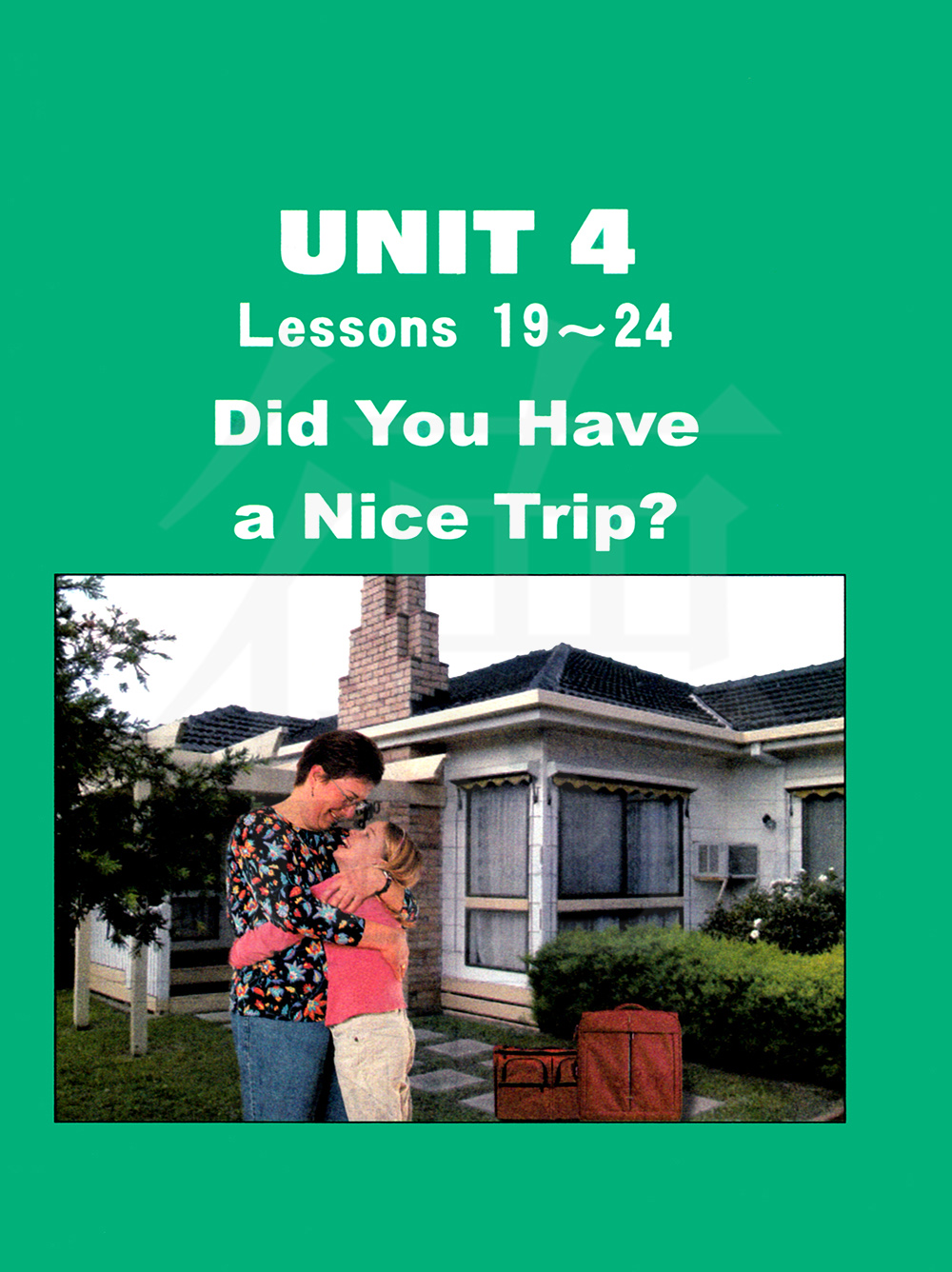
第四单元
第19-24课
你旅途愉快吗?
知识点
(一)动词过去式形式的变化
动词的过去式的变化有两种:规则变化和不规则变化
1. 规则变化及读音
(1)一般情况下在动词末尾加—ed,清辅音(/t/除外)后读/t/,浊辅音(/d/除外)和元音后读/d/,在/t/、/d/音后读/id/ 。如:
help—helped/t/ look—looked/t/ talk—talked/t/ listen—listened/d/
play—played/d/ borrow—borrowed/d/
want—wanted/id/ need—needed/id/ wait—waited/id/
(2)以不发音的e结尾的动词在末尾加—d,读音同(1)。如:
like—liked/t/ live—lived/d/ close—closed/d/
(3)以辅音字母加y结尾的动词,先变y为i,再加—ed。读音同(1)如:
cry—cried/d/ study—studied/id/ carry—carried/d/
(4)以重读闭音节结尾的动词,若末尾只有一个辅音字母,应先双写这个辅音字母,再加—ed。读音同(1)如:
plan—planned/d/ stop—stopped/t/ shop—shopped/t/
2. 不规则变化(列举初一阶段出现的部分不规则动词)
am/is—was are—were break—broke buy—bought
can—could come—came catch—caught do—did
draw—drew drink—came dream—dreamed, dreamt drive—drove
find—found fly—flew get—got go—went
give—gave know—knew lie—lay may—said
meet—met rid—rode run—ran say—said
see—saw show—showed sing—sang sleep—slept
speak—spoke stand—stood take—took teach—taught
tell—told think—thought wear—wore write—wrote
3. 有些词形不发生变化。如:
cut—cut hit—hit hurt—hurt let—let put—put read—read
(二)一般过去时的构成
1. 当谓语动词是be动词was, were时,其句型结构如下:
(1)陈述句:主语+was/were+其他+表示过去的时间状语。如:
Everyone was here yesterday. 昨天每个人都在。
They were at Guangdong restaurant last night.昨晚他们在广东餐馆。
(2)否定句:主语+was not(wasn’t)/were not(weren’t)+其他+表示过去的时间状语。如:
L wasn’t at school yesterday.昨天我不在学校里。
The baskets weren’t under the tree this morning 今天早上篮子不在树下了。
(3)一般疑问句:was/was+主语+其他+表示过去的时间状语?,其肯定回答为Yes,主语+was/were.;否定回答为No,主语+wasn’t.。如:
—Were you ill last week?上周你病了吗?
—Yes, I was./No, I wasn’t .是的,我病了。/不,我没病。
—Were your friends out yesterday evening?你朋友们昨晚出去了吗?
—Yes, they were./No, they weren’t.是的,他们出去了。不,他们没出去。
(4)特殊疑问句:特殊疑问词+一般疑问句语序?如:
Where were you last night?昨晚你在哪里?
What day was it yesterday?昨天是星期几?
2. 当谓语动词是行为动词时,其句型结构如下:
(1)陈述句:主语+行为动词的过去式+其他+表示过去的时间状语。如:
I got up at six o’clock yesterday morning.
我昨天早上六点起床。
My uncle flew to Guangzhou last month.
上个月我叔叔乘飞机到广州去了。
(2)否定句:主语+didn’t+行为动词的原形+其他+表示过去的时间状语。如:
She didn’t find her book this morning.
今天早上她没找到她的书。
They didn’t come back last year.去年他们没回来。
(3)一般疑问句:Did+主语+行为动词的原形+其他+表示过去的时间状语?
其肯定回答为Yes,主语+did.;否定回答为NO,主语+didn’t.。如:
—Did you leave school early yesterday afternoon ?
你昨天下午很早就离校了吗?
—Yes, I did./No, I didn’t.
是的,很早离校了。/不,我没有。
—Did they clean the room last Sunday?
上个星期天他们打扫房间了吗?
—Yes, they did ./No, they didn’t .
是的,他们打扫了。/不,他们没打扫。
(4)特殊疑问句:特殊疑问词+一般疑问句的语序?如:
—Where did your father work last year?
你爸爸去年在哪里工作?
—He worked in a shop.
他在一家商店工作。
—How did you go to Beijing last time?
上一次你怎么去的北京?
—I went there by train.
我坐火车去的。
题库
课后题