知识点
一:重点单词和短语
on foot 步行, by bus =take a bus 乘公交车by plane,乘飞机by taxi 乘出租车by
ship 乘船by subway 乘地铁by train 乘火车by bike 骑自行车by ferry 乘
轮渡Hooray!好极了
slow down 慢下来, stop 停wait 等pay attention to 注意cross the road横穿马
路traffic light 通信号灯at home 在家missed(miss 的过去式)想念different,
不同
chopsticks,筷子(复数) cross穿过look right 向右看same 相同的door 门
look at 朝。。。看play with 和。。。一起玩
二:按要求写单词:
go (反义词)come foot(复数) feet child(复数) children
early(反义词) late good(反义词) bad坏take 带走(反义词) bring 拿来
slow(反义词) quick/fast go (过去式) went do(过去式) did
do(第三人称单数) does go(第三人称单数) goes
same 相同的(反义词) different 不同的miss(过去式) missed
wrong 错误(反义词) right 正确can(否定形式) can’t
三:重点句型分析
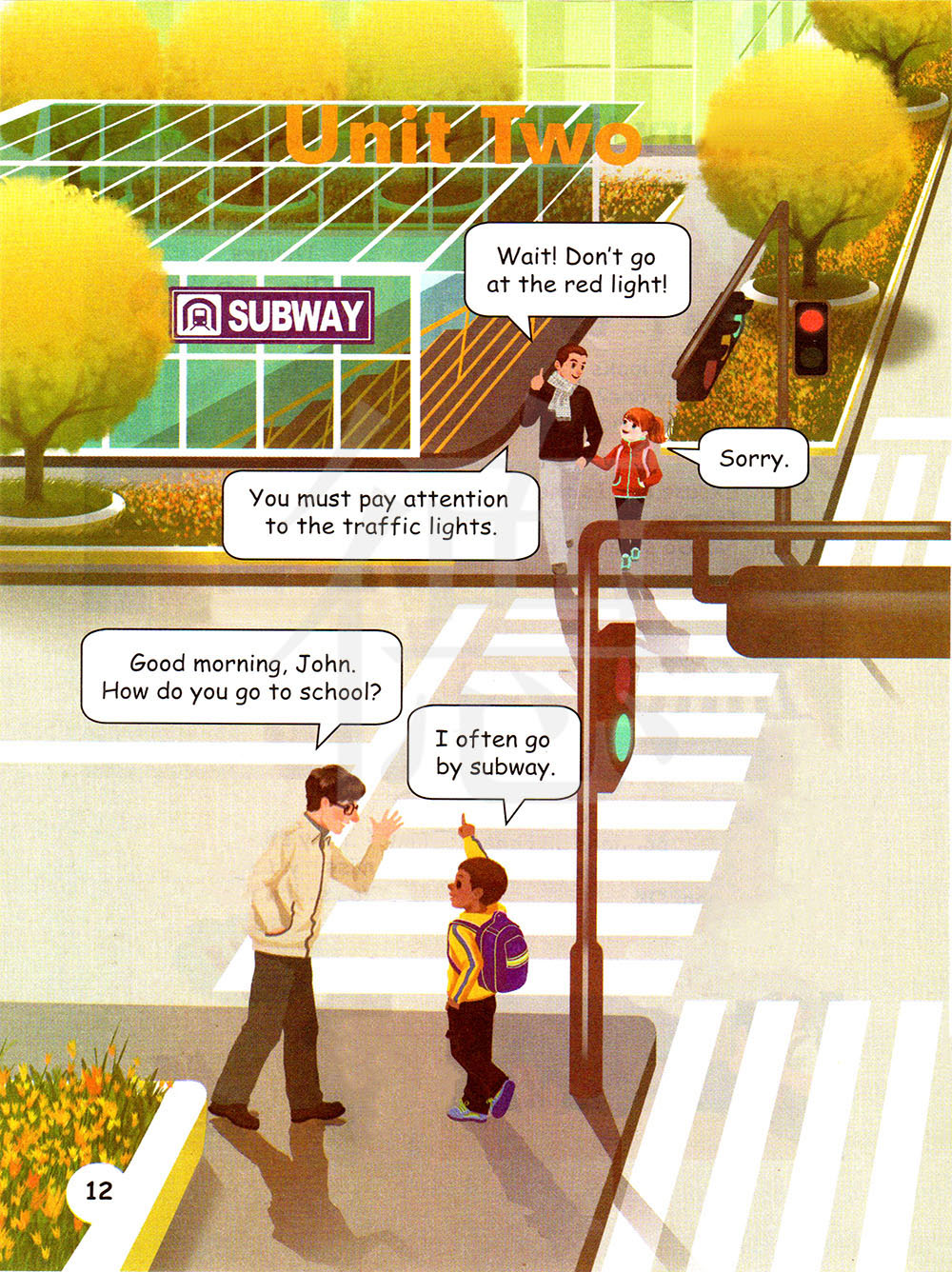
1. How do you come to school?你(们)怎么来学校的?
此问句是由特殊疑问词how 引导的特殊疑问句, 用于询问对方的出行方式。回
答时要根据具体情况作答。
表示地点的词: Germany德国Munich 慕尼黑England 英国Australia 澳大利亚
school学校the park 公园the cinema电影院the hospital医院the post office邮局
the bus stop公共汽车站home 家
2. Usually, I come on foot.=Usually, I walk.通常情况下,我步行来。
此句是对出行方式的回答句。其中usually 意为“通常”, 表示频率很大, on foot
意为“步行”。一般用by 表示出行方式。By 后面一定要直接加交通工具的单数
形式, 只有“小脚丫”foot与on 搭配, “步行”用on foot 表示。
3. I must pay attention to the traffic lights.我必须注意交通信号灯。
Must 是情态动词,意为“必须”后面跟动词原形。
动作词组: wear a helmet戴头盔pay attention to the traffic lights 注意交通信号灯
look right 向右看
4. Don’t go at the red ligh别t! 闯红灯!
此句是Don’t开头的否定祈使句, don’t后面跟动词原形。意为“不要做某事”。
动作词组: run 跑go at the red light闯红灯touch the door触摸门
Eg. Don ’t smok不e要. 吸烟。 /禁止吸烟。
Don’t take photo禁s.止拍照。
5 We must look right before crossing the road我. 们在横穿马路前必须看看右边。
此句中must 是情态动词, 意为“必须”后面跟动词原形, 在此句中before 是
一个介词, 而介词后面跟动词-ing 形式。
6. There is no door on the bus公. 共汽车上没有门。
此句是there be句型的单数句, be动词要根据后面名词的单复数形式来决定,
名词为单数或不可数名词就用there is, 名词为复数就用there are. 此句中no door
意为“没有门”, 表示单数含义,因此要用there is开头。