1、habit 习惯 2、tidy干净的;整齐的 3、fast 快的 4、never 从不 5、late 迟的 6、finish完成 二、三会单词与词组
3、get up early in the morning在早晨早早得起床 4、never go to bed late 从不晚睡觉 5、go to bed early 早早睡觉 6、before bedtime 睡前
7、go to bed late last night 昨晚很晚睡觉 8、finish his homework完成家庭作业 9、finish primary school 小学毕业 10、before dinner在晚饭前 11、after lunch午饭后
5. They listen to their teachers at school. 他们在学校听老师的话。 6.He also does well at home. 他在家也表现得好。
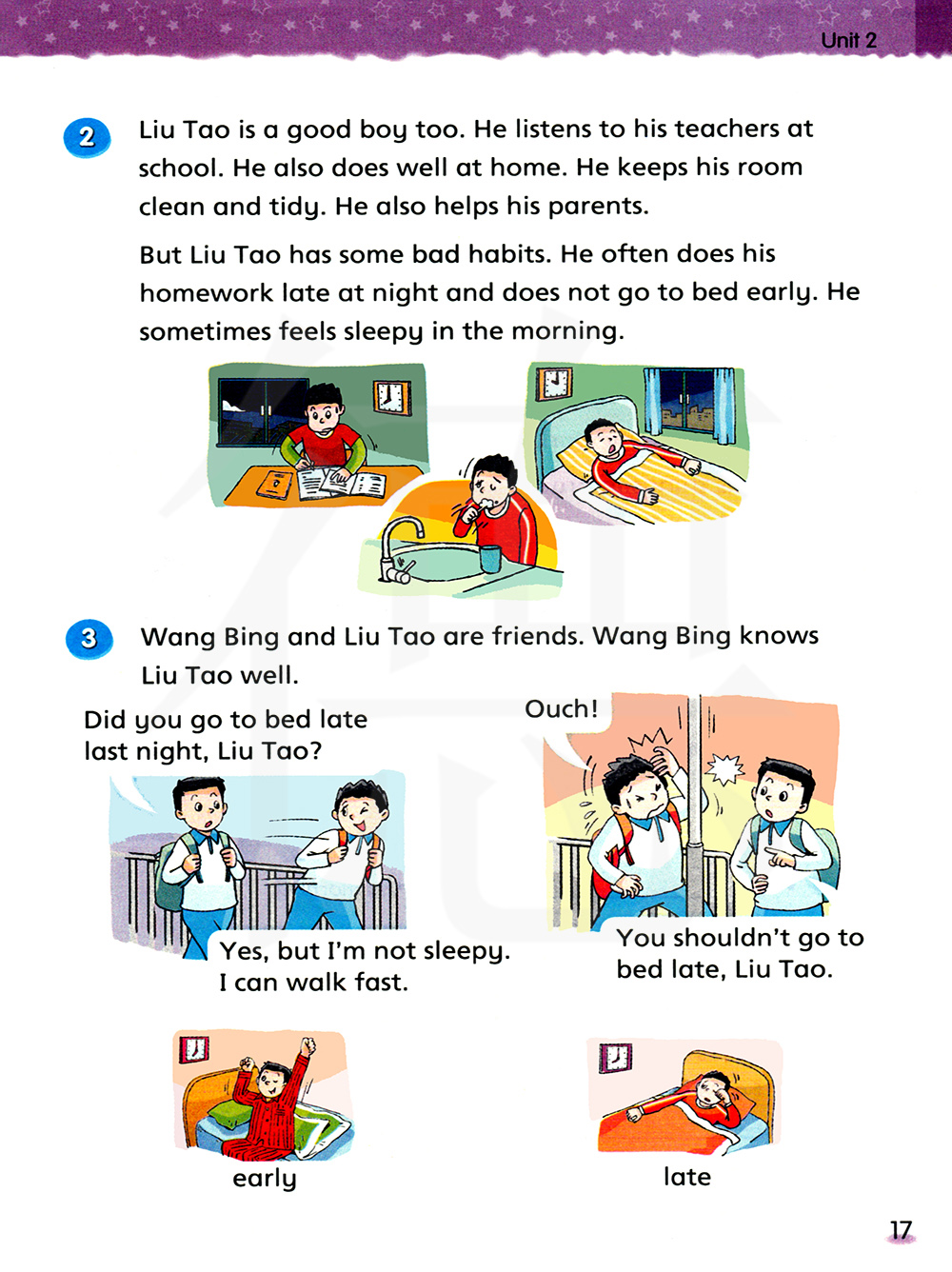
7.He keeps his room clean and tidy. 他保持他的房间既干净又整齐。 8.He often does his homework late at night and does not go to bed early. 他经常做作业做到深夜并且不早睡。
9.He sometimes feels sleepy in the morning. 他有时在早上感觉困。 10.Wang Bing knows Liu Tao well. 王兵很了解刘涛。
11.Did you go to bed late last night? Yes, I did./ No, I didn’t. 你昨晚睡得晚吗?是的,我是。/不,我不是。
12.Let me show you around our house. 让我带你参观我们的房子。 13.I always have my lunch on time. 我总是准时吃午饭。 14. You should put your books and toys in order. 你应该把你的书和玩具放得井井有条。
15. The man is singing badly. 男士正唱歌唱得糟糕。
16.The boy is doing well at school. 男孩在学校表现得很好。 四、语法知识 副词状语的顺序: 英语副词的分类
(1) 时间副词:常见的有now, then, soon, ago, lately, later, before, early, today, tomorrow, yesterday, tonight, suddenly, still, already, just等。
(2) 地点副词:常见的有here, there, up, down, away, nearby, home, upstairs, downstairs等。
(3) 方式副词:表示行为方式的副词大多以-ly结尾,常见的有quietly, heavily, warmly, carefully, happily, angrily等。
(4) 频度副词:常见的有always, usually, often, sometimes, never等。 (5) 程度副词:常见的有very, much, too, greatly, really等。如:
(6) 焦点副词:就是通过强调使之成为人们注意的焦点的副词,常见的有:only, also, just, especially, too,等。
(7) 疑问副词:就是用于引出特殊疑问句的when, where, why, how等。 1. 句末/尾时:方式状语-地点状语-时间状语:地点和时间状语内部的顺序由小到大。
如:I ate some noodles at school yesterday. 昨天我在学校吃了一些面条。 2. 句首时:时间状语-地点状语
如:When and where did you meet yesterday? 你们昨天什么时候,什么地方见面的?
3. 频度副词位于助动词和情态动词之后、行为动词之前。
常见的频率副词有:always, usually, often, sometimes, never. 但sometimes, often 等可以放在句首或句尾,usually可放在句首。
如:(1)Sometimes I get up early .=I sometimes get up early . 我有时起得早。
(2)The workers usually have lunch at the factory. 工人们通常在工厂里吃午饭。
(3)They often do their homework in the evening. 他们经常在晚上写作业。
(4)She was always later for school last year. 她去年上学总是迟到。