知识点
重点解析
1、Ving做主语,谓语动词用单数 动名词作主语,在动词的基础上加ing,使该动词具有名词的各种特征,可作名词灵活使用。
Reading is an art. 读书是一种艺术。
Climbing mountains is really fun. 爬山真是有趣。
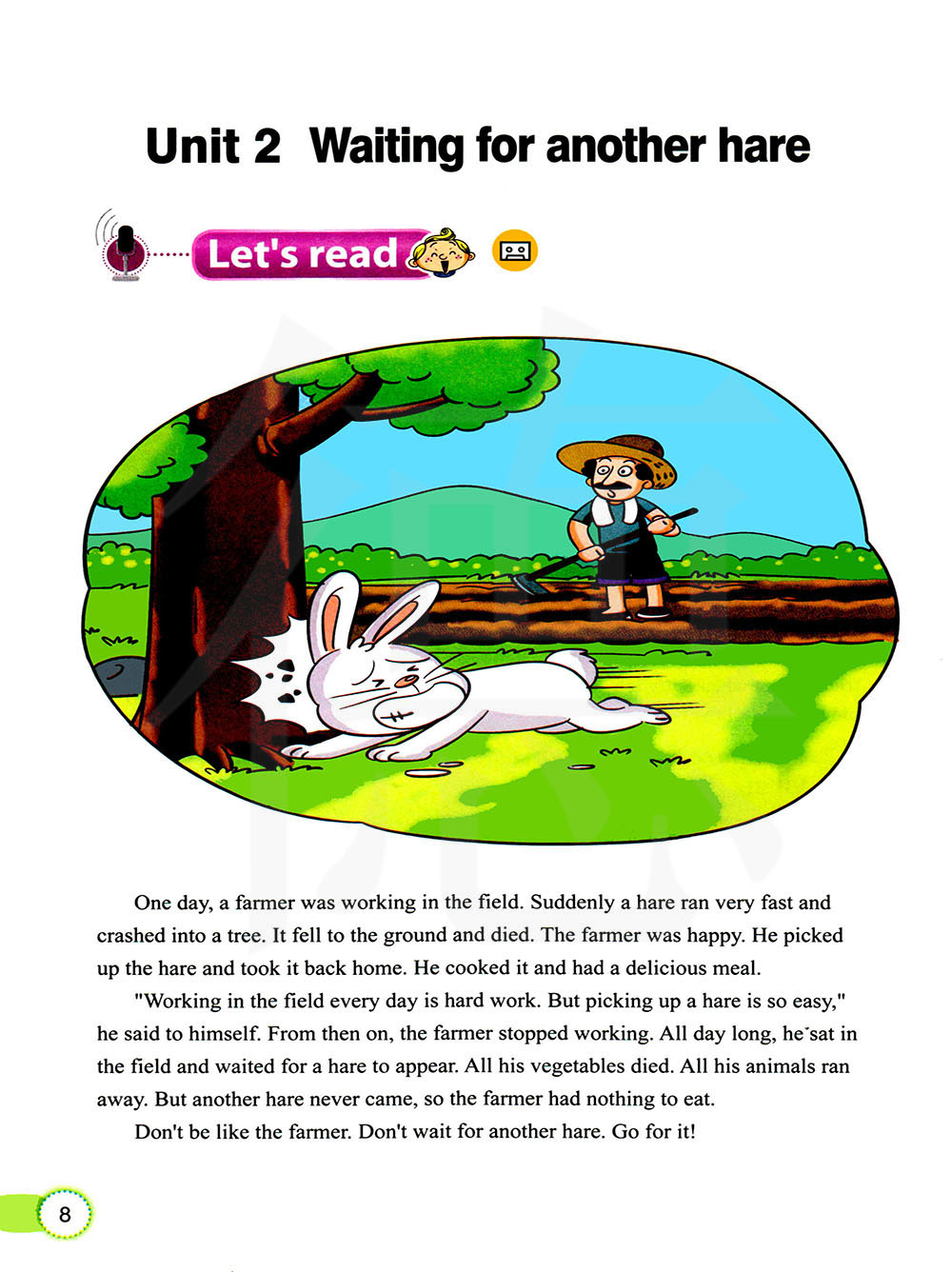
2、pick up
1) pick up : 捡起,拾起
pick up sth = pick sth up 捡起某物
pick up the hare = pick the hare up若为代词,只能位于pick 与up之间 把它捡起来 pick it up
2)pick up : 用(车)来接,到某处去接某人,也可以是中途顺便把人或物带走。
3、hard work 与 work hard
work hard努力工作(动词短语)
hard work 繁重的工作(名词短语)
例句:If you work hard you will succeed. 如果你努力工作,你就会成功。
4、辨析another other others
1)other可作形容词 或代词,做形容词时,意思是“别的,其他”,泛指“其他的(人或物)” 。
如: Do you have any other question(s)? 你还有其他问题吗? Ask some other people. 问问别人吧! Put it in your other hand. 把它放在你另一只手里。
2)others是other 的复数 形式,泛指“另外几个”,“其余的”。在句中可作主语、宾语。如: Give me some others, please. 请给我别的东西吧。
3)another=an+ other,既可作形容词,也可作代词,只能用于三个或更多的人或物,泛指同类事物中的三者或三者以上的“另一个”,只能代替或修饰单数可数名词。如: I don?t like this one. Please show me another. 我不喜欢这一个,请给我看看另一个。
5、stop doing sth
1)stop doing 停止正在做的某事。例:I must stop smoking. 我必须戒烟了。
2)stop to do 停止,中断做某事后去做另一件事。这个“do”代表的就是即将做的事情。 例:They stop to play football.
6、from then on from then on 从那时起 from now on 从现在起
7、反身代词
|
myself
我自己
|
yourself 你自己
|
himself
他自己
|
herself
她自己
|
itself
它自己
|
|
ourselves 我们自己
|
yourselves 你们自己
|
themselves 他们自己
|
themselves 她们自己
|
themselves 它们自己
|
8、注意以下词组中to的用法
have nothing to eat 没东西吃 have nothing to say 没话说 have nothing to to 没事可做
9、One day, a farmer was working in the field.使用的是过去进行时态。过去进行时用来讲述过去某个时间正在发生的事情。将现在进行时中的be动词am, is, are变为was,were就构成过去进行时了。例如:They were watching TV when you called.
10、一般过去时
动词过去式变化规则:
1) 一般在动词末尾加-ed,如:pull-pulled, cook-cooked
2) 结尾是e加d,如:taste-tasted
3) 末尾是辅音字母加一个元音字母和一个辅音字母的重读闭音节,应双写末尾的辅音字母,再加-ed,如:stop-stopped
4) 以“辅音字母+y”结尾的,变y为i, 再加-ed,如:study-studied