知识点
一、语态:
1.①英语有两种语态:主动语态和被动语态
主动语态表示是动作的执行者 被动语态表示主语是动作的承受者
Cats eat fish. (主动语态)猫吃鱼。
Fish is eaten by cats. (被动语态)鱼被猫吃。
②被动语态的构成
由“助动词be +及物动词的过去分词”构成
助动词be 有人称、数和时态的变化,其变化规则与be 作为连系动词时完全一样。
时态 被动语态结构
例句
一般现在时 am are +过去分词 is English is spoken in many countries.
一般过去时 was +过去分词 were + 过去分词 This bridge was built in 1989.
情态动词 can/should may +be+过去分词 must/…… The work must be done right now.
③被动语态的用法 当我们不知道谁是动作的执行者,或者没有必要指出谁是动作的执行者,或者只需强调动作的承受者时,要用被动语态。
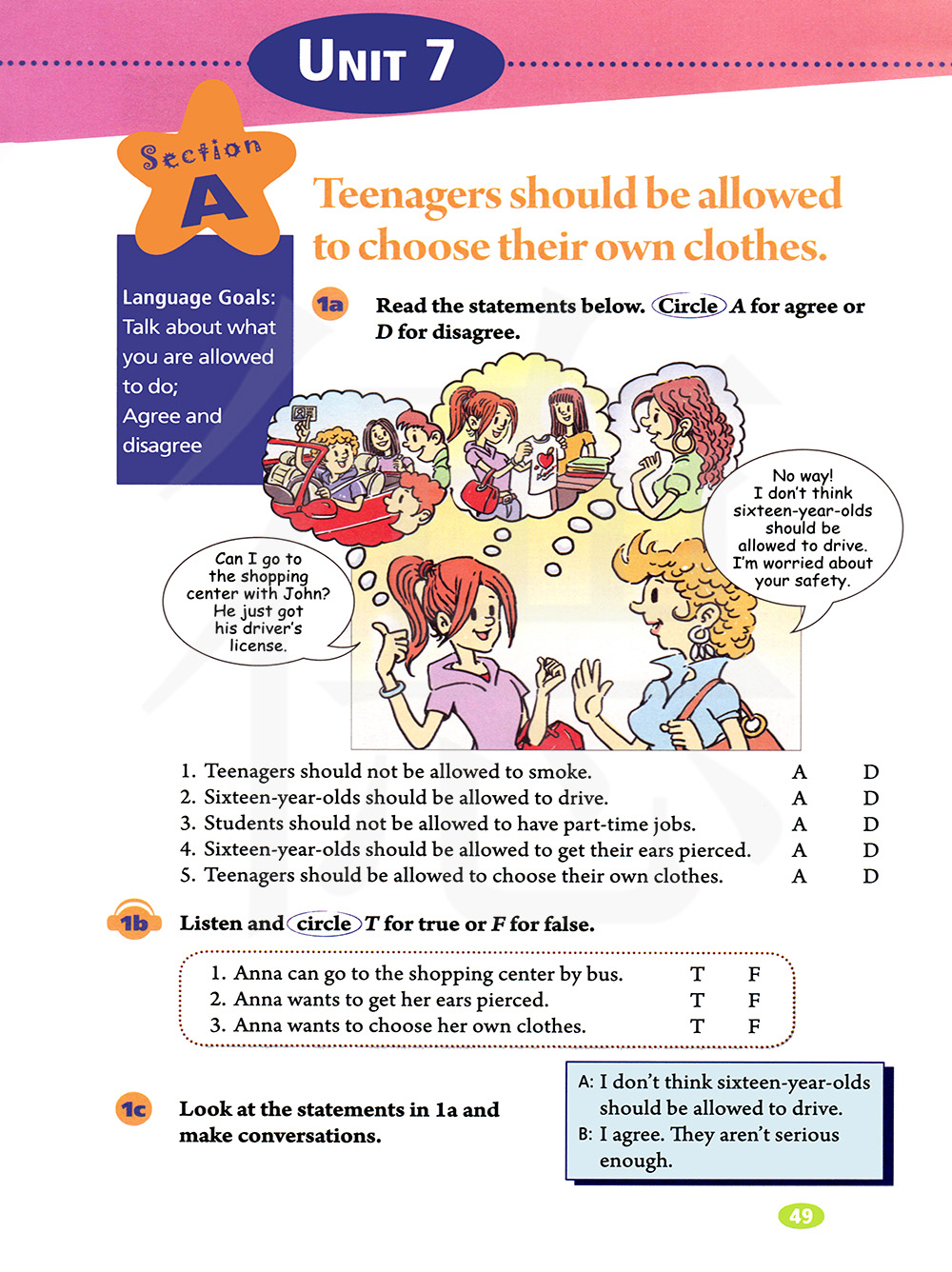
2. allow sb. to do sth. 允许某人做某事(主动语态)如:
Mother allows me to watch TV every night. 妈妈允许我每晚看电视。
be allowed to do sth. 被允许做某事(被动语态)如:
LiLy is allowed to go to Qinzhou. 莉莉被允许去钦州。
3. get their ears pierced 穿耳洞 让/使(别人)做某事 get sth. done(过去分词) have sth. done 如:
I get my car made. == I have my car made. 我让别人修好我的车
4. enough 足够 形容词+enough 如:beautiful enough 足够漂亮 enough+名词 如:enough food 足够食物 enough to 足够…去做… 如: I have enough money to go to Beijing. 我有足够的钱去北京。
She is old enough to go to school.她够大去读书了。
5. stop doing sth. 停止做某事
Please stop speaking. 请停止说话。
stop to do sth. 停止下来去做某事
Please stop to speak. 请停下来说话。
6. 看起来好像…sb. seem to do sth. it seems that +从句
He seems to feel very sad.
It seems that he feels very sad. 他看起来好像很伤心。
7. 系动词不能独立作谓语,要和表语一起构成谓语。常用的连系动词有: look, feel, be, become, get, turn, smell, taste, stay(保持), kept 等。连系动词除be 和become 等少数词可接名词作表语外,一般都是接形容词 。 如:
They are very happy.
He became a doctor two years ago.
She felt very tired.
8. 倒装句: 由 so +助动词(be/do/will/have)/情态动词+主语 意为:…也是一样
She is a student. So am I. 她是一个学生,我也是。
She went to school just now. So did I . 她刚才去学校了,我也是
She has finished the work. So have I . 她已经完成了工作,我也完成了。
She will go to school. So will he. 她将去学校,他也是。
9. yet 仍然,还 常用在否定句或疑问句当中
10. stay up 熬夜如:I often stay up until 12:00pm.我经常熬夜到12点。
11. clean up 打扫 整理 如:
I have cleaned up the bedroom. 我已经打扫完了卧室。
12. 程度副词: always总是 usually经常 sometimes有时 never从不 如:
I am always/usually/sometimes/never late for school. 我总是/经常/有时/从不上学迟到。
13. 曾经做某事:
Do you ever get to school late? Yes, I do. No, I don’t.
Have you ever got to school late? Yes, I have. No, I haven’t.
14. go shopping(去购物), go fishing(去钓鱼), go swimming(去游泳), go boating(去划船), go hiking(去登山), go trekking(去徒步)
15. be strict with sb. 对某人严厉 如:
Mother is strict with her son. 妈妈对她的儿子很严厉。
16. take the test 参加考试 pass the test 通过考试 fail a test 考试失败
17. the other day 前几天
18. agree 同意 反义词 disagree不同意 动词
agreement 同意 反义词 disagreement 不同意 名词
18. keep sb/ sth. +形容词 使某人/某物保持…. 如:
We should keep our city clean.我们应该保持我们的城市干净。
19. both…and… +动词复数形式 如:
Both Jim and Li Ming play bastketball.
20. learn (sth.) from sb. 向谁学习(什么) 如:
Jim learnt English from his English teacher. 吉姆向他的英语老师学习英语
21. have an opportunity to do sth. 有机会做某事
have a chance of doing sth. 有机会做某事
如:I have an opportunity to go to Beijing.
I have a chance of going to Beijing.
22. at present 目前
23. at least 最少 at most 最多
24. 花费 take ,cost, spend , pay
sth. take (sb.) time to do sth.
It took (me) 10days to read the book.
sth. cost (sb.) ……
The book cost (me) 100yuan.
sb. spend … on sth.
She spent 10days on this book.
sb. spend …doing sth.
She spent 10days reading this book.
sb. pay … for sth.
She paid 10yuan for this book.
25. have +时间段+off 放假,休息 如:have 2 days off
26. reply to 答复某人 如:She replayed to MrGreen.
27. agree with sth. 同意某事 如:I agree with that idea.
agree to sb. 同意某人的意见 如:I agree to LiLei.
28. get in the way of 碍事,妨碍
如:Her social life got in the way of her studies. 她的社会生活妨碍了她的学习。
29. success n. succeed v. successful adj. successfully adv.
30. think about 与think of 的区别
①当两者译为: 认为、想起、记着时,两者可互用
I often think about/ of that day. 我经常想起那天。
②think about 还有“考虑”之意 ,think of 想到、想出时两者不能互用
At last, he thought of a good idea. 最后他想出了一个好主意。
We are thinking about going Qinzhou. 我们正在考虑去钦州。
31. 对… 热衷, 对…兴趣 be serious about doing
如:She is serious about dancing. 她对跳舞热衷。
be serious about sth.
如:She is serious about him. 她对他感兴趣。
32. practice doing 练习做某事
She often practice speaking English.
33. care about sb. 关心某人
如:Mother often care about her son.
34. also 也 用于句中
either也 用于否定句且用于句末
too 也 用于肯定句且用于句末
I am also a student. 我也是一个学生
I am a student too. 我也是一个学生。
I am not a student either. 我也不是一个学生