知识点
【词汇解析】
1.spend
spend作动词,意思是“度过”。
My cousin wants to spend the weekend with us.我表弟想和我们一起过周末。
spend作动词时还可以表示“花费(时间、金钱等)”。其常用结构如下:
(1)sb.spend(s)time/money on sth.表示“某人把时间/金钱花在某事上”。
Do you often spend your money on new books?你经常把钱花在新书上吗?
(2)sb.spend(s)time/money(in)doing sth.”表示“某人花费时间/金钱做某事”。
Do you often spend your money(in)buying new books? 你经常把钱花在买新书上吗?
2.tie
tie作名词,意思是“领带”,是可数名词。
My father has a new tie. 我父亲有一条新领带。
tie还可以作动词,意思是“捆绑,系”,常用短语:tie…to…意思是“把……拴/系/绑 到……上”。
Please tie the dog to the tree. 请把狗拴到树上。
3.1end
lend作动词,意思是“借给”,强调“借出”。表示双宾语的“把某物借给某人”用lend sb. sth.,相当于lend sth.to sb.。
Can you lend your bike to me? 你能把你的自行车借给我吗?
4.both
both作代词,意思是“两个(都)”。both of…意为“两者……”,后接名词、代词的复数形 式.且名词前必须与the或形容词性物主代词连用,代词需用宾格。
Both of my parents are teachers. 我父母都是老师。
5.be made of
be made of意思是“由……制成”。
Our desks are made of wood. 我们的课桌是木头制成的。
【辨析】be made of,be made from和be made in
|
be made of
|
由……制成(从成品中看得出原材料)
|
|
be made from
|
由……制成(从成品中看不出原材料)
|
|
be made in
|
在某地制成(后接表示地点的名词)
|
【短语归纳】
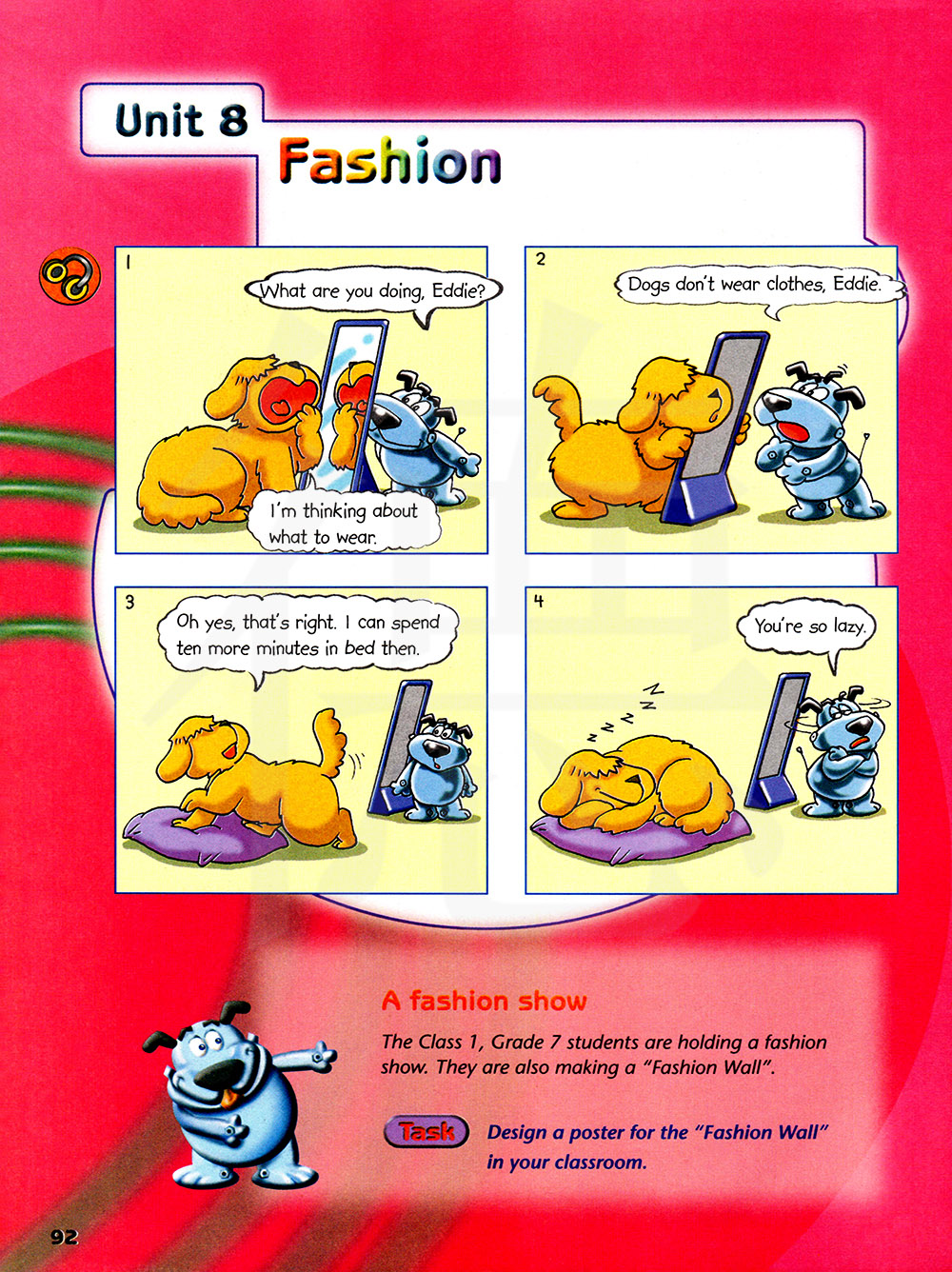
1.think about what to wear 考虑穿什么衣服
2.ten more minutes。another ten minutes 再过10分钟
3.wear sports clothes 穿着运动服
4.look cool 看起来酷
5.both of them 他们两个
6.100k modern and beautiful 看起来时尚漂亮
7.wear jeans 穿牛仔裤
8.write a letter to her friend写封信给她的朋友
9.a member of the basketball team 篮球队的一员
10.wait for the school bus 等校车
11.1ie on the bed 躺在床上
12.go for a dinner 去参加晚宴
13.be fit for a long walk 适合长时间的步行
14.look lovely in your new hat 戴着你的新帽子看起来很可爱
15.practise saying the words 练习讲单词
16.design clothes 设计服装
17.make a“Fashion Wall” 做一面“时尚墙”
18.not too long or too large 不太长也不太大
19.look smart in dark blue 穿着深蓝色的衣服看起来精干
20.my fashion design 我的时装设计
【句型分析】
1.What a great show,Sandy! 桑迪,这场演出真棒!
英语中的感叹句是由what和how两个感叹词引导,后面跟上感叹部分,然后再加主谓 结构构成的。感叹词what后的感叹部分为名词(短语),感叹词how后的感叹部分为形容词或副词结构。
What a fine voice she has! 她的嗓音真好听!
What good news it is! 真是个好消息啊!
How quickly she runs! 她跑得可真快!
How beautiful the flower is! 多漂亮的花!
2.What do you think of my red gloves,Amy? 埃米,你觉得我的红手套怎么样?
What do you think of…?是个固定句型,意为“你觉得……怎么样?”,通常用来询问对方对某事的观点,答语多为形容词。同义句型还有How do you like…?。
一What do you think of cars made in Japan? 你们认为日本制造的汽车怎么样?
一They are much cheaper than those made in America. 比美国制造的车便宜得多。
—How do you like the coat? 你认为这件外套怎么样?
一It feels soft but is expensive. 手感很柔软,但是非常贵。
【拓展】think还有以下常用词组:think of意为“记起,想起;考虑”;think about意为“考虑”; think over意为“仔细考虑;重新考虑”。
I can’t think of the word for“film”inFrench. 我想不起法语的“电影”是怎么说的了。
Perhaps we should think about this again. 也许我们应该重新考虑一下这件事。
She asked her boss for a week to think over this thing.她请求老板给她一个星期的时间来仔细考虑这件事。
3.You look lovely in your new hat. 戴着这顶新帽子你看起来很可爱。
句中look用作系动词,意为“看起来”,后接形容词。本句还可以表达为Your new hat looks lovely on you.,两句意思相同,但需注意的是:主语和宾语互换了位置,后面的介词也必须作出改变。
She looks smart in her long leather boots.
一Her long leather boots look smart on her. 她穿着长皮靴看起来很精干。
The pink dress looks pretty on the little girl.=The little girl looks pretty in the pink dress. 这条粉红色的裙子穿在这个小姑娘身上看起来很漂亮。
4.I think white shirts look clean.and white matches any other colour. 我认为白衬衫 看起来干净,而且白色跟任何其他颜色都搭配。
match any other colour意为“与其他任何颜色都搭配”。“any other+单数可数名词”意为 “任何其他……”,指同一范围内除了某人或某物以外的其他人或事物,但当被比较的人或事物不在同一范围或不属于同一类别时,则用“any+单数名词。”试比较:
China is larger than any other country in Asia.(China属于country in Asia) 中国比亚洲的任何其他国家都大。
China is larger than any country in Africa.(China不属于country in Africa) 中国比非洲的任何国家都大。
【语法点拨】
现在进行时
现在进行时表示说话时正在进行的动作。
1.现在进行时的肯定句
主语+be(am,is,are)+现在分词+…
I am watching TV now.我现在正在看电视。
动词的现在分词的变化规则如下:
(1) 在动词词尾后加一ing。如:study→studying,cook→cooking。
(2) 以不发音e结尾的动词,去掉e再加一ing。如:give→giving,take→taking。
(3) 以ie结尾的动词,变ie为Y,再加一ing。如:die→dying,lie→lying。
(4) 以一个辅音字母结尾的重读闭音节动词,双写最后一个辅音字母,再加一ing。
如:get→getting,swim→swimming,run→running。
2.现在进行时的否定句
主语+be+not+现在分词+…
She isn’t reading now.现在她不在看书。
They aren’t listening to music. 他们不在听音乐。
3.现在进行时的一般疑问句
Be+主语+现在分词+…?
一Are they playing tennis now? 他们现在在打网球吗?
一Yes,they are.是的,他们是。/No,they aren’t.不,他们不是。
4.现在进行时的特殊疑问句
疑问词+be+主语+现在分词+…?
What are you doing now? 你现在在干什么?
Who are you waiting for? 你在等谁?
【注意】(1) 现在进行时的句子往往带有now,at present,at the moment等时间状语,或带有 look,listen等暗示词。
My brother is playing computer games at the moment.我弟弟此刻在玩电脑游戏。
Listen! Someone is singing in the room. 听!有人在房间里唱歌。
(2) 像have,like,know,understand,hope,want,love等动词不用现在进行时;look, sound,smell,taste等连系动词也不用现在进行时。