知识点
【词汇解析】
1.date
date作名词,意思是“日期”,一般多以句子形式出现。“What’s the date today?”用来询问“今天是几月几号?”,其回答用“It’s+具体的日期”。
一What’s the date today? 今天是几月几日?
一It’s 10 September. 今天是9月10日。
【辨析】“What day is it today?”用来询问“今天星期几?”,其回答用:“It’s+具体的星期几”。
2.gate
gate作名词,意思是“大门;通道;大门口”,指上面与屋顶不相连的门,通常有两扇。
Look!A boy is at the zoo gate. 看!一个男孩在动物园大门口。
【辨析】door作名词,意思是“门”,指上面连着屋顶的“门”,可指大楼房间或家具、车辆的“门”。
3.show
show作动词,意思是“引;带;领”,常构成短语show sb.around(带领某人参观)。另外,show还有“给某人看;显示”的意思,短语show sb.sth.一show sth.to sb.,表示“把某物给某人看”。
Let me show you around! 我带领你参观吧!
Can you show it to me? 你能把它给我看看吗?
【拓展】show还可以作名词,意思是“展览;演出”,常用短语为on show,意为“在展出”。
4.in front of
in front of意思是“在„„的前面”,指位置“在„„外部的前面”。
There is a garden in front of my house. 我的房子前面有一个花园。
【辨析】in the front of意思是“在„„的前面”,指位置“在„„内部的前面”。
My father is in the front of the car. 我父亲坐在轿车的前面。
5.take
take作动词,意思是“花费”,表示“做某事花费某人多长时间”用句型“It takes sb.some time to do sth.”,其中it是形式主语,真正的主语是后面的to do sth.
It takes me an hour to do homework every day.我每天花一小时做家庭作业。
6.kind
kind作名词,意思是“种类”,常构成短语all kinds of(各种各样的)。
The kind of fruit is very nice.这种水果很好。
There are all kinds of food on the table. 桌子上有各种各样的食物。
【拓展】kind还可作形容词,意思是“善良的,友好的”,与nice或friendly同义,常构成短语be kind/nice/friendly to sb.,表示“对某人友好”。
7.borrow
borrow作动词,意思是“借,借用”,通常指“向别人借”。表示“向某人借某物”用borrow sth.from sb.
May I borrow your pen? 我可以借你的钢笔吗?
Tom often borrows some money from his friends.汤姆经常向他的朋友们借一些钱。
8.a few
a few意思是“一些,少量”,用来修饰可数名词的复数形式,表示肯定的意义。
His sister has a few books in her schoolbag.他姐姐书包里有一些书。
【辨析】单独使用few,意思是“不多(的),少数 (的)”,也用来修饰可数名词的复数形式,但表示否定的意义。
The boy has few books in his schoolbag. 这个男孩的书包里几乎没有书。
9.on foot
on foot意思是“步行”。表示“步行上学”用 go to school on foot。
His brother goes to school on foot. 他哥哥步行去上学。
Do you often go home on foot. 你经常步行回家吗?
【拓展】短语go to„on foot与walk to„同义。但短语“步行回家”用go home on foot或walk home。
【注意】“步行”用on foot,但“乘公共汽车”用by bus。
【短语归纳】
1.the parents’meeting 家长会
2.meet at the school gate 在校门口见面
3.welcome to our school 欢迎来到我们学校
4.show sb.around 带领某人参观
5.clean and bright 干净明亮
6.look modern 看起来现代
7.have meetings 开会
8.in a white shirt 穿一件白色衬衫
9.1et me see 让我想想
10.after class 下课以后
11.say hello to sb. 向某人问好
12.hear sb.well 听清某人的话
13.on the phone 通电话;在电话中
14.how long 多长时间
15.on one’s way back 在某人返回的途中
16.be open 开放
17.all kinds of books 各种各样的书
18.borrow books from the library 从图书馆借书
19.far away from my home 离我家很远
20.take a bus to school 乘公共汽车上学
【句型分析】
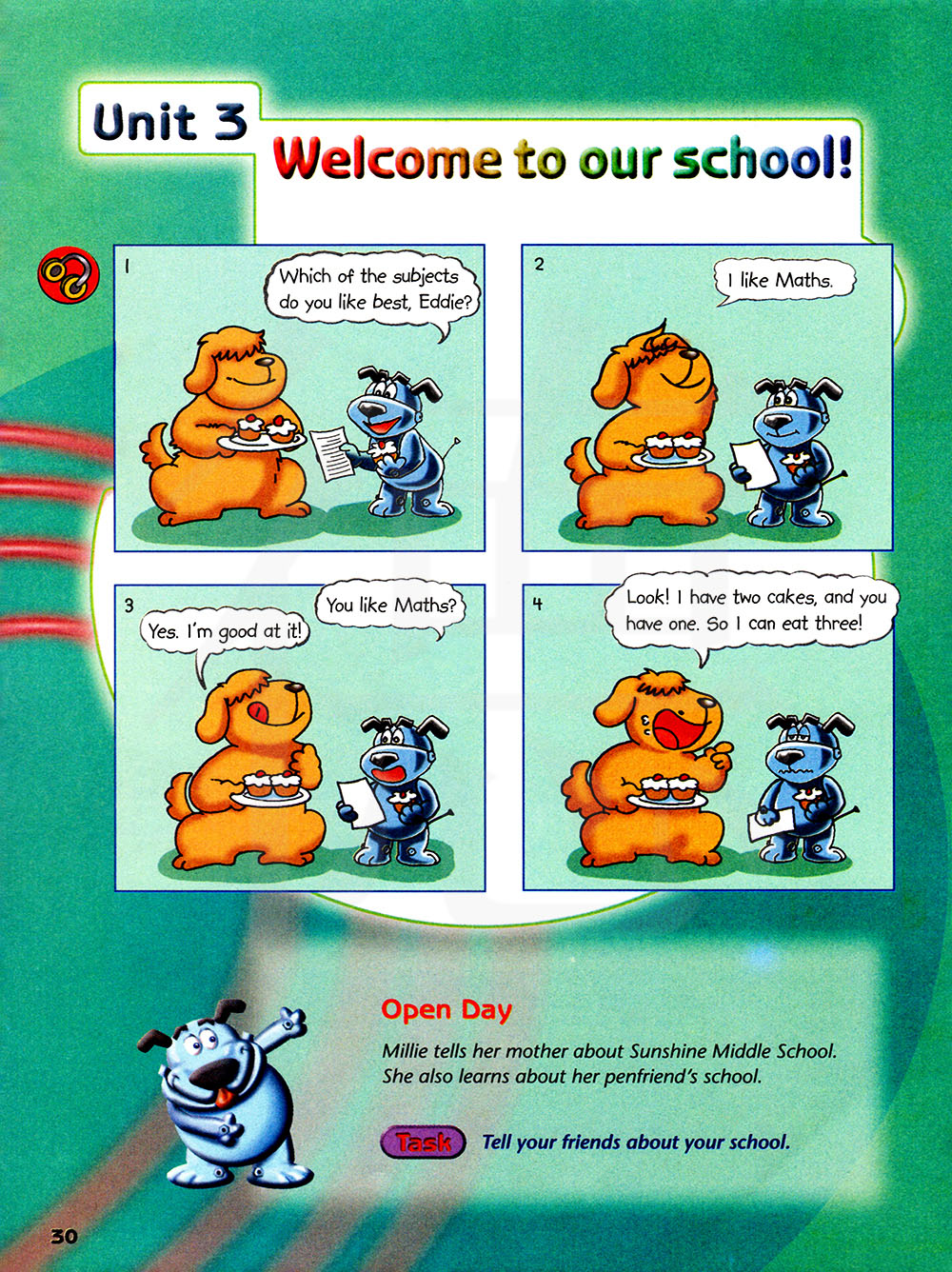
1.Which of the subjects do you like best,Eddie? 埃迪,你最喜欢什么学科?
本句中which意为“哪个(些)”,常对同类事物中某一个(些)提问。
Which is your favourite room? 哪一个是你最喜欢的房间?
Which book do you want to buy? 你想要买哪本书?
2.So I can eat three! 所以我可以吃三个!
本句中so为连词,意为“因此,所以”,连接状语从句;引导的从句通常放在主句之后。
Amy likes English,so she often reads it in the morning. 埃米喜欢英语,所以她经常在早晨读英语。
【注意】汉语中通常用“因为„„所以„„”来表示因果关系,但在英语中,通常用了because就不能再用so;用了so,就不能再用because。
She gets up late,so she is late for school every day.
=She is late for school every day because she gets up late. 她起床晚,所以她每天上学都迟到。
3.Pardon? 什么?请再说一遍。
本句通常用来请求对方重复刚才所说的话.相当于:Say it again,please.,有时我们也可用I beg your pardon!来表示。
—Read the instructions for your classmates,please.请向同学们读一下说明。
—I beg your pardon!/Pardon? 请再说一遍,好吗?
I ask you to read the instructions for your classmates. 我请你向同学们读一下说明。
4.How does she get to school? 她是怎么到学校的?
这是一种询问“交通方式”的问句,其中get t通方式的词语或句子,如:on foot(步行),by bus/car/train/plane„(坐公交车/汽车/火车/飞机„„)。
—How does Millie get to the school every day?米莉每天怎样来学校的?
一By bus./On foot./By car. 乘公交车。/步行。/乘汽车。
How do the students get to the cinema? 学生们怎么去电影院呢?
5.It takes me about half an hour. 我大约花半个小时。
It takes(sb.)some time to do sth.意思是“花费(某/v)„„时间做某事”。其中it是形式 主语,真正的主语是to do sth.。
It takes her two hours to walk home every day.她每天花两小时走回家。
【注意】本句型也能替换成:sb.spend(s)sometime doing sth.,因此上一句可转换成:
She spends two hours walking home every day.
6.I live far away from the school. 我住得离学校远。
此处far为副词,指距离上的“遥远”或“远离”,常用的搭配有far away from,意为“远 离„„”。
The village is far away from here. 那个村庄离这儿很远。
I know a nice little Italian restaurant not far from here. 我知道有家不错的意大利小餐馆离这儿不远。
另外,我们还可以用how far来询问距离。
How far is the school from your home? 你家离学校有多远?
How far can you throw? 你能扔多远?
【语法点拨】
人称代词的主格和宾格
人称代词是用来代表人或事物的代词,有人称、数(单复数)、格(主格、宾格)以及性别(男女)的变化。人称代词分为主格和宾格两种形式。其变化规律如下表所示:
|
人称代词
|
单数
|
复数
|
|
主格
|
宾格
|
主格
|
宾格
|
|
第一人称
|
I
|
me
|
we
|
us
|
|
第二人称
|
you
|
you
|
you
|
you
|
|
第三人称
|
he,she,it
|
him , her , it
|
they
|
them
|
1.人称代词的主格
人称代词的主格分为单数:I,you,he,she,it和复数:we,you,they。人称代词的主格在句中作主语。
I have many new friends.They are all very nice.我有很多新朋友。他们都非常好。
Are you in Class 4,Grade ? 你在七年级四班吗?
Kitty is cute.She loves dancing. 基蒂很可爱。她喜欢跳舞。
2..人称代词的宾格
人称代词的宾格也分为单数:me,you,him,her,it和复数:us,you,them。人称代词的宾格在句中作动词或介词的宾语。
Thank you for helping me with my homework.谢谢你帮助我做家庭作业。(作动词宾语)
My school is beautiful.I like it very much. 我的学校很漂亮。我非常喜欢它。(作动词宾语)
It’s nice of you to chat with me for so long. 你真好,和我聊了这么长时间。(作介词宾语)