知识点
【词汇解析】
1.really
really为副词,意思是“的确,确实”。用于修饰形容词、动词或整个句子,表示疑问、惊讶或为了加强语气。
It is really good.好极了。
They are really very glad.他们确实非常高兴。
Your mother is really worried.你妈妈的确很担心。
2.enjoy
enjoy为动词,意思是“享受……的乐趣;欣赏;喜爱”。常表示从外界事物或活动中得到喜悦,后面接名词、代词或动词一ing形式。
Do you enjoy the film? 你喜欢这部电影吗?
Does Peter enjoy living in Suzhou? 彼得喜欢住在苏州吗?
3.player
player为名词,意思是“运动员”。英语中许多动词词尾加一(e)r变成名词,表示做某动作的人。player是由动词play加一er变来的。类似的动词有:swim,dance,work,write等。
Mo Yan is a famous writer. 莫言是个著名的作家。
His sister is an excellent dancer. 他的姐姐是个优秀的舞者。
4.hope
hope动词,意思是“希望”。可以用hope to do sth.,也可以用“hope+that从句”。 We hope to see you again. 我们希望再次见到你。
I hope that you enjoy the story. 我希望你喜欢这个故事。
5.a lot of
a lot of意思是“许多;大量”。口语中常用lots of。后跟名词时,名词既可以是不可数的,也可以是可数的,可数名词一定要用复数形式。lots of在口语中常常代替many和much。
I can see a lot of apples on the tree. 我看到这棵树上结了很多苹果。
There are a lot of interesting books in my study.我的书房里有很多有趣的书。
6.match
match名词,意思是“比赛;竞赛”,另外还有“火柴”的意思。
He likes watching football matches. 他喜欢看足球赛。
Please take some matches when you go camping. 你去野营时请带些火柴。
【短语归纳】
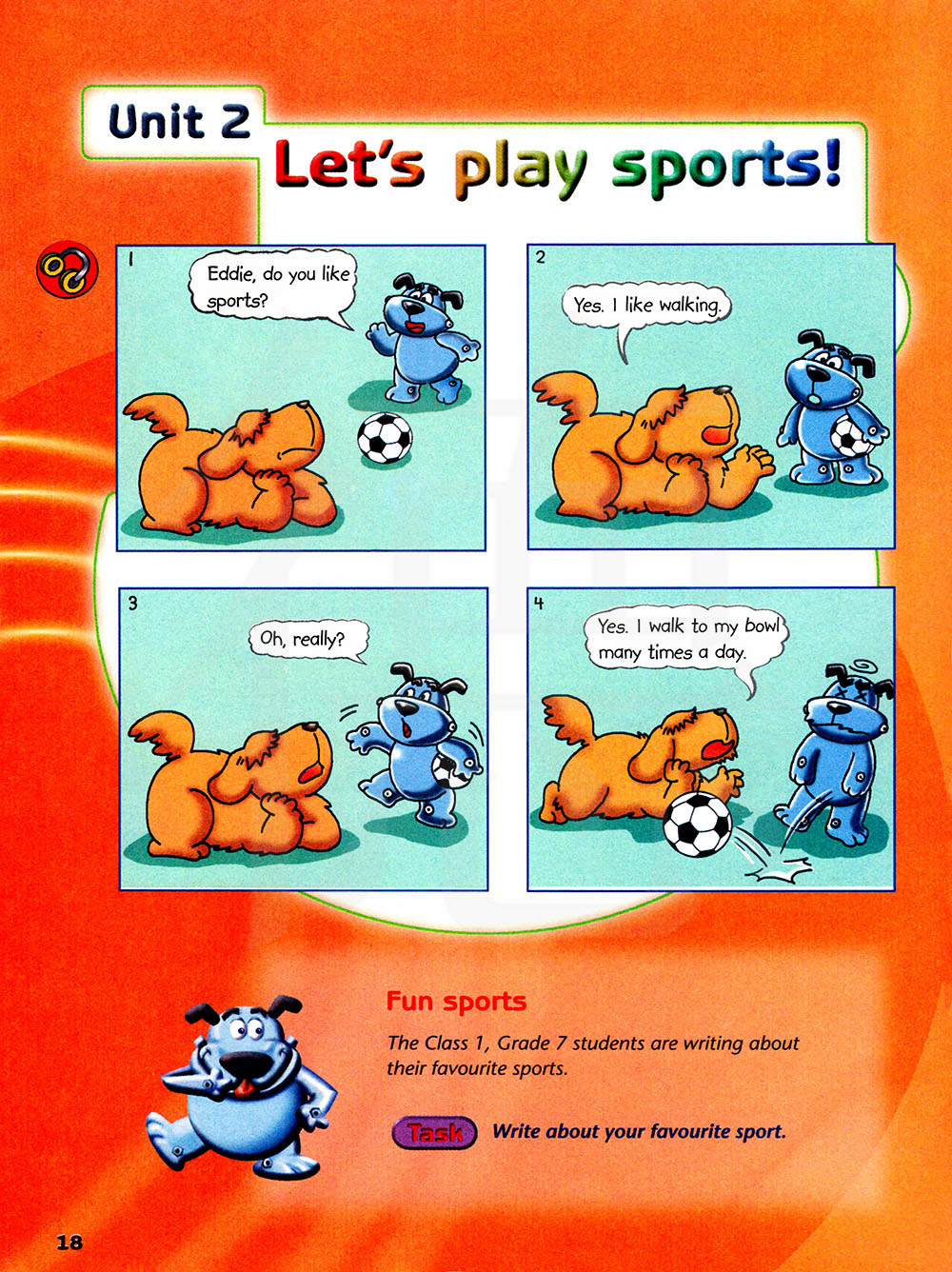
1.many times a day 一天多次
2.play volleyball 打排球
3.enjoy swimming 喜欢游泳
4.my favourite football star 我最喜欢的足球明星
5.a new member of Huanghe Football Club 黄河足球俱乐部的一名新成员
6.1ive in Beijing 居住在北京
7.1ook strong 看起来强壮
8.in his free time 在他的空闲时间里
9.make him happy 使他开心
10.in the next’World Cup 在下一届世界杯
11.come t’rue 成为现实
12.watch ball games on TV 在电视上观看球类比赛
13.at weekends 在周末
14.make me feel great使我感觉很棒
15.read a lot of interesting books 读许多有趣的书
16.take this bag 拿这个包
17.a music club 一个音乐俱乐部
18.play basketball with my friends 和我的朋友们一起打篮球
19.talk about basketball 谈论篮球
【句型分析】
1.I hope his dream comes true. 我希望他的梦想成真。
这句话中的hope是及物动词,his dream comes true在句中充当宾语,此句中hope后面 省略了that。此外,hope还可接不定式to do sth.。要注意的是,我们只说:hope to do sth.,不说hope sb.to do sth.。另外,hope也可以用作名词,意为“希望,期望”。
I hope(that)he will succeed. 我期望他会成功。
I hope to see you and your family soon. 我期待不久能见到你和你的家人。 You mustn’t give up hope. 你一定不要放弃希望。
You are my only hope.你是我唯一的希望。
【拓展】关于hope我们还有一个常用句型,I hope so.希望如此。
2.Of course.I often一. 当然。我经常……
of course通常在对话中用作回答,表示“当然”。
一Are you going with us? 你和我们一起去吗?
一Of course.当然啦。
有时与not连用。
一Were you glad to leave? 你愿意离开吗?
一Of course not.当然不愿意。
3.Me too. 我也是。
Me too.表示“我也是”,So do I.也表示“我也是”,两者意思一样,但用法和内涵不一样,前者口语化很强,它不含有动作的意味在里面,后者则表示与前面说话人做了同样的动作。
(1) 一I’m 13 years old.我十三岁。
一Me too……/So am I.我也是。
(2) I usually walk to school. 我经常步行去学校。
一Me too./So do I.我也是。
(3) I had a good time yesterday. 我昨天玩得很高兴。
一Me too……/So did I.我也是。
4.When and where do you often play? 你经常在什么时间什么地方玩?
When and where…?是一个常用句型,同时问时间和地点,不能互换,但有趣的是,回答的时候我们往往先回答地点,再回答时间。
—When and where was the first World Expo hosted? 第一届世博会是在什么时间、什么地点举办的?
—In London,1851. 1851年,在伦敦。
【语法点拨】
一般现在时
1.表示经常或习惯性的动作
She watches TV on Saturdays. 她周六看电视。
I read newspapers at breakfast every morning. 我每天早饭时看报纸。 2.表示客观事实
Cats eat fish.猫吃鱼。
A duck has two legs.鸭子有两条腿。
3.表示现在的状态或主语具备的性格和能力
Simon likes playing football.西蒙喜欢踢足球。
I am a teacher.我是一个老师。
4.一般现在时中,当主语是第三人称单数时,动词要用“三单形式”,其他人称用动词原形。动词三单形式的变化规则:
(1)多数直接在动词词尾加s,如:like→likes,play→plays,meet→meets。
(2)以辅音字母+y结尾的动词,把y变i,再加es,如:study→studies,fly→flies。
(3)以sh,ch,ss,x或一些以o结尾的动词,在词尾直接加es。如:wash→washes,fix→fixes.dress→dresses,do→does,go→goes。
5.含有实义动词的一般现在时态的句子转换
(1)动词原形
肯定句:We have lessons from Monday to Friday.
否定句:We don’t have lessons from Monday to Friday.
一般疑问句:Do you have lessons from Monday to Friday?
肯定回答:Yes,we do.
否定回答:No,we don’t.
(2) 动词三单形式
肯定句:He swims in summer.
否定句:He doesn’t swim in summer.
一般疑问句:Does he swim in summer?
肯定回答:Yes,he does.
否定回答:No,he doesn’t.