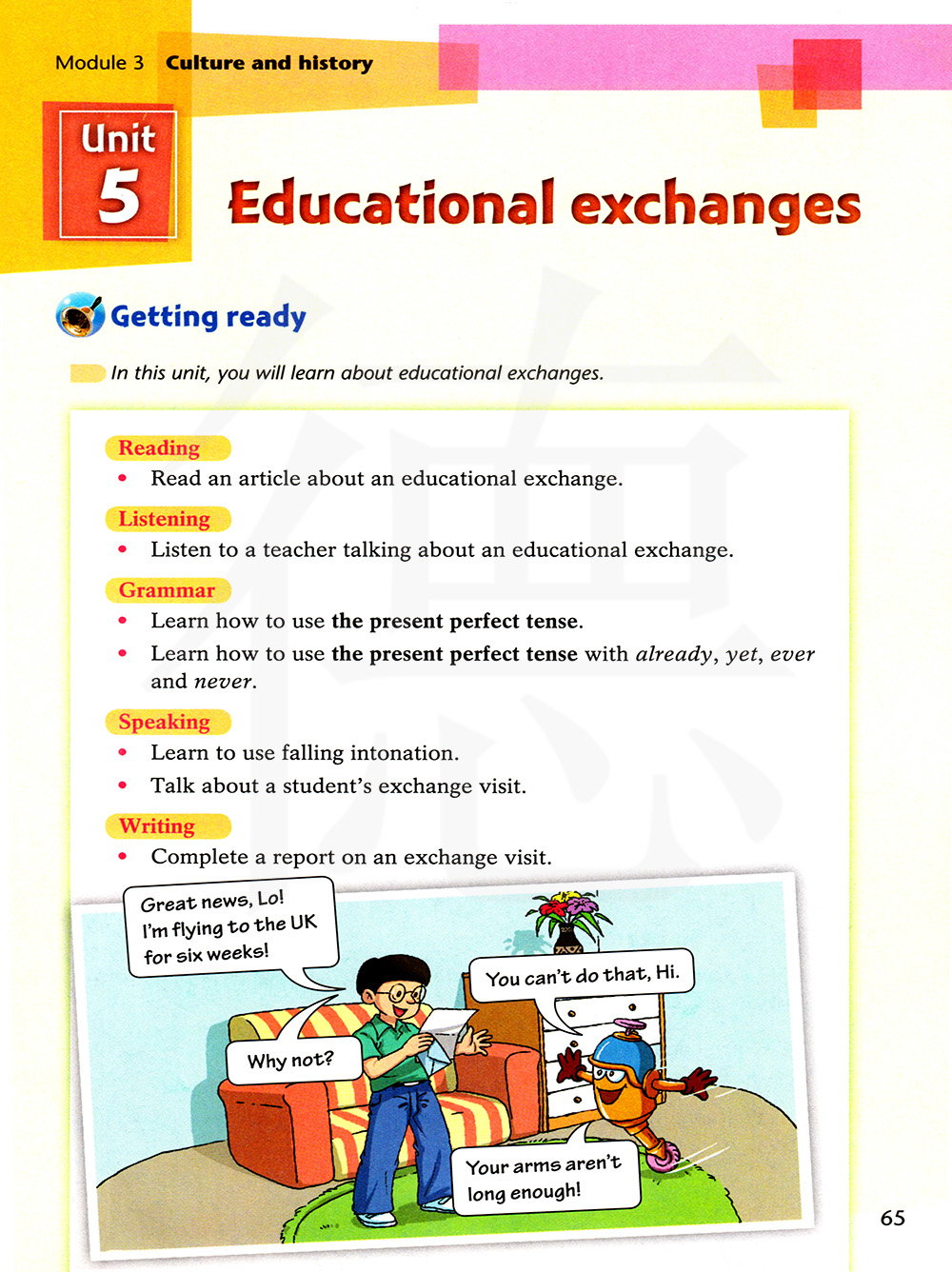
知识点
【重点短语】
1. educational exchange 教育交流
2. an exchange visit 一个交流参观
3. host family寄宿家庭
4. learn to use 学着用
5. at the weekend 在周末
6. place of interest 名胜古迹
7. a fantastic experience 一次极好的经历
8. at first 起初,起先= in the beginning
9. so far 到目前为止,迄今为止
10. a bit of 小量
11. introduce…to.. 使…初次了解…
12. as well 也
13. keep in touch with 保持联系
14. take part in 参加
15. be the same as 与…相同
16. come over (to…) (通常远距离地) 从…到…
17. be proud of/take pride in 以…为自豪
18. one and a half years= one year and a half
19. on time 准时/in time 及时
20. get ready for sth 为某事做准备
21. deal with 对待,处理
22.one another= each other 彼此
23. be glad to do sth 很开心地做某事
24. the rest of… …剩余部分
25. be friendly to sb 对某人友好/ make friends with sb 与某人交朋友
26. plan to do sth 计划做某事
27. try to do sth 尽力做某事
28. can’t wait to do sth 迫不及待做某事
29. practice doing sth 练习做某事
【重点句子】
1. Why not do sth? 为什么不做…?
2. What do they think of the exchange visit? 他们认为这次交流访问怎么样?
3. The students spend the weekdays studying with Chinese students. 学生们与中国学生一起学习度过工作日。
4. They taught our students how to use chopsticks. 他们教我们的学生如何使用筷子。
5. I’m glad to be a guest in their home. 我非常开心地成为他们家的客人。
【语法】
一、 现在完成时的概念。
①表示过去发生的动作对现在造成的影响或结果
She has been ill for three days. (她病了三天了。)
② 表示从过去某一时间开始一直持续到现在的动作或状态。
We've known each other since we were children. (我们从小就认识。)
I have been a member of the Party for 10 years.
③常与现在完成时连用的时间状语有:
just刚刚 yet 仍然,还 now 现在 lately 最后 ever 曾经 today 今天 never 从未 before 从前 recently 最近 already 已经 this week 本周 since 自从 for a long tine 很长时间了 since then 自那以来 so far 到目前为止 in the past/last few years 在过去/最近的几年
二、构成:”助动词have, has + 过去分词”
现在完成时态的肯定句、否定句和疑问句形式(以work为例):
|
人称
|
肯定
|
否定
|
疑问
|
回答
|
|
第一人称
|
I have seen the UFO. We have travelled around the world.
|
I haven’t seen the UFO.
We haven’t travelled around the world.
|
Haveyou seen the UFO?
Have you travelled around the world?
|
Yes, I have./ No, I haven’t.
Yes, we have./ No,we haven’t.
|
|
第二人称
|
You have been to England.
|
You haven’t been to England.
|
Have you been to England?
|
Yes, I/we have.
No,I/we haven’t.
|
|
第三人称
|
He/She has been to Beijing.
They have given concerts all over the world.
|
He/ She hasn’t been to Beijing. They haven’t given concerts all over the world.
|
Has he/ she been to Beijing? Have they given concerts all over the world?
|
Yes,he/she has.
No,he/she hasn’t.
Yes, they have.
No,they haven’t.
|
注:规则动词的过去分词的构成与过去是相同,不规则动词的过去分词见附表。