知识点
一、单词
1. trip n. 旅行,通常指短途旅行
eg:He is going to make a day trip to Hong Kong. 他想进行香港一日游。 I’m on a business trip to Japan. 我正在日本出差。
trip前面的介词用on, on a trip表示“在旅行期间”。
make/take/have a trip 短语都表示“旅行”
a trip to„(后接目的地) 意为“去„„的旅行”
eg:a trip to China 中国之旅 a trip to Wuhan 武汉之旅
2. kind 可数名词,意为“种类”。 常见短语有:
①a kind of 一种......
eg: The dog is a kind of animal. 狗是一种动物。
②all kinds of 各种各样的......
eg:There are all kinds of books in the bookshop. 这家书店里有各种各样的书。③many kinds of 许多种......
eg:There are many kinds of vegetables in the garden. 花园里有许多种蔬菜 3. different是形容词,意为“不同的”,后跟可数名词时用复数形式。difference为名词,意为“不同”。
eg: There are different kinds of animals here. 这儿有不同种类的动物。
be different from 不同于
eg: Your watch is different from mine. 你的表和我的不同。
4. Africa 非洲,其形容词形式是African。
类似结构的词还有:Asia—Asian 亚洲—亚洲的
Australia—Australian 澳洲—澳洲的
Europe—European 欧洲—欧洲的
America—American 美洲—美洲的
4. Live 此处为不及物动词,意为“活着,居住” 常用短语live in意为“住在...”后接地点名词。
5. alone 作副词时,意为“孤独地,独自地”修饰动词时,放在动词后面作状语。 eg:I like to work alone. 我喜欢独自一人工作。
作形容词时,意为“孤独的,单独的”,放在be动词之后。
eg:She is alone at home. 她独自一人在家。
alone和longly辨析
alone 孤独的,指的是独自一人
She is alone at home. 她独自一人在家。
lonely 孤独的,指内心的孤独
She is alone, but she don’t feel lonely. 她独自一人,但并不觉得孤独。
二、短语
1. such as “比如,例如”,后面跟所列举的事物。
eg:Tom has many hobbies, such as playing football, listening to music and climbing the mountains. 汤姆有许多爱好,例如踢足球,听音乐,爬山。
for example和such as 辨析
for example一般只以同类事物或人中的“一个”为例。如果作插入语,用逗号隔开。
eg: For example, London is the capital of Britain. 例如,伦敦是英国的首都。
Tony, for example, is a good student. 例如,托尼就是个好学生。
such as 用来列举同类人或事物中的几个例子。
eg: He can speak many foreign language, such as English, Japanese, Spanish. 他会说多种外语,例如英语,日语,西班牙语。
2. a kilo of... 表示“一千克„„”
而“两千克或两千克以上„”用“基数词 + kilos + of„”表示
Eg: I want three kilos of oranges. 我想要3千克橘子。
3. all over the world ( = all around the world)意为“世界各地”
eg:The students come from all over the world. 学生们来自世界各地。
The summer camp welcomes people from all over the world. 夏令营欢迎来自世界各地的人们。
4. as well as意为“并且,还有,也” .
eg:Tom knows Chinese as well as English. 汤姆不但懂英语而且懂汉语。
三、基本句型
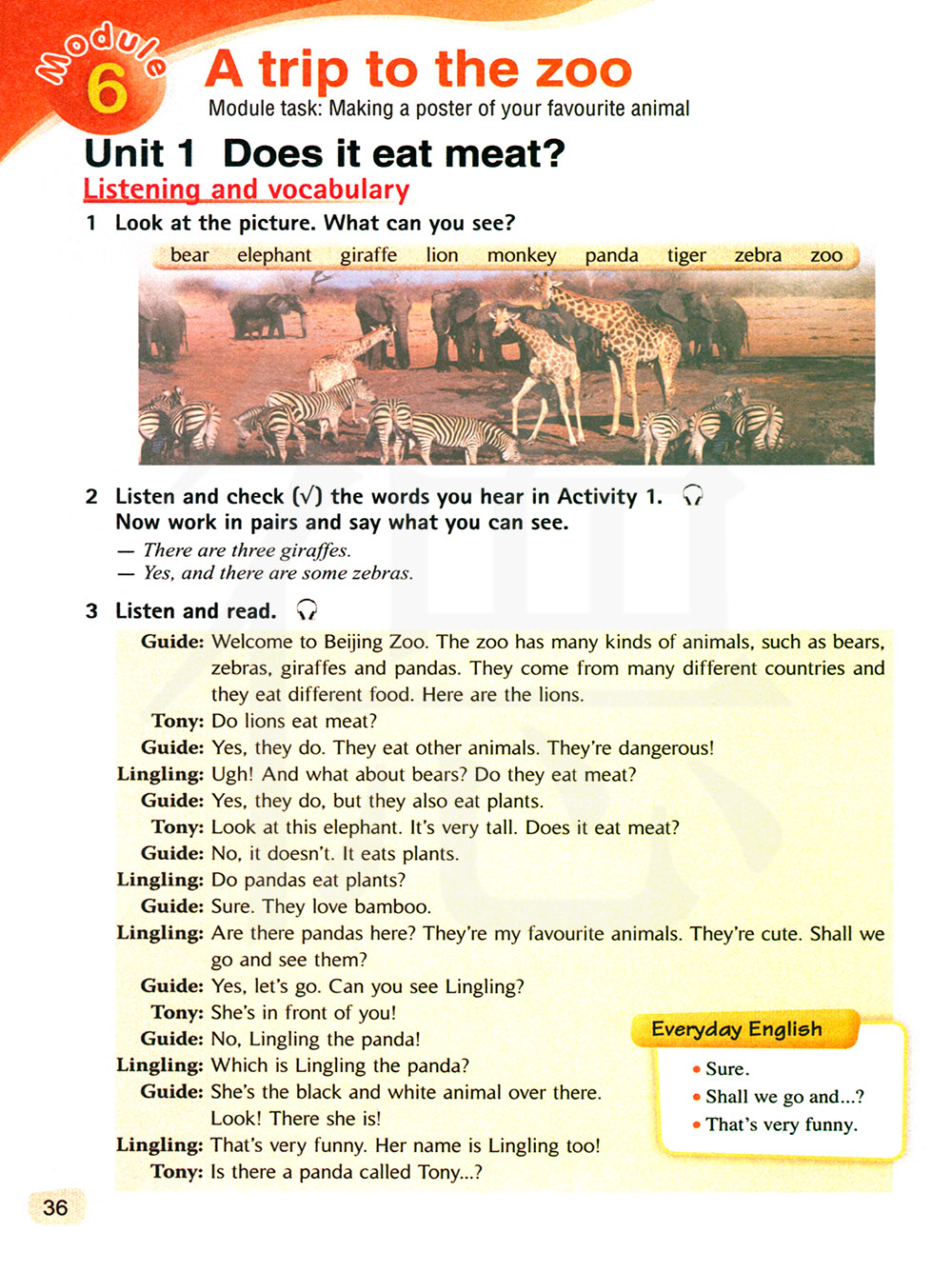
1. Welcome to Beijing Zoo. 欢迎来到北京动物园。
welcome to… 意为“欢迎来到……”
eg:Welcome to our school. 欢迎来到我们学校。
2. Is there a panda called Tony...? 有叫托尼.....的熊猫吗?
called Tony意为“被称为托尼的”,此处在句中作a panda的后置定语,相当于named
Eg: a girl called Lucy = a girl named Lucy 一个叫露西的女孩
a city called Shanghai = a city named Shanghai 一个叫上海的城市
四、语法
1. 倒装句
Look! There she is! 看!她在那儿!
这句话的正常语序是“Look, she is there.” there提前是为了强调地点。 副词there, here等置于句首使用倒装语序。 eg: Look, here comes the bus! 看,公共汽车来了!
注意: 当主语是名词时用完全倒装,即“There/Here + 谓语 + 主语” 当主语是人称代词时,则不用倒装,即“There/Here + 主语 + 谓语”
eg: Here are the books. 给你书。
There goes the thief! 有贼!
There you go again. 你又来这一套。
Here you are. 给你。
2. 宾语从句
Some people think it carries water in the humps on its back, but it’s not true. 一些人认为骆驼背上的驼峰里贮存着水,但这不是真的。
“it carries water in the humps on its back”作think的宾语,因为作宾语的是个句子而非一个词,故称之为宾语从句。“Some people think”是主句部分;而“it carries water in the humps on its back”是从句部分。
eg:I think (that) he is right. 我认为他是对的。
I hope (that) everything will be fine. 我希望一切都好
3. 行为动词的一般现在时
①主语是第三人称单数的行为动词的一般现在时否定形式是在行为动词的前面加doesn’t(does not),这时要注意把谓语动词还原为动词原形。
Eg:Peter has breakfast every day.
Peter doesn’t have breakfast every day.
Paul plays basketball on Wednesday.
Paul doesn’t play basketball on Wednesday.
②主语是第三人称单数的行为动词的一般现在时疑问式是在句首加助动词does,后面的谓语动词还原为动词原形.其肯定与否定回答用Yes, X does./ No, X doesn’t. 如下面表达方式:
Does X„? Yes, it does./ No, it doesn’t.
Eg:Does he have breakfast every day ?
Yes, he does./ No, he doesn’t.
Does he play basketball on Wednesday?
Yes, he does./ No, he doesn’t.
五、知识拓展
1. 表示来自有2种说法:come from/ is from。
eg: He comes from America.他来自美国。
He is from America. 他来自美国。