知识点
一、单词
1. family n. 家; 家庭(成员) 集合名词。
(1)作 “家,家庭整体” 讲,做主语时,谓语动词用单数形式。
eg. My family is a big one. 我家是个大家庭。
(2)作“家人,家庭成员” 讲,做主语时,谓语动词用复数形式。
eg:My family are watching TV. 我的家人在看电视。
2. woman n. 成年女子,妇女 复数形式( pl.) women
man n. 成年男子,男人 复数形式( pl.) men
当man和woman作定语修饰后面的名词,要随着后面名词的复数而变复数。
eg. three women teachers 三名女教师 two men doctors 两名男医生
3. police n. 集合名词,表示警察(总称),单复数同形。前面一般要用定冠词the,作主语时,谓语动词用复数形式。
eg. The police are looking for the lost boy. 警察正在寻找那个丢失的男孩。
4. job是可数名词, 意为“工作”;
eg. My father has a job in a factory. 我的父亲在一家工厂里有一份工作。 work作名词,意为“工作”,是不可数名词;作动词, 意为“工作”,是不及物动词。
eg. He can’t find work/a job in the city. 他在城里找不到工作。
I have a lot of work to do evry day. Jack works evry day. 杰克每天工作。
5. same adj. 相同的 pron. 相同的(人/物)
(1) same 作形容词, 意为“相同的”,在句中作定语,常与定冠词the连用。
eg.The shoes are the same size. 这些鞋是相同的。
(2) same 作代词意为“相同的(人/物)”。 常用结构:the same as... 和...一样
eg. I think the same as you do about it. 在这件事上,我的想法和你的一样。 My birthday and hers are the same. 我和她的生日是同一天。
二、短语
1. in front of与in the front of
(1)in front of 在...(某物体范围外)的前面。
eg. The school is in front of my home. 学校在我家的前面。
(2)in the front of 在...(某物体范围内)的前面。
eg. The blackboard is in the front of my classrom. 黑板在教室的前面。
2. go to hospital 去医院看病
go to the hospital 去医院(不一定是病人)
be in hospital 生病住院
be in the hospital 在医院里(不一定是病人)
三、基本句型
1. 确认人物的句型:
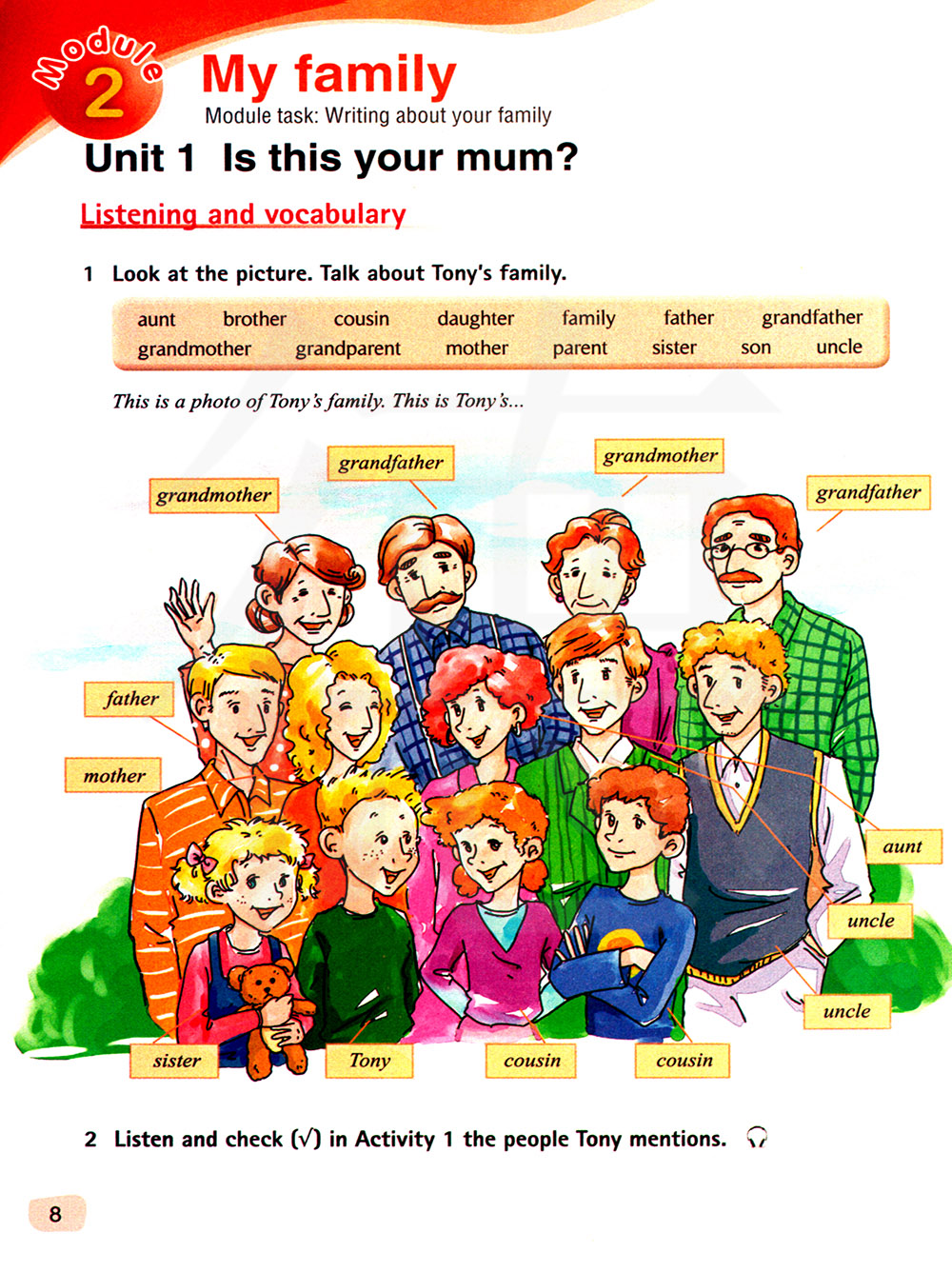
---Is this your mum?这是你的妈妈么?
---Yes, she is./No, she isn’t. 是的,她是。//不,她不是。
---Are these your parents?这是你的父母么?
---Yes, they are. /No they aren’t. 是的,他们是。/不,他们不是。
2. 询问某人是谁的句型:
---Who’s the girl in red? 穿红色衣服的女生是谁?
---She is my friend. 她是我朋友。
---Who is the boy on the left?左边的男生是谁?
---He is my brother. 他是我哥哥。
3. 表示位置关系的句型:
---My mum is on the left/on the right. 我妈妈在左边/右边。
---Her husband sits next to her. 她的丈夫在她旁边。
---I’m in front of Li Lei. 我在李磊的前面。
4. 询问某人职业的句型:
---What’s your father?/ What’s your father’s job? 你父亲是干什么的? ---My father /He is a doctor. 我的父亲是一名医生。
---What do you do? 你是干什么的?
---What’s your sister? 你姐姐是干什么的?
5. 表示某人职业的句型:
---My father is a manager. 我的父亲是一名经理。
---Her mother is a nurse. 她的妈妈是一名护士。 -
--I’m a teacher. 我是一名老师。
四、语法
1. 指示代词
(1) this / these 意为 “这个;这些”,表示在时间或空间上离说话人较近的人或物。 eg: This is my bike. 这是我的自行车。
These bikes are mine. 这些自行车是我的。
(2) that /those意为 “那个;那些”,表示在时间或空间上离说话人较远的人或物。eg: That is his book. 那是他的书。
Those books are his. 那些书是他的。
2. 名词所有格
(1) 在名词后加“’s”,(常用于有生命的名词)。
eg: These are Tom’s books. 这些是汤姆的书。
(2) 在名词前加 “of ” (常用于无生命的名词)。
eg: I like the colour of the desk. 我喜欢这个桌子的颜色。
!(a)以字母s结尾的单数名词或复数名词,在词尾直接加” ’ ”,不加s.
eg: This is Thomas’ room. 这是托马斯的房间。
These are the students’ books. 这些是学生们的书。
(b)不以s结尾的复数名词,在词尾加 “’s ”。
eg:Today is Children’s Day. 今天是儿童节。
(c)表示两者或两者以上共同拥有时,只在最后一个名词后用所有格。但表示两者或两者 以上分别拥有时,在名词后分别使用所有格。
eg: This is Jim and Tom’s book. 这是吉姆和汤姆共有的书。
These are Jim’s and Tom’s desks. 这些分别是吉姆和汤姆的书。
(d) 当 “’s”所有格和of所有格结构一起使用时,叫做“双重所有格”。其构成有两种形式: of + 名词所有格of + 名词性物主代词
eg: He is a friend of my father’s. 他是我爸爸的一个朋友。
She is a friend of mine. 她是我的一个朋友。
(e)“s” 所有格后面常省略表示地点、场所的词。
eg: He often goes to his uncle’s. 他经常去他叔叔家。
五、知识拓展
1. who与whom
who在句中一般做主语,有时在口语中,用作动词的宾语。
whom在句中作宾语,口语中可与who替换,但在介词后面作宾语时,只能用whom。eg. Who is your teacher? 谁是你的老师?
Whom/Who do you like best? 你最喜欢谁?
Whom are you looking for? 你找谁?
2. what, how引导感叹句的用法:
(1)what修饰名词或代词,在句中作定语。
What + a/an + adj. + 单数名词+主语+谓语。
eg. What a tall building it is! 它是一个多么高的楼啊!
What + adj. + 复数名词/不可数名词 + 主语 + 谓语。
eg. What interesting stories they are. 它们是多么有趣的故事啊!
What nice weather it is. 多么好的天气啊!
(2)how修饰形容词和副词,在句中作状语。
How + adj./adv. + 主语 + 谓语。
eg: How interesting the book is. 这本书是多么有趣啊!
How hard they are studying. 他们正在多么努力地学习啊!
3. 表示方位的词归纳:
behind 在...后面
beside 在...旁边
on the left ( right ) of... 在......左(右)边
next to 在---旁边,紧挨着
on the left 在左边
on the right 在右边