知识点
【单词拓展】
1. shake v.
→shaking (n.) 摇动
2. direct v.
→direction(n.) 方向
3. live v.
→alive (adj.) 活着的
4. safe adj.
→safety(n.) 安全
5. fear (n.)
→fearful(adj.)可怕的、担心的
【短语归纳】
1 wake up 醒来
2 crash into 撞上……
3 fall from 从……上跌落下来
4 mop up 把……拖干净
5 wash away 冲走
6 catch fire 着火
7 feel a slight shake 感到轻微震动
8 run out of 从……中跑出
9 in all directions 四面八方
10 come down 坍塌
11 not…at all 一点也不
12 a moment of fear 片刻的恐惧
13 calm down 冷静下来
14 shout for help 呼救
15 move away 移开
16 find one’s way out 找到出路
17 at last 最后,终于
18 break down 出故障,坏掉
19 because of 因为,由于
20 as…as possible 尽可能
【重点句型】
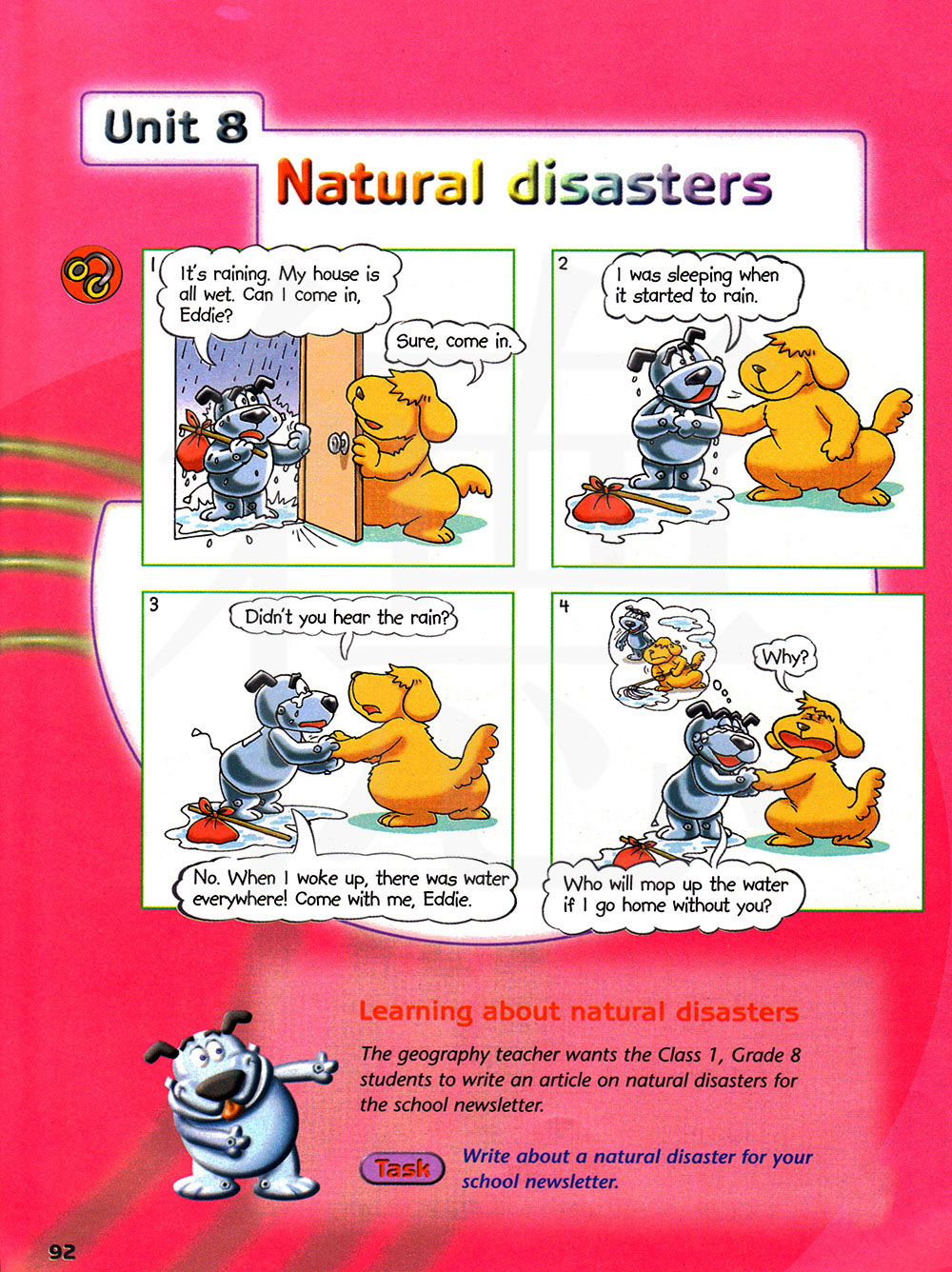
1. Who will mop up the water if I go home without you? 如果你不跟我回家,谁将拖干水呢?
2. There was a heavy storm with thunder and lighting. 有一场暴风雨,电闪雷鸣。
3. Lighting hit a classroom building and it caught fire. 闪电击中了一栋教学楼,并引发了火灾。
4. I was sleeping when the earthquake started. 地震发生时我正在睡觉。
5. Outside, people were running in all directions while pieces of glass and bricks were failing down. 外面,人们四处奔跑,成片的玻璃与砖头纷纷落下。
6. A moment of fear went through my mind, but I told myself to calm down since I was still alive. 我的脑海里闪过片刻的恐惧,但我告诉自己要冷静,因为自己还活着。
7. Luckily, there was just enough space for me to move. 幸运的是,有足够的空间来容我移动。
8. I was trying to find my way out, I suddenly heard some noise above me. 当我正在尽力寻找出路时,我突然听到楼上有嘈杂声。
【语法点拨】
过去进行时的结构及用法
过去进行时态表示过去某一时间正在进行的动作行为。过去进行时与一般过去时一样,也常和表示过去的时间状语连用。
肯定结构:主语+was/were + doing+其他
否定结构:主语+was/were + not + doing+其他
一般疑问句结构:Was/Were+主语+doing+其他?
答语:Yes,主语+was/were,/ No,主语+wasn’t/weren’t.
特殊疑问句结构:特殊疑问词+ was/were+主语+ doing+其他?
when,while和as的用法
(一)as的意思是“正当„„时候(just as,at the same moment that)”“随着„„(while,when)”,它既可表示一个具体的时间点,也可以表示一段时间。as可表示主句和从句的动作同时发生或同时持续,即“点点重合”“线线重合”;又可表示一个动作发生在另一个动作的持续过程中,即“点线重合”,但不能表示两个动作一前一后发生。如果主句和从句的谓语动词都表示持续性的动作,二者均可用进行时,也可以一 - 2 - 个用进行时,一个用一般时或者都用一般时。例如:
1、As I got on the bus, he got off. 我上车,他下车。(点点重合)
2、 He was writing as I was reading. 我看书时,他在写字。(线线重合)
3、 The students were talking as the teacher came in. 老师进来时,学生们正在讲话。(点线重合)
(二)while的意思是“在„„同时(at the same time that )”“在„„期间(for as long as, during the time that)”。从while的本身词义来看,它只能表示一段时间,不能表示具体的时间点。在时间上可以是“线线重合”或“点线重合”,但不能表示“点点重合”。例如:
1、He was watching TV while she was cooking. 她做饭时,他在看电视。(线线重合)
2、 He was waiting for me while I was working. 我工作的时候,他正等着我。(线线重合)
3、 He asked me a question while I was speaking. 我在讲话时,他问了我一个问题。(点线重合)
(三)when的意思是“当„„时候(at the time that)”“无论什么时候(whenever)” “一„„就„„(as soon as )” “在„„以后(after)”。它表示的时间概念比较广泛,上述例句中的as或while均可用when代替,因为when不但可以表示具体的时间点,而且也可以表示一段时间。在时间上它既能表示“点点重合”“线线重合”,又能表示“点线重合”。例如:
1、When he came in,she went out. 他进来,她出去。(点点重合)
此句中when从句的动作表示的是一个时间点,when可以用as代替,但不能用while代替。
2、When he came back,I was doing some washing. 他回来时,我在洗衣服。(点线重合)
此句中when从句的动作表示的是一个时间点,所以只能用as代替,不能用while代替。
3、 When Mary was writing a letter, the children were playing outside. 玛丽写信时,孩子们都在外面玩。(线线重合)
此句中的when从句的动作表示的是一段时间,故可用as 或 while代替。