知识点
【单词拓展】
1.mixedn.男女混合的;混合的
→mix vt.&vi.混合
2.foreign adj.外国的
→foreigner n.外国人
3.discussvt.讨论,议论
→discussion n.讨论
4.win vt.&vi.赢得;赢,获胜
→winner n.获胜者
5.dailyadj.每日的,日常的
→day n.一天,白天
6.weeklyadj.每周的
→week.n.周,一星期
7.quickadj.快的
→quickly adv.快地,迅速地
8.real adj.真实的,真的
→really adv.真正地
9.French n.法语
→French adj.法国的
→France n.法国
10.American adj.美国的
→America n.美国
11.British adj.英国的
→Britain n.英国
12.advertisement n.广告
→advertise vt.&vi.做广告,做宣传
【短语归纳】
1.have plans for the weekend 有周末安排
2.have a lovely time 玩得高兴,过得愉快
3.keep(on)doing something 继续做某事,重复做某事
4.finish school 放学
5.wear school uniforms 穿校服
6.go on a school trip 进行一次学校旅行
7.among all my subjects 我所有的学科当中
8.during the week 在一周期间
9.borrow more books from the school library 从学校图书馆借更多的书
10.bring in books and magazines from home 从家里带来书和杂志
11.near the end of the week 在一周快结束的时候
12.discuss something with somebody 和某人讨论某事
13.in the 8th grade 在八年级
14.1isten carefully to my problems 仔细倾听我的问题
15.offer somebody something/something to somebody 向某人提供某物
16.earlier than usual 比平常更早
17.win two games 赢两场比赛
18.read an article by a boy from the USA 读一篇美国学生写的文章
19.have some time off 休一段时间假
20.1ook through the questions 浏览问题 ²
【句型分析】
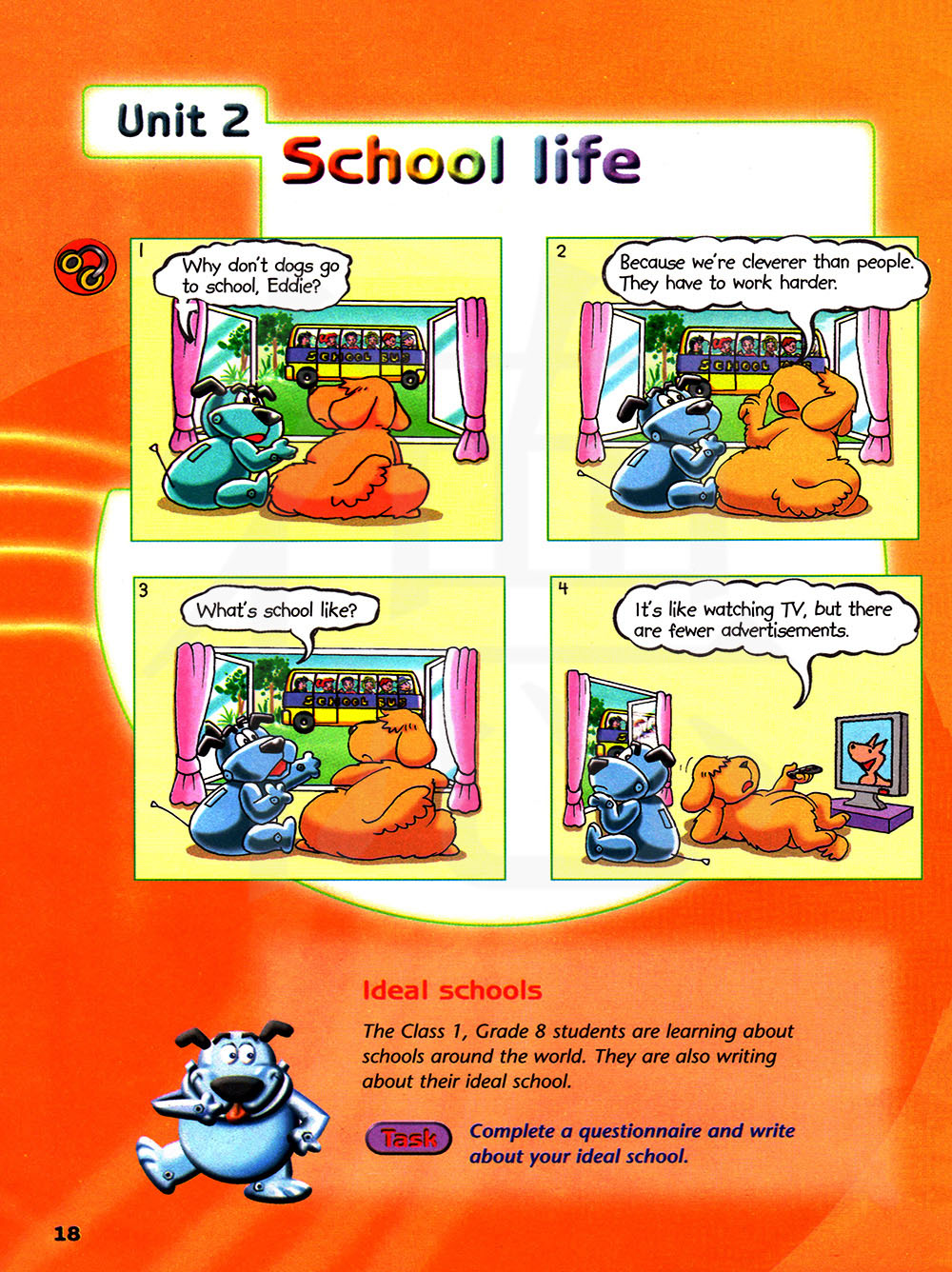
1.Why don’t dogs go to school,Eddie?
这是个否定疑问句。这句话的意思是:“埃迪,为什么狗不上学呢?”。言外之意:“埃迪,狗也应该上学啊!”。“Why don’t/doesn’t/didn’t+主语+谓语动词+其他”相当于“why not+谓语动词+其他”,意为“为什么不;为何不”,通常表示一种建议或责备。如:
Why don’t you(=Why not)go to the party and see for yourself? 你为什么不亲自去聚会上看看呢?
Why didn’t they go to the cinema last night? 他们昨晚为什么没有去看电影呢?
Why not have a goodsleep? 为什么不好好睡一觉呢?
2.Shall we go together?
此句意为:我们一起去好吗?Shall we…?意为“我们……好吗?”,用于征求他人意见、向他人提出建议或请求他人的许可。如:
Shall we go to the museum this afternoon? 今天下午我们去博物馆好吗?
表示提建议的常用句型还有:
Could/Would you please do something?请你做某事好吗?
Shall we/I do something?我们/我做某事好吗?
Let’s do something.让我们做某事吧。
Why don’twe/you do something? 我们/你们为什么不做某事呢?
Why not do something? 为什么不做某事呢?
You’d better do something.你最好做某事。
Would you like to do something?你想要做某事吗?
How/What about something/doing something? (做)某事怎么样?
3.Learning foreign languages is fun.
此句意为:学习外语很有趣。这里的learning foreign languages是一个动名词短语,在句中充当主语。在英语中,当动名词(短语)用作主语时视为一个整体,谓语动词用单数形式。如:
Swimming is my favourite sport.游泳是我最喜爱的运动。
Living in the country is much quieter than living in the city.住在乡下比住在城里要安静得多。
4.I read all article by a boy from the USA.
此句意为:我读了一篇文章,是一个美国男孩写的。句中的by用作介词,意为“由/被……创作”,an article by…可表示成an article written b y...,意为“由……写的文章”。如:
This is an article(written)by Lu Xun.这是一篇鲁迅写的文章。
—Who was the music by?这首乐曲是谁创作的?
—It was by Mozart.是莫扎特创作的。
5.I spend less time doing homework than Nancy.
句中的doing可以改为to do吗?不可以。这里用了一个spend…(in)doing something的结构,意为“花费……做某事”。此时,spend的主语必须是“人”,宾语可以是“时间、金钱、精力”等,用on接名词或用in(通常省略)接动词-ing形式,不能跟动词不定式。如:
He spends a lot of money on story-books.
=He spends a lot of money(in)buying story-books. 他花费很多钱买故事书。
We spend one and a half hours on homework every day.
=We spend one and a half hours(in)doing homework every day. 我们每天花一个半小时做家庭作业。 ²
【易混辨析】
1. used to do sth. (过去常常做某事)
be used to do sth.(被用来做某事)
be used to doing sth. (习惯于做某事)
2. pleasant, pleased, pleasure
(1)pleasant令人高兴的,令人愉快的,作定语,用来修饰事物不能修饰人。
(2)pleased一般作表语,常用的结构:sb. be pleased at sth. /doing sth. Sb. be pleased with sth., sb. be pleased that…
(3)pleasure n.愉快,乐趣 It’s a pleasure to do sth. do sth. with pleasure