知识点
短语:
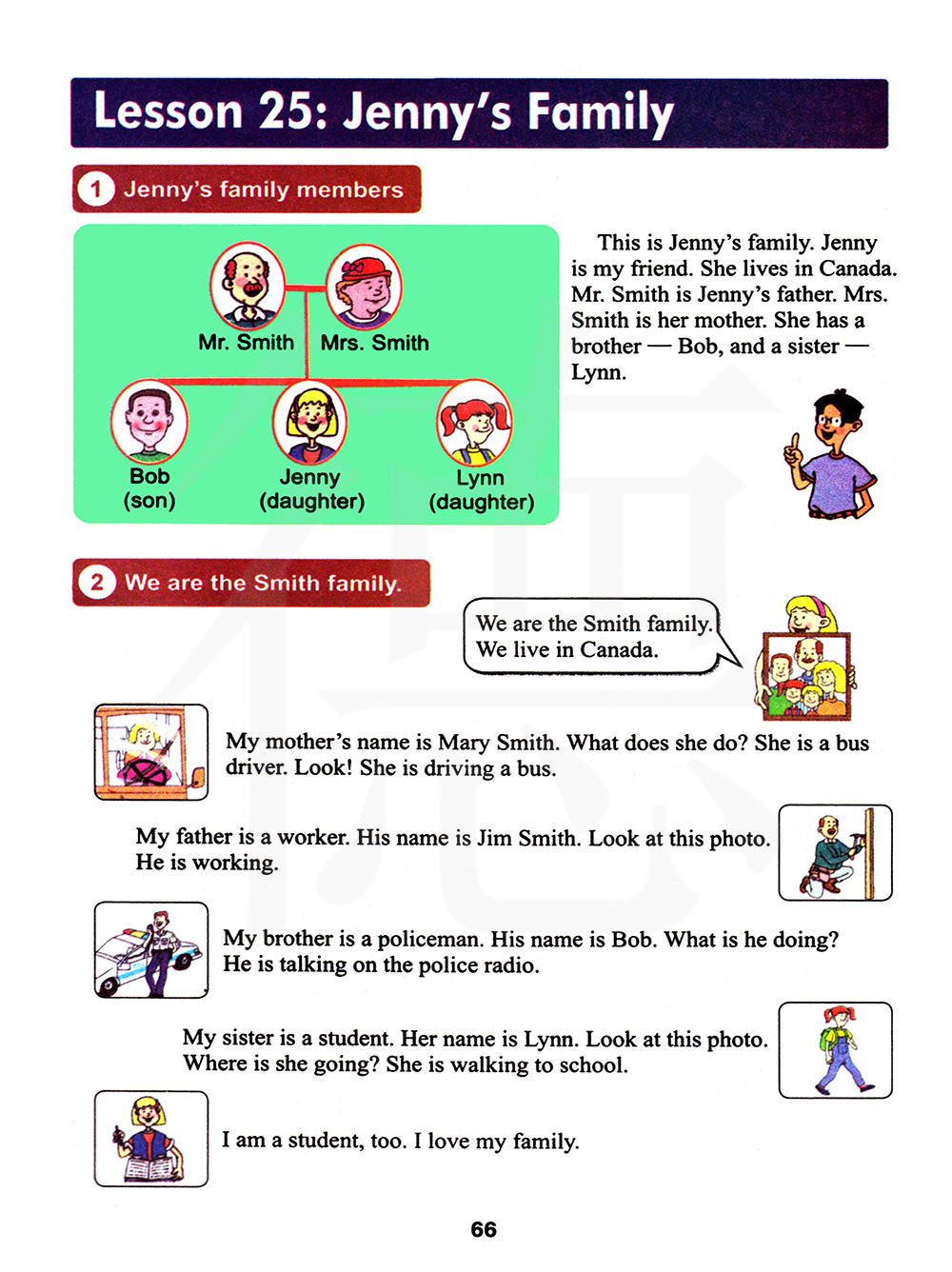
1.a happy family 一个幸福的家庭
2. Jenny’s family 珍妮的家庭
3.live in 居住
4.the Smith family= the Smiths 史密斯一家/夫妇
5.a police officer 警官
6.a bus driver 公车司机
7.come to 来到
8.a birthday cake 生日蛋糕
9.have a birthday party 举办生日聚会
10.sing a birthday song for me为我唱生日歌
11. get many presents 收到许多礼物
12.make dumplings 包饺子
13.work together一起工作
14.above the bed 在床的上方
15.under the bed在床下
16.beside the bed在床边
17.behind the door 在门后
18.in front of 在…前面
19.on the wall 在墙上
20.talk with sb on the phone 在电话上交谈/ talk on the phone 打电话
21.watch TV 看电视
22.go to sleep 入睡
23.play on the computer 玩电脑
24.lie on the bed 躺在床上
25 listen to the radio听收音机
26.do one’s homework 做作业
27. Time for sth 是…时间了
28. How about = What about …怎么样?(根据不同的语境有不同的翻译)
29.brush teeth刷牙
30.wash face/hands 洗脸/手
31.take a shower 洗澡
32.comb hair 梳头
33.put on 穿上
重点、难点分析:
1. father and mother父亲和母亲
(1)可用parents代替,用复数形式表示父母双亲;如果表达father or mother则为单数parent。如:
Mary is from a family of a parent. 玛丽来自一个单亲家庭。
My parents are watching TV. 我父母正在看电视。
(2)father和mother为正式用语,一般用在较正式的场合;称呼父亲母亲一般不用father和mother,在口语中常用dad和mum,也可用daddy和mummy。如
My father is a worker. 我父亲是一名工人。
My mother is very great. 我的母亲很了不起。
(3)father的其他用法
①(father常用复数)祖先 sleep with one's fathers葬在祖坟
②创始者;倡导者 the Father of English poetry英诗鼻祖
③固定搭配 Father Christmas圣诞老人 Father's Day父亲节
(4)mother的其他用法
①根本;来源 Necessary is the mother of invention. (谚语)需要乃发明之母。
②固定搭配 mother tongue母语;本国语Mother's Day母亲节
2. How old are you? 你多大了?
(1)此句也可表达为What's your age?
—How old are you?你多大了?
—I'm ten (years old).我十岁了。
(2)old的其他用法
①年老的;老的 the old and young老年人和青年人
②旧的 This is my old pen. 这是我的旧钢笔。
③熟悉的 He is an old friend of mine. 他是我的老朋友。
3. family家,家庭
(1)family意为“家,家庭”,若强调一个整体,谓语动词用单数;若强调家庭中的每一个成员,谓语动词则用复数形式。如:
My family is a big one. 我们家是一个大家庭。
His family are going to travel to the USA. 他全家打算去美国旅行。
(2)固定搭配
family name姓
What's your family name? 你姓什么?
family tree家谱
(3)与family有相同用法的还有以下几个单词:class(班级),people(人民),police(警察)等。
(4)family,home和house这三个词都可以指“家”。
(a)family意为“家,家庭,家人”,着重指由家庭成员组成的社会基本结构—家庭或家庭中的每个成员,与居住的房屋无关。如:
I love my family. 我爱我家。
The whole family will spend their holiday in Hainan. 全家将在海南度假。
(b)home意为“家,家园”,指与家人共同居住的地方,强调家庭成员居住的环境和氛围,不可以用来指人。如:
I have to stay at home alone tonight. 今晚,我不得不一个人呆在家里。
His home is in Shanghai. 他家在上海。
①有时可指出生的城市或国家,带有感情色彩。如:
home town故乡 old home老家
②home还可以用作副词,表示“在家,到家”。如:
Mike is at home. 麦克在家里。
Let's go home. 我们回家吧。
(c)house意为“房子,房屋”,侧重指住所,即建筑物。如:
There are many trees in front of my house. 我家前面有许多树。
4. grandfather and grandmother(外)祖父母
(1)又可昵称为grandma and grandpa,其中grand为前缀,还有以下单词。如:grandson(外)孙子和granddaughter(外)孙女
(2)还可替换为grandparents祖父母,外祖父母。如: Both of his grandparents died many years ago. 他祖父母均是许多年前去世的。
(3)奶奶,外婆(口语)同granny。如: I met a granny on my way home. 我在回家的路上碰上一位老大娘。
5. I have a friend named Jenny Smith. 我有一名叫詹妮·史密斯的朋友。
(1)name既可作名词,又可作动词。在上句中为动词的过去分词作定语,意为“名叫……”,可与called换用。如:
My name is Lily. 我的名字是莉莉。
My sister has a cat named/called Tony. 我妹妹有只名叫托尼的小猫。
(2)name作动词:还可意为
①给……取名;命名 The parents named their child“Congcong”. Because they hope he will be clever. 父母给他们的孩子取名为“聪聪”,因为他们希望他聪明。
②说出……的名字 Can you name all the plants and trees in this garden? 你能说出这个花园里所有花草树木的名称吗?
③提名;任命 They named Mr Green manager of the company. 他们任命格林先生为公司经理。
6. the Smith family史密斯一家 也可表达为The Smiths,定冠词加上姓氏的复数可表示“××一家人”或“××夫妇二人”,作主语时,谓语动词用复数形式。如: The Green family are very friendly. The Greens are very friendly. 格林一家很友善。
7. have a birthday party举行生日宴会
(1)have有“举行,举办”的意思,还有以下短语:have a concert举行一场音乐会;have a meeting开会;have a sports meeting举行运动会等。
(2)have的其他用法
①有;拥有;据有How many books do you have?你有多少本书?
②have to必须(做某事);不得不 Do you have to go to the dentist's?你必须去看牙吗?
③吃;饮 What shall we have for dinner?我们晚餐吃什么?
(3)固定搭配
have a drink of. . . 喝一点儿……
have a cough(患)咳嗽
have a good time玩得高兴
have a look看一看
have a rest休息一会儿
have a swim游泳
have breakfast吃早餐
8. I will have a birthday cake and candles.我将有一个生日蛋糕和一些蜡烛。
(1)“will+动词原形”为一般将来时的构成形式,表示将要发生的动作。 will是助动词,一般疑问句中,will可提前。如:
They will plant more trees in the park. 他们将在公园里植更多树。
Will they plant more trees in the park? 他们将在公园里植更多树吗?
(2)be going to和will都表将来。will表示单纯的将来的事实,在美国通用于所有人称,在英语用于第二、三人称。be going to表示某人的主观愿望,有“打算,想要”之意;比如有根据的天气预报用will,而常人对天气的推测多用be going to。如:
①It's going to rain during the night,I think. 我认为今天晚上大概要下雨。
② There will be a strong wind to the north of the Huaihe River. 淮河以北地区有大风。
(3)have在本句中,意为“有”,强调一种某人对某物的占有或拥有;而我们学过的there be 句型也意为“有”,但强调的是一种客观的存在。但有时二者也可互换,但结构不同。如:
Betty has a beautiful doll. 贝蒂有一个美丽的布娃娃。
There are some books on the desk. 桌子上有些书。
There are four windows in this room. 这个房间有四个窗子。
This room has four windows. 9. Sure!当然!
(1)Sure!意为“当然!”表示对某事或请求的同意和肯定,相当于Certainly. OK. All right. 或Of course. 如:
—Will you please open the door?请你打开门,好吗?
—Of course. /Sure. /OK. /All right. /Certainly. 当然可以。
10. play的用法
(1)play作名词,意为“游戏,消遣”,另可译为“戏剧,剧本,表演”。如:
The children are at play. 孩子们在玩耍。
I like watching TV play. 我喜欢看电视剧。
(2)play作及物动词,意为“打(球),弹(乐器)”,但球类运动前不加the,乐器前必须加the,作不及物动词,意为“玩”。如:
The children are playing basketball on the playground. 孩子们在操场上打篮球。
Lily can play the flute. 莉莉会吹笛子。
Don't play with the fire. 别玩火。
(3)play的固定搭配
play an important role 起到重要作用
play in 奏乐迎入
play with 与…一起玩
play the game 玩游戏;行动光明正大;遵守比赛规则
play someone as (在比赛中)用某人担任…
fair play 公平竞争;公平比赛;平等对待
give full play to 充分发挥
play football 踢足球
play basketball 打篮球
in play 开玩笑地;比赛进行中
play for 为…而玩;效力…
play a role 发挥作用;扮演一个角色
play on 演奏;发生影响;利用别人的感情;继续比赛
play a part 装腔骗人;扮演角色;在…中起一份作用
at play 在玩
play the violin 拉小提琴
played out 结束;衰竭;失去作用
play ball 开始活动;开始赛球
play the role 扮演角色