知识点
短语
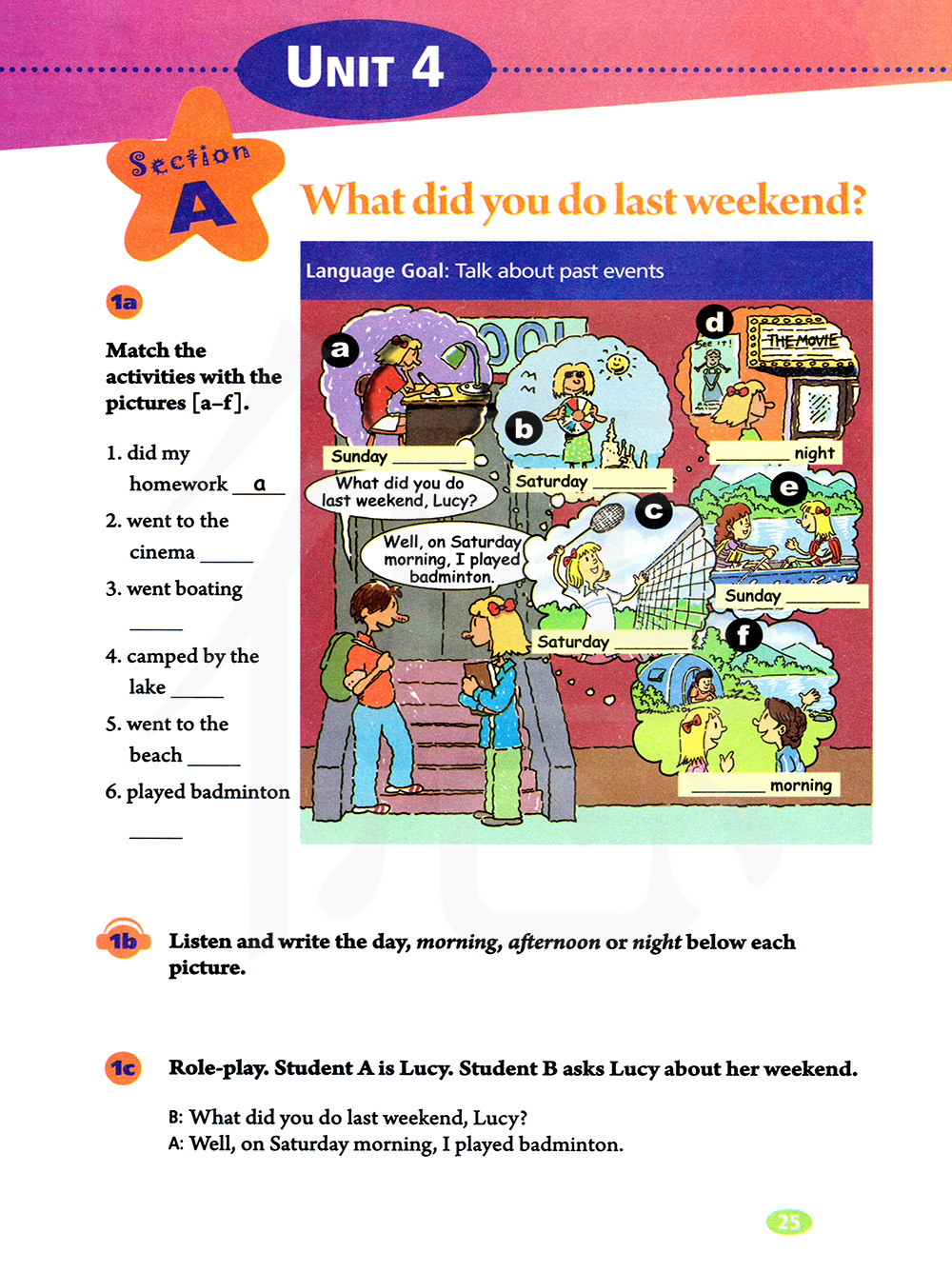
1.do my homework 做作业
2.go to the cinema 去看电影
3.go boating 去划船
4.by the lake 在湖边
5.go to the beach 去海滩
6.play badminton 打羽毛球
7.visit my grandma 看望我奶奶
8.study for the English test 为英语测验而学习备考
9.the Natural History Museum 自然历史博物馆
10. kind of 有点儿
11.stay up 深夜不睡,熬夜
12. give back 归还 13.be afraid 害怕
14. play the guitar 弹吉他
15.go to the library 去图书馆
16. in a swimming pool 在游泳池里
17. shout at… 冲……大声叫嚷
18. high school 高中,中学
19.fly kites 放风筝、
20. go camping 去野营
21.put up 搭建
22 .make a fire 生火
23.tell stories 讲故事
24 .each other 互相
25.go to sleep 入睡
26.get a surprise 吃惊
27.shout to… 呼喊……喊叫……
28.up and down 来来回回;上上下下
29.wake…up 把……弄醒
30.do my homework 做我的家庭作业
31.on Saturday morning 在星期六早上
32.have a good weekend 周末过得愉快
33.the next morning 第二天早上
34.work as 以……身份而工作
35.run away 跑开
36.move into … 移进……
用法集萃
1. go + doing 去做某事
2. play + 球类 玩……球
3. 时间段+ ago ……前
4. keep + sb. / sth. + 形容词 / 副词 / 介词短语 使……保持……
5. so + 形容词 / 副词+ that 句子 如此……以至于……
6. see sb. doing sth. 看见某人正在做某事
7. let sb. do sth. 让某人做某事
8. start to do / doing sth. 开始做某事
经典范文
I had a busy weekend. On Saturday morning, I did my homework, and then I played computer games. In the afternoon, I visited my grandmother. We talked for a long time.
On Sunday morning, I cleaned my room and did some reading. Then I cooked for m parents. In the afternoon, I watched a football match on TV and listened to music. I had a good time.
知识点解析
1. 表示“ 发生在过去的动作”,要用一般过去时,句中常含表示“过去”的时间。
一般过去时的结构:主语+V过去式。翻译时加上“…了”。
(不管主语是“单数”还是“复数”,动词始终用“过去式”)
2. –你上个周末做了什么? -- What did you do last weekend? (did引导,动词还原)
--在星期天上午,我打了网球。-- I played tennis on Sunday morning.
在上午/下午/晚上:in the morning/afternoon/evening
在星期天上午/下午/晚上: on Sunday morning/afternoon/evening
在上个星期天上午: / last Sunday morning (前不用冠词)
在上学的白天/晚上:on school days/nights
3. –Tina的周末怎么样? -- How was Tina’s weekend?
--它很棒:It was great.
–它还不错: It was not bad.
–它很糟糕:It was terrible.
4. 该是回家的时候了:It’s time to go home.
句型:该是做某事的时候了:It’s time to do sth
5.句型:某人花费时间在某事上:人+spend+时间+on sth
句型:某人花费时间做某事:人+spend+时间+doing sth
6. 句型:做某事怎么样? What/How about doing sth?
某人/某东西怎么样? What about sb/sth? 如:你怎么样? What about you?
7. 常用do, does, did, don’t, doesn’t, didn’t代替前文提到的动词。
8. 去爬山:go to the mountains 爬山: climb the mountains
去购物:go shopping
去看电影:go to the movies 看电影: see a movie = watch a movie
去散步:go for a walk 散步:take a walk
去图书馆:go to the library 去城市图书馆:go to the city library 9. 待在家里:stay at home
10. 为考试而学习: study for the test = study for exams
11. 举行派对:have a party 举行晚会: have an evening party
12. 阅读:do some reading
13. 去海滩:go to the beach (beach变复数+es)
14. 练习英语:practice English 句型:练习做某事: practice doing sth
15. 过了一个繁忙的某末:have a busy weekend (此处的have翻译为“度过”)
16. 一本关于历史的书:a book about history (此处的about翻译为“关于”,= on)
17. 带某人去某地:take sb to sp
18. 乘车去某地:go to sp by car (car前无其他单词,“乘”用by) = go to sp in their car (car前有其他单词,“乘”用 in)
19. (1) last 最后的;在最后一张照片里:in the last photo
(2) last 上一个;上个星期:last week 上个月:last month 去年:last year
20. (1) spend 度过; 如:How do you spend your summer holidays?
(2) spend 花费; 如: He spent two hours cleaning his room.
21. (1) for 对…来说; 如:对大多数的孩子来说:for most kids
(2) for 为,给; 如:为我烧晚饭: cook dinner for me