知识点
一、重点短语
1. at night在夜晚
2. in a more natural environment在一个更加自然的环境中
3. all year round一年到头;终年
4. be far from 离……远
5. in the dark 在黑暗中
6. in the past 在过去
7. have been to sp. 去过某地
8. science museum 科学博物馆
9. history museum 历史博物馆
10. amusement park 游乐园
11. go somewhere different 去不同的地方
12. go skating 去滑冰
13. take the subway 坐地铁
14. a great way to spend a Saturday afternoon一个过周六下午的好方法
15. all the old movie cameras所有的古老的电影摄影机
16. learn about sth.解有关。。。。的情况
17. on the weekend 在周末
18. camp in the mountains 在大山里露营
19. put up a tent搭帐篷
20. in such a rapid way 以如此迅猛的方式
21. different kinds of各种各样的
22. development of toilets 厕所的发展
23. social groups 社会团体
24. the tea art performances茶艺表演
25. make a perfect cup of tea with beautiful tea sets用漂亮的茶具沏一杯完美的茶
26. a nice place to enjoy tea 一个品茶的好地方
27. thousands of 数以千计的
28. International Museum of Toilets国际厕所博物馆
29. the Terracotta Army 兵马俑
30. Southeast Asia东南亚
31. Night Safari 夜间动物园
32. three quarters 四分之三
33. an English-speaking country一个讲英语的国家
34. have problem doing sth. 做某事很困难
35. during the daytime在白天
36. a couple of times 好几次
37. right now 现在;目前
38. an amusement park with a special theme.一个有特别的主题的游乐园
39. walk around the park 在公园里到处走
40. hear of 听说
41. take a ride兜风
42. another province另一个省
43. the Bird’s Nest鸟巢
44. encourage sb. to do sth.鼓励某人做某事
45. on the one hand... on the other hand.一方面,另一方面
二、重点短语归纳
1. thousands of 数以千计的,许许多多的;
2. three quarters四分之三;
3. close to贴近,邻近;
4. on the one hand...on the other hand一方面......另一方面......;
5. take a holiday度假;
6. whether...or...无论/不管„还是„;
7. practice doing sth.练习做某事;
8. at night在夜晚;
9. have problem doing sth.做某事遇到困难;
10. be asleep睡着(表示状态);
11. of course当然;
12. be far from远离;
13. English-speaking country说英语的国家;
三、重要句型
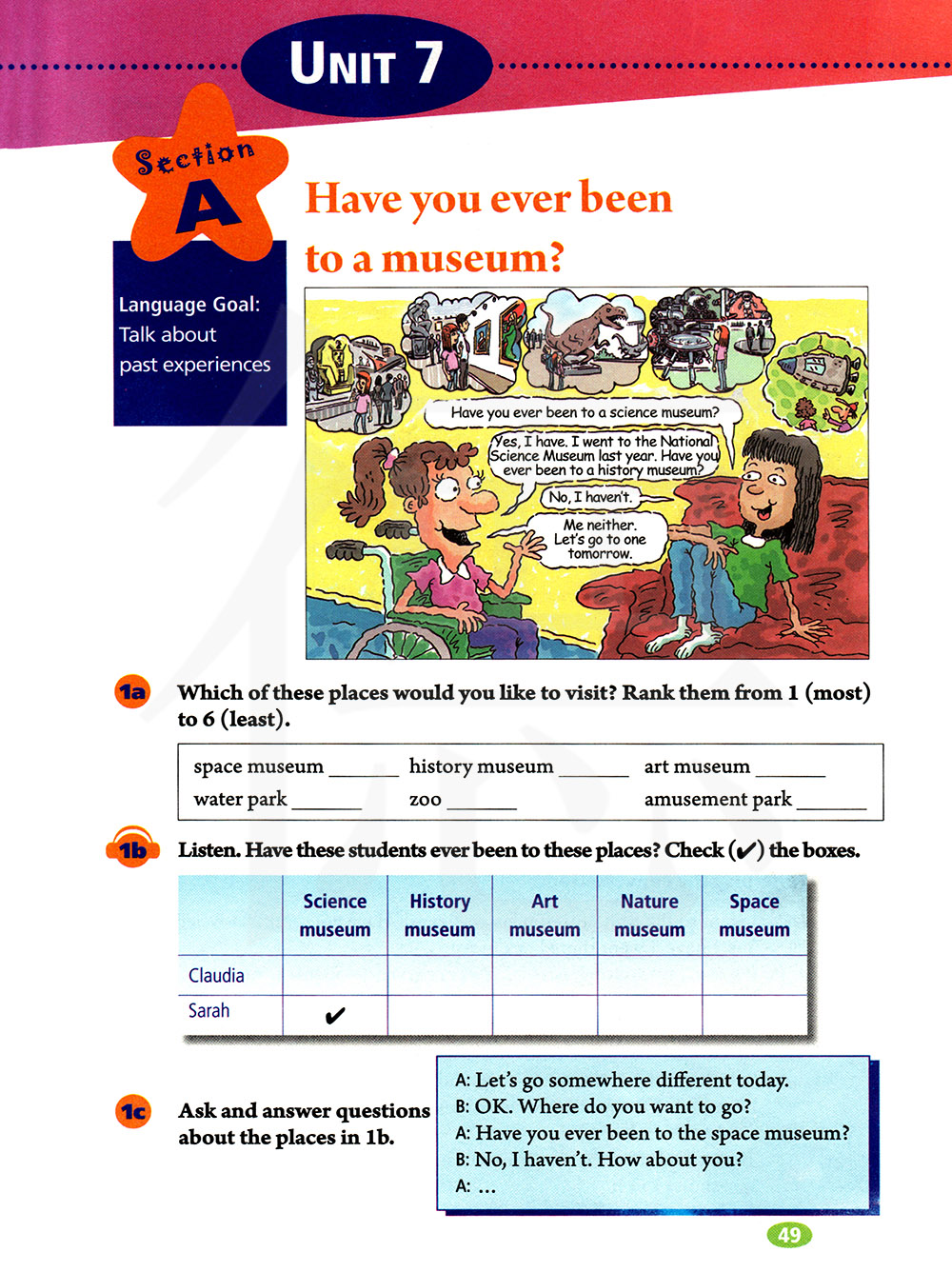
1 Have you ever been to... ? Have you ever been to a science museum? 你曾经去过科学博物馆吗?
2. Let’s. 。。。。 Let’s go somewhere different today. 我们今天去个不同的地方吧。
3. It’s~\~adj. +that... It9 s unbelievable that technology has progressed in such a rapid way! 科技以如此迅猛的方式发展真是令人难以置信啊!
4. Whether... , you,11...
Whether you like Indian food,Western food or Japanese food, you’ll find it all in Singapore! 不管你喜欢印度食品、西方食品还是日本食品,在新加坡你都能找到!
5. One great thing. . is that. . One great thing about Singapore is that the temperature is almost the same all year round. 新加坡一个很大的特征是它的气温几乎一年到头都是一样的。
It is best to do sth..
It is best to visit Singapore... 最好……游览新加坡。
语法讲解
一、 have/has been to 与have/has gone to
(1) “have/ has been to +地点名词”表示“去过某地”,表示某人的一种经历,说话时已不在那个地方, 常和once, twice, never, ever等连用。当地点为副词时,则要省掉no。
---Where have you been? 你去哪儿了?
---I’ve been to the post office. 我去邮局了。(人已不在邮局)
---Have you ever been to Shanghai? 你曾去过上海吗?
---No, I’ve never been there. 没有,我从来没有去过那儿。
(2) “have/has gone to+地点名词”表示“去了某地”,说话时某人已离开此地,在去某地的路上、已在某 地或在回来的路上,所以此句型常用于第三人称,不能与时间状语once, twice, never, ever等连用,也不能和for以及since构成的短语连用。
---Where is Simon? 西蒙在哪儿?
---He has gone to Australia with his family. 他和家人一起去澳大利亚了。(人已不在这儿,在去澳大利亚的路上、已在澳大利亚或从澳大利亚返回的途中)
助记
have/has been to, have/has gone to意不同,两者用法当分清。
have/has been to+地点,“曾经去过某地”行;
have/has gone to+地点,“已去某地”人无踪。
【拓展】“have/has been in +地点名词”表示“在某地待过(多久)”,常与表示一段时间的状语连用。
例如:Mr. Brown has been in Shanghai for three days. 布朗先生来上海已经3天了。
We have been in China since 5 years ago. 我们自从5年前就来中国了。
How long have you been in New York? 你在纽约多久了?
二、 非延续性动词与延续性动词
(1) 非延续性动词也称为短暂性动词或瞬息动词,这类动词所表示的动作往往在“瞬间”就完成了,动 作不能“持续”,可以用于完成时态,但在完成时态的句子中不能与表示一段时间的状语连用,如:since two days ago, for two years等。如果要表示该动作的延续,就需要将其转换为延续性动词或表示状态的词。
The film started two hours ago. 电影是两个小时前开始的。(正确)
→The film has been on for two hours. 电影已经开始两个小时了。(正确)
The film has started. 电影已经开始了。 (正确)
The film has started for two hours. 电影已经开始两个小时了。(错误)
常见的非延续性动词有:die, buy, borrow, lend, come, go, arrive, stop, finish, leave, open, close, begin, start, see, marry, join, hear等。
(2) 延续性动词,是指动作可以延续的动词,可以跟表示持续一段时间的时间状语连用。
常用的延续性动词有:keep, have, last, run, eat, drink, sing, sleep, sit, teach, live, stay等。
I have kept the book for two days. 这本书我已经借了两天了。
He will stay here for a week. 他要在这里待一周。
(3) 非延续性动词所表示的动作不能持续,若要跟for或since等表示一段时间的状语,则该非延续性 动词要用延续性动词或表示状态的词来替换。
Jim left his hometown last year. 吉姆去年离开了家乡。
=Jim has been away from his hometown for a year. 吉姆离开家乡一年了。
常见的非延续性动词和对应的延续性动词或表示状态的词:
|
非延续性动词
|
延续性动词/表示状态的词
|
|
die
|
be dead
|
|
borrow
|
keep
|
|
buy/catch
|
have
|
|
get up
|
be up
|
|
come/arrive/go
|
be in/at
|
|
finish/stop
|
be over
|
|
leave
|
be away (from)
|
|
open
|
be open
|
|
close
|
be closed
|
|
begin/start
|
be on
|
|
marry
|
be married
|
|
join
|
be in/ be a member of
|
(4) 非延续性动词的现在完成时的否定式可以和表示一段时间的时间状语连用,因为非延续性动词的 这种否定形式构成一种状态,而这一状态是可以持续的。
例如:He hasn’t bought any sweets for a year. 他已经有一年没有买糖果了。
I haven’t seen Mr. Zhang for ages. 我好几年没有看到张先生了。