知识点
短语
1. 跟着某人follow sb.
跟着某人做某事follow sb. to do sth.
2. 确定be sure
3. 恐怕,害怕be afraid
4. 不得不,必须have to
5. 跟某人来come with sb.
6. 一封邀请信an invitation letter
7. 邀请某人做某事invite sb. to do sth.
8. 离…很远be far away from…
9. 进行一次旅行go on a trip
10. 指路 give directions
11. 到达get to (后接home, here, there等副 词不加to)
12. 在…的北方(外部)be north of…= be to the north of …
13. 一次班级出游a class trip
14. 从这里下go down here
15. 登上,上去go up
16. 在…之前in front of
17. 一直走go straight on
18. 躺下lie down
19. 整天all day long
20. 百兽之王the king of the animal world
21. 使人做某事make sb do sth.
22. 跳来跳去jump around
23. 过桥cross/go across the bridge
24. 各种各样的all kinds of
25. 旅途愉快have a nice trip
26. 使人发笑make people laugh
27. 沿着…走walk along
28. 向左/右转turn left/right
29. 一次去动物园的出游a trip to the zoo
30. 逛动物园go/get around the zoo
31. 鸟世界the world of birds
32. 发出美妙的声音make beautiful sounds
33. 在草地上on the grass
34. 躺在草地上lie on the grass
35. 看起来像look like
36. 在开放的地区in the open area
37. 半小时后half an hour later
38. 一个…,另一个… one…,the other…
39. 第一次for the first time
40. 在长椅上方over the bench
41. 一次寻宝a treasure hunt
42. 从…经过walk past…
43. 交通灯 traffic lights
44. 在第二个路口向右转take the second turning on the right
45. 在第一个十字路口左转turn left at the first crossing
46. 给某人指路去…give sb. directions to sp.
47. 英语角English Corner
48. 本周六下午this Saturday afternoon
49. 在第一个十字路口at the first crossing
50. 在街的拐角处 at the corner of the street
51. 在…的尽头,在…的结尾at the end of
52. 看电影see a film
53. 邀请某人去某地invite sb. to sp.
54. 邀请某人做某事invite sb. to do sth.
55. 许多的,大量的plenty of (+可数名词/ 不可数名词)
56. 为…准备…prepare…for…
57. 为做某事而准备prepare for doing sth/ prepare to do sth.
重点知识
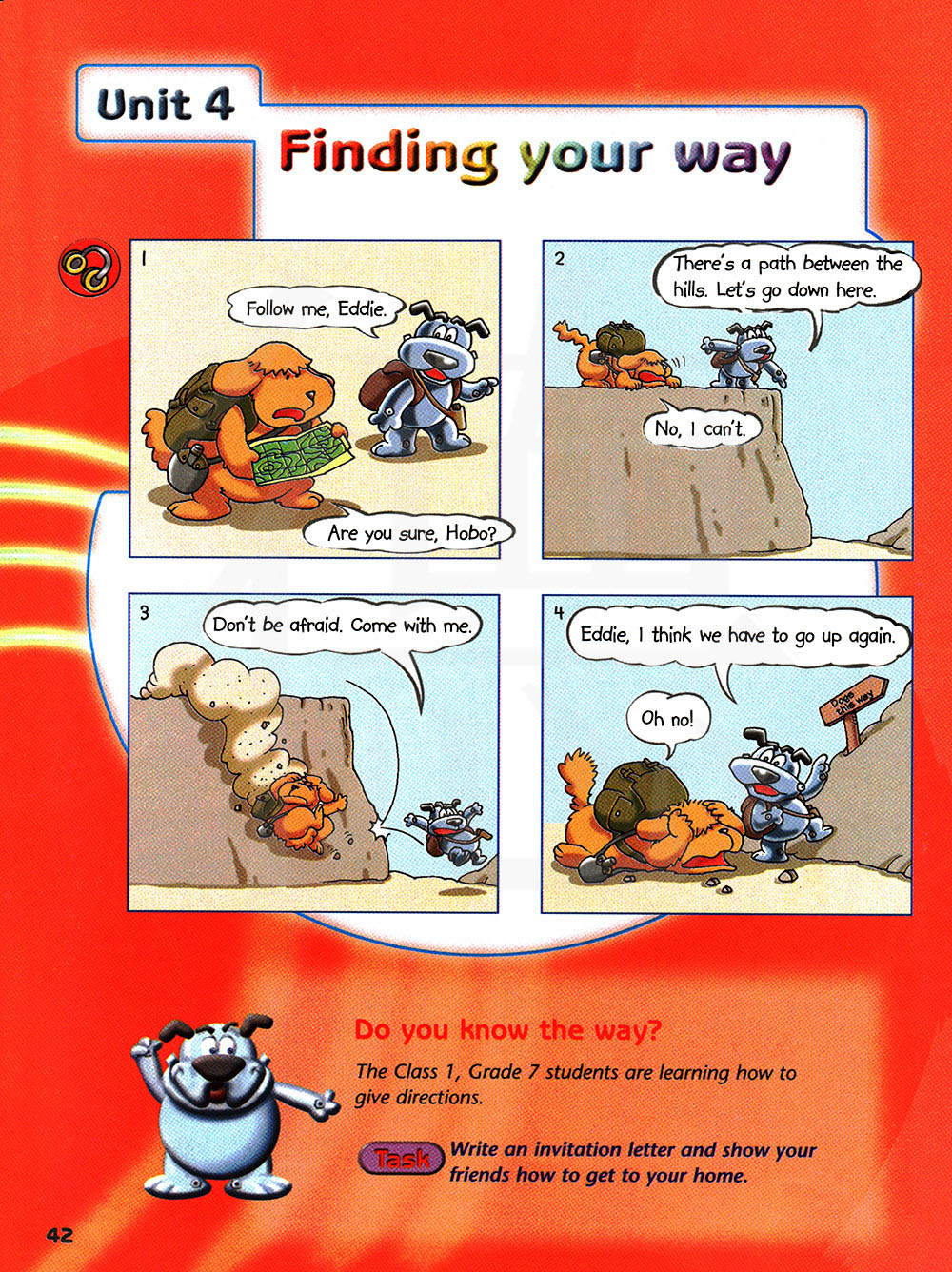
1. 跟我来。Follow me.
follow vt.
1)跟着 Follow me.= Come with me./Come after me.跟我来。
2) 模仿,仿效 He is trying to follow me. 他在试着模仿我。
3)理解,明白 I don’t follow you. Can you repeat? 我不理解你。你能重复一下吗?
following adj. 接着的,随后的;下列的
follower n. 跟随者;崇拜者
2. 你确定吗?Are you sure?
1) sure adj. “确信的,有把握的,一定的”, 同义词 certain, 反义词 unsure, 常和 be 连用
2) sure adv. 用于口语中,表示说话人非常有把握,“当然可以;当然愿意”,相当于 certainly, 或 yes.
3) Sb.+ be sure to do sth. 表示说话人的推测或判断,表示“一定;肯定” The movie is really good. You are sure to enjoy it.这个电影真的很好。你一定会喜欢的
4) 祈使句 “Be sure to do sth.” 表示说话人向对方提出的要求。 Be sure to come home before ten. 一定要在10点前回家。
5) Sb. be sure of/about ….“确信…;对…有把握”,后接名词、代词或动名词形式。
6) “be sure+从句”, “对…肯定/有把握”
3. 在小山间有一条小路。让我们从这里下。There’s a path between the hills. Let’ s go down here.
between 在(两者)之间, 在…与…之间:between …and …
among 在…之间(在三者或三者以上用among)
4. 别害怕。跟我来。Don’t be afraid . Come with me.
afraid adj. 害怕的,畏惧的
be afraid to do sth. “害怕(不敢)做某事”,强调因为害怕而不敢做某事。(胆小)
be afraid of doing sth. “担心会发生某事,害怕做某事” (不想做)
be afraid of sth./sb. 害怕某人/某物
5. 我想我们必须从这里上去。I think we have to go up here.
have to “不得不,必须” 强调客观上原因被迫不得不做,有人称、数和时态的 变化,否定为don’t have to,意为“不必” Ø
must “必须”,强调主观的意愿,没有人称、数和时态的变化,否定为mustn’t, “禁 止”
6. 让我们进行一次出游。Let’s go on a trip.
go on “进行,发生”,相当于have 或take
go on “继续”,指接着做原来没有做完的事情,go on doing sth.
7. 阳光花园在动物园的西边。Sunshine Garden is west of the Zoo.
在…的西边 be west of …= be to the west of …
当表示复合方向是,先说南北,再说东西。例如:东北 – northeast, 西南--southwest
8. 我们将怎样到达那里? How will we get there?
9. 大家好。我们在南门的前面。Hi, everybody. Here we’re in front of the South Gate.
everybody=everyone “每人,人人” ,不定代词还有:everything, anything, something, nothing, anybody, somebody, nobody, anyone, someone,
特点:
1)不定代词作主语,动词用三单。Everything is ok.
2)形容词修饰不定代词,放在不定代词后面。something nice, nothing important
here, there 引导的句子一般是倒装句
主语是代词时,Here/There + 主语+ 谓语动词:There they are.= They are there.
主语是名词时,Here/There + 谓语动词+主语:Here is the book. =The book is here. 10. 直走 ..,你们会发现熊猫馆。
10. 直走 ..,你们会发现熊猫馆。Go straight on........... ., and you’ll find the Panda House.
“祈使句,+and +陈述句”句型,祈使句相当于一个条件状语从句,陈述句相当于主 句。前句表示一种条件或假设,后句表示一种结果或推论。Go straight on, and you’ll see a big bridge.= If you go straight on, you’ll see a big bridge.
straight adj. 直的,笔直的 adv. 径直地 (不可以将副词写成straightly) 直发 straight hair
11. 它们喜欢吃竹子和整天躺着。 They like to eat bamboo and lie down all day long. 整天all day long : long 为副词,一般放在表示一段时间的名词之后,起强调作用。
They work hard all year long.
lie 躺着 过去时lay, 现在分词 lying , 过去分词 lain
12. 穿过这座桥,你将会看见大象。Cross the bridge, you’ll see the elephants.
cross v. “穿过,横过”, 只从平面上通过,常用于表示“穿过马路、河流、桥、街 道”等,即cross the road/river/bridge/street. 当表示从内部穿过时,通常用through ,穿过树林/隧道等,即through the forest/cannel
cross v. 交叉,相交
crossing n. 十字路口
|
cross
|
动词
|
|
|
across
|
介词
|
指从表面穿越,可与street, road, bridge等连用(含义与on有关)
|
|
through
|
介词
|
指从立体空间内部穿过,可与forest, city, door, park,cannel等连用(含义与in有关)
|
|
over
|
介词
|
指越过障碍物等,jump over the wall
|
13. 记住,它们是危险的。Remember that they’re dangerous.
remember to do sth. 记得要去做某事 (还没有做)
remember doing sth. 记得做过某事(做过) 类似的单词还有: forget , stop, try 等
dangerous 危险的 safe 名词danger 反义 safety
处于危险中be in danger 脱离危险 be out of danger
14. 绝对不要走进它。Never go near them.
此句为祈使句的否定句型。Never + 动词原形…。
never “从不”,否定副词。
15. 沿着路走。Walk along the road.
along prep. 沿着,顺着
along adv. 向前,和…一起, 常与某些动词go, come, run, walk move等连用, 表示向前移动。
固定搭配:all along一直,始终; come along 和…一同来;
get along(with)进展,进 行,相处;walk/go along 沿着…走;
along with 与…一起
16. 当鸟儿唱歌时,它们会发出美妙的声音。Birds make beautiful sounds when they sing.
make是使役动词,意为“使,让”,后可以接名词、形容词、动词不定式作宾语补足语。
make the room clean
make him a leader
make his son wake up early
后面可以接不带to的动词不定式作宾语补足语的动词还有:let, have, hear, see, watch. feel,notice等
make的常用固定搭配:make coffee 煮咖啡 make noise 吵闹 make money赚钱 make a living 谋生 make a face做鬼脸 make friends with 与…交朋友 make sb. do sth. 使某人做某事
|
sound
|
指耳朵听到的任何声音。
|
|
voice
|
多指人发出的声音,包括说话声、笑声、歌声。
|
|
noise
|
多指吵闹声、嘈杂声、噪音等。
|
17.它们跳来跳去,让人发笑。They jump around and make people laugh.
laugh vi. 笑,大笑 laugh at…嘲笑… laugh to …对…笑 laugh over…因…笑
laugh n. (可数名词)笑声
18. 它们相当得高。They are quite tall.
quite adv. 1相当,非常 His book is quite popular. 他的书相当畅销。
2完全地,彻底地 I quite agree with you. 我完全同意你得观点。
quite a few “相当多 ”, 后接可数名词复数
quite a little“相当多 ”, 后接不可数名词 T
注意:quite常放在不定冠词a/an 的前面,只有当名词前有形容词修饰时,也可以放 在a/an的后面。 She is quite a beauty. It’s a quite new watch.
19. 也有一些鸟,对吗?There are also birds, aren’t there?
本句为There be 句型的反意疑问句。
反意疑问句的构成:陈述句+附加疑问句。
反意疑问句前后两部分必须遵循“三同一反”的原则:人称,动词和时态相同,前肯后 反,前反后肯。
There is a book on the desk, isn’t there?
There weren’t any apples in the bag, were there?
|
on
|
两个物体表面接触
|
|
|
over
|
在正上方,指垂直方向
|
反义词 under
|
|
above
|
指高于某物,在其上方,但不在正上方
|
反义词 below
|
20. 让我们首先去熊猫馆。Let’s go to the Panda House first.
first 在此句不是“第一”,是副词“首先,起初”
First, I’d like to say something. 首先,我想说点事。
21. 我们就在这里。Here we are.
22. 多么可爱!How cute!
感叹句通常以What或How开头。What修饰名词或名词短语,How修饰形容词或副词。
常用感叹句的结构:
1. What+a/an+形容词+单数名词(+主语+谓语)!
2. What + 形容词+ 不可数名词/复数名词(+主语+谓语)!
3. How + 形容词/ 副词(+主语+谓语)!
23. 走过屋子左转,沿着紧邻河边的小路走。Walk past the house, turn left and walk along the path next to the river.
walk past… 从…旁边经过;
walk along…沿着…走;
walk down… 向下走(表示向前走或从高处走向低处);
walk on 继续走
24. 在第二个拐弯处右转。Take the second turning on the right. = Turn right at the second turning
25.米莉正在给丹尼尔指路去阳光花园。 Millie is giving Daniel directions to Sunny Garden.
26. 我怎样到达那里?How do I get there?
问路的一些语句
How do I get to the …? 我如何到达…?
Can you tell me the way to…? 你能告诉我去…的路吗?
Do you know the way to…?你知道去…的路吗?
Can you tell me how to get to the…?你能告诉我如何去…吗?
Where is the …?…在哪里?
27. 在交通灯处我应该走哪条路?Which way should I go at the traffic lights?
28. at the end of, in the end, in the end of, by the end of Ø in the end 最后,终于,相当于finally, at last,表示事情的结局 Ø
in the end of “在…的最后”,多用于修饰时间
at the end of +名词短语,“在…末端/尽头”
by the end of “到…底为止”, 通常用于完成时态
29. 我的父母会准备大量的食物和饮料。My parents will prepare plenty of food and drinks. 许多的,大量的plenty of…后接可数或不可数名词,一般用在肯定句中,否定句用many 或much 表示许多,疑问句中用enough
30. also, too, as well, either 都表示“也”
|
too
|
用在肯定句中,没有also正式,常位于句末,用逗号隔开。也可以放在句中。
|
|
also
|
用于肯定句中,比较正式,位于实义动词前,be动词、助动词、情态动词后。
|
|
as well
|
多用于口语,用法与too相同,一般放句末,但没有逗号隔开。
|
|
either
|
用于否定句中,位于实义动词前,be动词、助动词、情态动词后。
|