知识点
短语归纳
1. go to hospital 去看病
2. carry on 继续开展,继续下去
3. set up 建起,设立
4. on board 在飞机(船、火车)上
5. hand out 分发,提出
6. make up one’s mind 决定
7. international charities 国际慈善组织
8. all over the world 全世界
9. medical treatment 医治
10. be used as 被用作
11. afford to do 付得起,买得起
12. go to hospital 去看病
13. operate on sb. 给某人做手术
14. carry on 继续展开
15. be proud of = take pride in 为……而骄傲
句型归纳
1. prevent … (from) doing 阻止……发生
2. stop…(from) doing 阻止……发生
3. carry on doing sth 继续做某事
4. be afraid of 害怕……
5. with the development of 随着……的发展
知识点总览
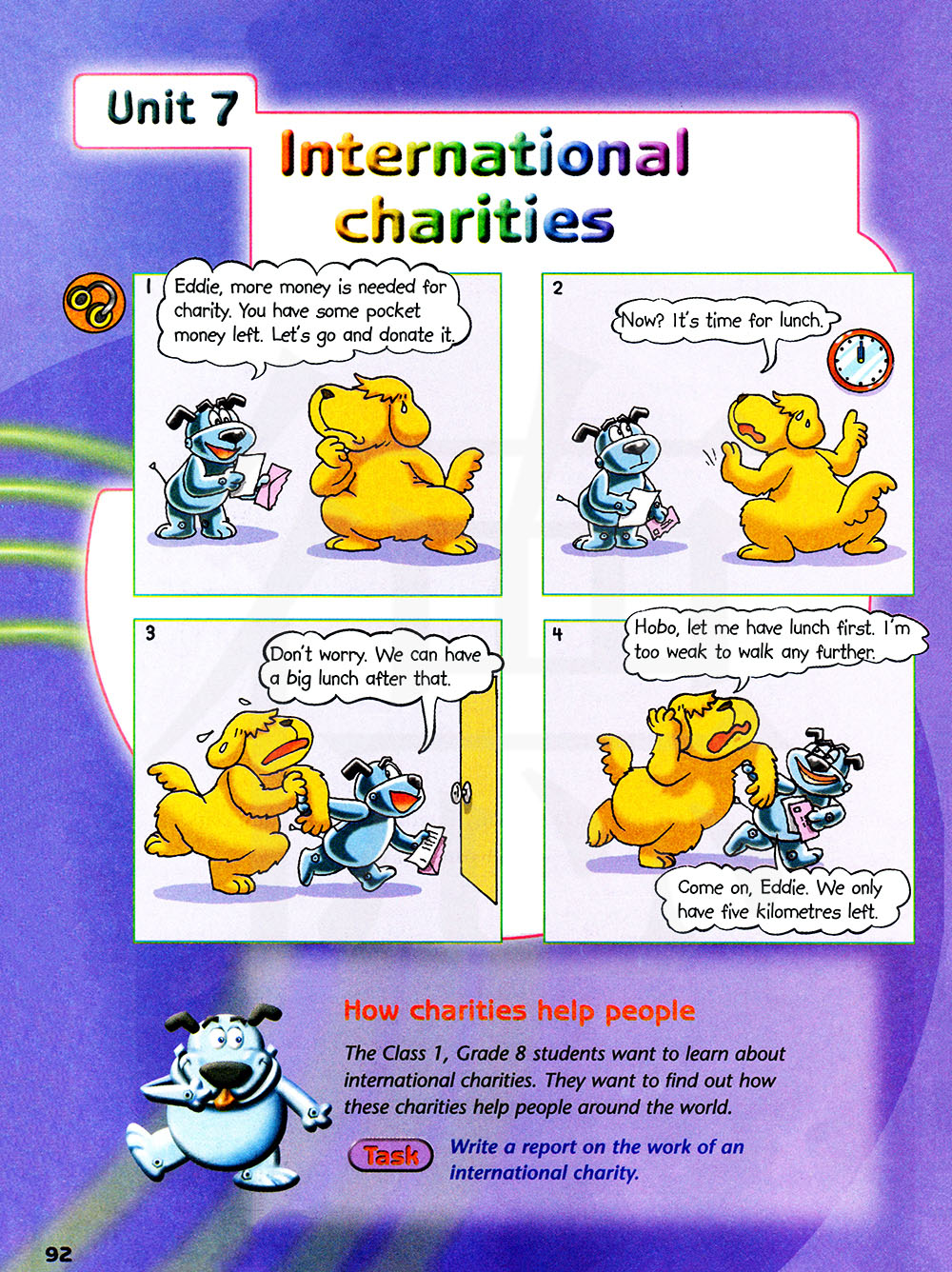
1. You have some pocket money left. 你有一些剩下来的零花钱。 have sth left 动词短语,表示“有某物被留下;被剩下”,left是leave的过去分词,在句中作后置定语。如:
Don’t worry, and still have a little time left.不要担心,我们还剩一点时间。
【拓展】have sth done“请/让 某人做某事”。如: Mr. Green had her daughter educated in America last year. 格林先生去年让他的女儿在美国接受教育。
2. I’m too weak to walk any further.我太虚弱了不能继续走了。
further副词,“较远、更远”,是far的比较级,最高级为furthest“最远”。如:
He can jump further than I can. 他能跳得比我远。
3. About 285 million people around the world are blind or have other eye problems, mostly in poor areas, and about 80 per cent of these cases can be prevented or cured. 全世界大约两亿八千五百万的人是盲人或有其他眼部疾病,绝大多数在贫困地区,百分之八十的病例能够被预防或治愈。
(1)mostly 副词,“主要地,大部分地”,常用于修饰动物和介词短语。如:
The students in our class are mostly 14 or 15 years old.我们班大部分的学生是14或15岁。
(2)per cent表示“每一百中;百分之······”,无复数形式,per介词,“每”。如:
I am 100 per cent in agreement with you.我百分之百/完全同意。
【拓展】英语中表达百分数的结构为“数词+per cent”,而表示“百分之······”要用“数词+ percent + of…”,其做主语时,谓语动词要根据of 后面主语的数而定。例如:
Ten per cent of the students come from the city. 百分之十的学生来自于城市。
4.However, many people don’t have money for medical treatment.然后,许多人没有钱进行治疗。
(1)however副词,“可是;然而;无论如何;不管怎样”。如:
I’d like to go with you, however my hands are full. 我很想和你一起去,可是我忙不过来。
(2)medical形容词,“医疗的;医学的”,名词为medicine,“医学;医术;内服药”。如: Teachers have a medical examination every year.教学每年进行一次体检。 Take the medicine twice a day.这药一天服两次。
(3)treatment名词,“治疗;疗法;疗程”,动词为treat,“治疗”。如:
They are trying a new treatment for cancer.他们在尝试一种新的治疗癌症的方式。
5. On the plane, volunteer doctors do operations.在飞机上,志愿者医生做手术。
(1)volunteer名词,“志愿者”,也可表示“志愿兵;义勇兵”。如:
They are the first group of the volunteers to help the people suffering from the earthquake. 他们是第一批帮助遭受地震之苦人们的志愿者。
6.Many of our patients can’t afford to go to hospital, so we have to go to them.我们的绝大多数病人负担不起去医院的钱,因此我们不得不去他们那儿。
(1)patient名词,“病人;患者”,相当于sick person。如:
There are many patients waiting to see the doctor.有许多病人正在等着看病。
(2)afford动词,“买得起;能做”,常放在can,could,be able to之后,多用于否定句或疑问句,后接名词、动词不定式或双宾语。如:
Can we afford a new car? 我们买得起新车吗?
7. I‘m proud to help people see again and improve their lives.我很自豪能帮助人们再看见并改善他们的生活。
proud 形容词,“自豪的;得意的”,后常接of 短语、动词不定式或that从句。如? We are proud of our success.我们为自己的成功而感到自豪。
8. But more money is needed to carry on with our work.但需要更多的钱继续我们的工作。
carry on with sth 表示“继续做某事”,相当于go on with sth。如:
Carry on with your lessons while the teacher is away.当老师不在的时候,请继续做你们的功课。
【拓展】carry on doing sth表示“继续做某事”,相当于go on doing sth。
语法: 一般现在时和一般过去时的被动语态
1. 英语的语态是通过谓语丁次的形式体现出来的,用来标明主语和宾语之间的关系。谓语动词有两种语态:主动语态和被动语态。如果主语是谓语动词所表示的动作的执行者,句子用主动语态;如果主语是谓语动词所表示的动作的对象,句子用被动语态。
Many people speak Chinese. 许多人讲中文。(谓语speak的动作是由主语many people执行的,即主语是谓语动词所表示动作的执行者。
Chinese is spoken by many people. (主语Chinese是谓语动词speak所表示的动作的承受者。)
2、被动语态的结构
一般现在时被动语态的结构:主语 + be动词的现在式(am/is/are)+ 动词的过去分词。 The mountain is covered with snow all year round, so it’s hard to climb it. 这座山终年被雪覆盖,因此很难爬上去。
一般过去时被动语态的结构:主语 + be动词的过去式(was/were)+ 动词的过去分词。
The house was built in 2011. 这座房子建于2011年。
3. 被动语态的使用情况。
①为了强调或突出动作的承受者时,用被动语态。
The window was broken. (强调窗户被打破这一事实)窗户被打破了。
②当不知道或没有必要说明动作的执行者是谁使用被动语态
Some new computers were stolen last night. (不知道电脑是谁偷的)一些新电脑在昨晚被盗了。
③出于礼貌或语气婉转等不愿说出动作的执行者是谁时,用被动语态。
You are requested to give another performance. 请你再表演一个节目。
④动作的执行者是泛指或不言明时。 English is spoken all over the world.
⑤在被动语态中,当需要指出动作的执行者时,有介词by引出。
The wounded soldiers have been saved by a farmer. (强调战士被救的事实)那些受伤的战士已经被一位农民救了。
4. 主动语态变被动语态的方法。
①把主动语态的宾语变为被动语态的主语,如果是人称代词,宾格要变成主格。
②把谓语变成被动结构(be + 过去分词),根据被动语态句子里的主语的人称和数,以及原来主动语态句子动词的时态来决定be的形式,变成被动语态后的句子时态与原来的主动句要一致。
③把主动语态中的主语放在介词by之后做宾语,如果是人称代词,将主格改为宾格。
All the people laughed at him.
→He was laughed at by all the people.
They make the bikes in the factory.
→The bikes are made by them in the factory.