知识点
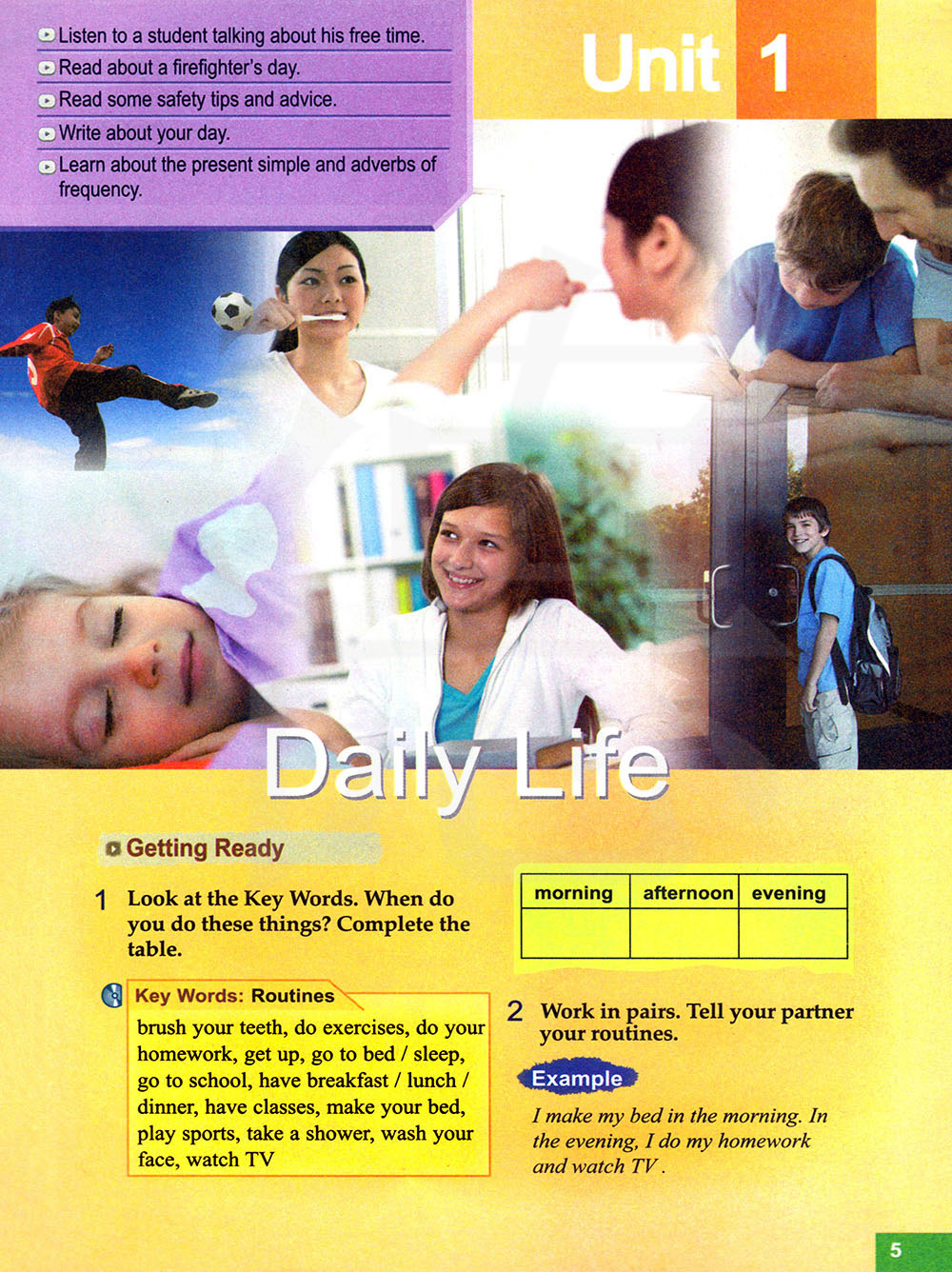
短语
1.get dressed 穿好衣服
2. make one’s bed 铺床
3.take a shower 洗淋浴
4. brush one’s teeth 刷牙
5.wash one’s face 洗脸
6. play sports 做运动
7.watch the evening news 看晚间新闻
8. listen to pop music 听流行音乐
9.go running 去跑步
10. go to the cinema 去看电影
11.tidy one’s room 整理房间
12.get some rest 得到休息
13.go for skills training 进行技能训练
14. ride a bicycle 骑自行车
15.stay at home 待在家里
16. talk with friends 和朋友聊天
17.walk in a storm 在暴风雨中行走
18. play with fire 玩火
19.meet an Internet friend 见网友
20. have to do sth.不得不做某事
21. safety tips 安全建议
22. have a point 有道理
23.stay away from 远离
句型
1.----What do you do after school? 你放学后做什么?
----I usually read books. 我通常看书。
2.----How often do you play sports after school? 放学后你多久做一次运动?
----I always/sometimes/never play sports after school. 放学后我总是/有时/从未做运动
3.----Does Bob play basketball every day? 鲍勃每天打篮球吗?
-----Yes,he does./No,he doesn’t. 是,他是的。/不,他没有。 4.----What do you think a firefighter’s job is like? 你认为消防员的工作怎样?
-----I think it’s dangerous/difficult/important. 我认为它危险/困难/重要。
5.I think walking in a storm is dangerous and going online is not. 我认为在暴风雨中行走是危险的,上网不危险。
6.many;much;a little,a few,little,few的区别
many:许多,修饰可数名词
much:许多,修饰不可数名词
a little:一点儿,修饰不可数名词
a few:一点儿,修饰可数名词
little:表示否定,修饰不可数名词
few:表示否定,修饰可数名词
7.how often 的用法
How often 的意思是“多久一次”。
How often引导的疑问句用来提问某动作或者状态发生的频率,回答常用always,usually,often,sometimes,seldom,never等频度副词或者every day,each week,once a week,three times a month等表示频率的短语。
8.try one’s best to do sth. 尽某人最大努力做某事
9.keep sb/sth +形容词 使某人或某物处于某种状态
10.must 和have to 的区别
must 是情态动词,后接动词原形,意思是“必须”;表示说话或者听话者的主观意愿。
have to 的意思是“必须,不得不”;表示首客观环境或条件限制而去做某事。
重点语法
一、一般现在时的用法:A.现在经常性的动作或状态B.客观事实和真理
一般现在时表示习惯性、经常性、反复性的动作或存在的状态。“习惯性、经常性、反复性”是一般现在时的三大特性,它不表示特定时间内发生的事。
二、时间状语标志词:always,usually,often, sometimes, never,every day /week /month/year/…
三、一般现在时的构成:Be动词构成的一般现在时;实义动词构成的一般现在时
四、谈谈“主语为三单,其后动词s添”
在一般现在时中,当主语为第三人称单数时,谓语动词要用第三人称单数形式。 可以简单叙述为“主语为三单,其后动词s添”。何谓第三人称单数?用一句话概括就是“非你、非我、非复数”, 如 he, she, it, my father, my mother, my sister, our English teacher, Tom, Mike, Liu Jia, China, my book, etc.
五、动词第三人称单数变化规则
动词第三人称变化的规则与可数名词复数变化的规则相同。
规则一、一般在词尾加 -s。 如:looks, puts. reads, sees, skis等。
规则二、以-o, -s, -x, -sh, -ch结尾的加 -es。 如:goes, does, misses, passes, mixes, fixes, pushes, wishes, watches, teaches,等。
规则三、以辅音字母加y结尾的,变y为 i,再加-es。 注意一定是辅音字母加y才变,若是元音字母加y,则直接加-s。 如:fly → flies, try → tries, fry → fries, copy → copies, buy → buys, enjoy → enjoys, play → plays, say → says, pay → pays
六、一般现在时的句子转换
(1)当句子中有be动词或情态动词时,则把be动词或情态动词(can,could等等) 提到主语的前面变成一般疑问句;在be动词或情态动词后面加not变成否定句.例:
①陈述句: She is a student.
一般疑问句→ Is she a student?
否定句→ She is not a student.
②陈述句: I can swim.
一般疑问句→ Can you swim?
否定句→ I can not swim.
(2)当句子中即没有be动词,也没有情态动词时,则在主语前加助动词do (you,以及复数), does(单数she,he,it)变成一般疑问句;在主语后谓语动词前加助动词don’t(I,you,以及复数 ), doesn’t(单数she,he,it)变成否定句,助动词后的动词要变成动词原形。例:
①陈述句: We get up at 7:00 every morning.
一般疑问句→Do you get up at 7:00 every morning?
否定句→We don’t get up at 7:00 e very morning.
②陈述句: She has a little brother.
一般疑问句→ Does she have a little brother?
否定句→ She doesn’t have a little brother.