知识点
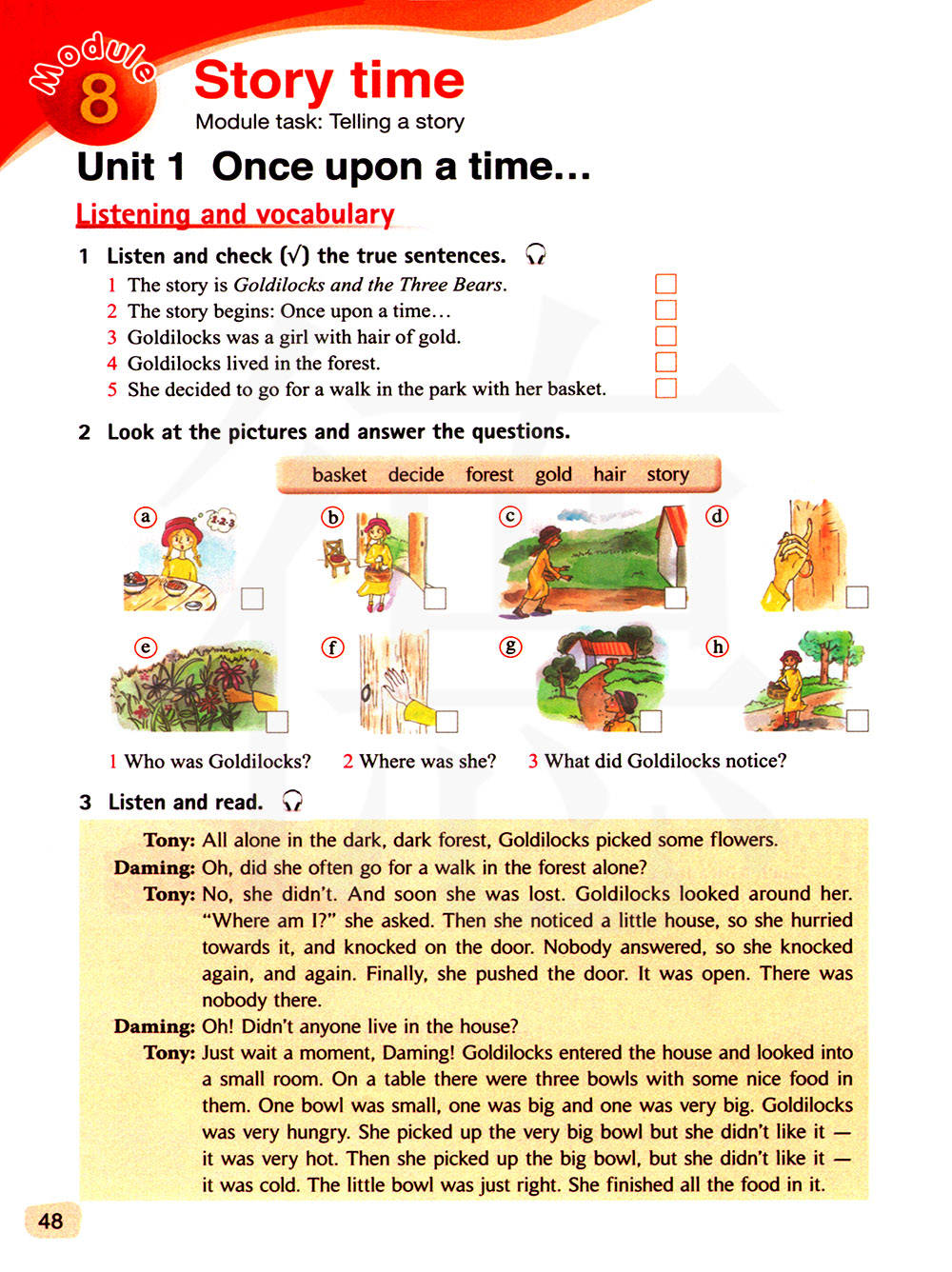
1、once upon a time 从前,很久以前相当于 long long ago, 常用于讲故事的开头。
Once upon a time, there was a king.
Once adv. 曾经,一度,一次 We once lived in Shanghai. once a month 一个月一次
2、decode (not) to do sth. 决定(不)做某事 They decided not to tell Tom about it.
decide + that从句 She has decided that she will be a doctor in the future.
Decide的名词形式→ decision make a decision 做决定
She has made a decision to become a doctor.
3、go for a walk go on a walk have a walk take a walk 去散步
4、be / get lost 迷路 I am always lost in big cities.
Lost adj. 丢失的,失去的;错过的,浪费掉的,Try to find the lost key.
5、look around 向四周看 She looked around her but she saw nothing.
6、notice v. 注意到,看到(感官动词) I noticed he left very early. 我注意到他走得早。
notice sb. do sth. I noticed her crying in the room. (正在哭)
notice sb. doing sth. I noticed her cry in the room. (哭了)
7、knock on /at the door 敲门 knock into 撞上 again and again 一次又一次
knock v. 敲,撞,碰 He knocked his head against the door.
8、enter = go/come into 进入 He entered high school. 我上了高中。
He entered the classroom at once. = He went into the classroom at once.
9、look into 向„„里面看;调查
The soldier looked into the house, but he found nothing.
The police are looking into the accident.
10、pick up 拾起,拾起 pick up sth. = pick sth. up sth.是名词时,可放up的前或后都可以。
当sth.是代词宾格时,只能放pick与up中间。
pick the pen up = pick up the pen pick it / them up
11、finish sth. I finished the work quickly. finish doing sth. I finished reading the book yesterday.
12、try to do sth. 尽力做某事 I will try to study English well.
Try doing sth. 试着做某事 I tried knocking on the door, but nobody answered.
try sth. 尝试某事物 Please try the delicious mooncake.
try one’s best to do sth. 尽某人最大能力做某事 I will try my best to get there on time.
have a try 试一试
13、either adv. 也,位于否定句句末,前面常加逗号。He doesn’t like running, either.
too 位于肯定句句末,前面常加逗号。 He can swim , too .
as well 位于肯定句句末,前面不加逗号。= He can swim as well.
also 位于肯定句句中,即位于be动词、助动词、情态动词后,实义动词前。
He is also a student. He can also swim. He also wants to go there.
14、be in pieces „成碎片 Soon the chair was in pieces .
15、sleep v./ n. go to sleep 入睡,睡着 have a good sleep 好好睡一觉 eight hours’ sleep
Sleeping adj. 睡觉的(在句中作定语)
a sleeping boy = a boy who is sleeping 一个睡着的男孩
asleep adj. (在句中作表语) be / fall asleep 睡着 The baby is fast asleep. He was just falling asleep there was a loud knock at the door.
sleepy adj. 困倦的,想睡觉的 I often feel sleepy in class.
16、return sb. sth. return sth. to sb. = give back sth. to sb. 把某物归还某人
return to = go / come back to 回到 I’ll return to school before 5 o’clock this afternoon.
17、point at 指着(近处) The girl is pointing at the table.
point to 指向(远处) Please point to the sky.
18、at first 起初,当初,与后来发生的事相对照。 At first I didn’t like English, but I soon
changed my mind. 我起初不喜欢英语,但我很很快改变了主意。
First of all 首先,第一,说明顺序,是时间上或一系列行动的开始。常接next,then等。
First of all, open the windows. Then turn off the gas and call the doctors.
19、 jump out of the bed 从床上跳下来 hurry out of the house 匆忙跑出屋子
out of 从„出来,在„„外, Fish can’t live out of water. 鱼离开水无法活下去。
jump out of 从„„跳出来 take out of 从„„取出来
rush out of 从„„冲出来 look out of 从„„向外看
20、without prep.-介词,没有,缺乏,无,不,反义词是:with
without / with + 名词/ 动词ing形式(动名词)。
Fish can’t live without water. He went to school without breakfast.
He left without telling us. They left without saying goodbye.
21、go for a walk 去散步