知识点
短语归纳
1. have the flu患感冒
have/catch colds/ a cold感冒
have a cough咳嗽
have a fever 发烧
have a headache 头痛
have a toothache 牙痛
have a stomachache 胃痛;肚子疼
have a backache背痛
have a sore throat喉咙痛
have a sore back背痛
2. talk too much说的太多
3. drink enough water喝足够的水
4. lie down and rest a躺下休息
5. drink some hot tea with honey喝些加有蜂蜜的热茶
6. see a dentist 看牙医
7. go to a doctor/see a doctor看医生
8. get an X-ray做一个X光检查
9. talk one’s tempe rature量体温
10. put some medicine on…在…上敷药
11. feel very hot感觉很热
12. cut oneself割伤自己
13. hurt oneself伤害自己
14. sound like听起来
15. one the weekend在周末
16. all the weekend整个周末
17. take /have breaks/a break 休息
have/take a rest休息
get some rest休息一下
18. away from指从...离开
19. in the same way 用同样的方法、方式
20. without moving没移动
21. on the side of the road 在路边
22. shout for help 大声呼救
23. without thinking twice不加思考
24. got off下车
25. have a heart problem患心脏病
26. take the man to the hospital带他去医院
27. wait for the next bus等下一班车
28. expect sb. to do sth. 期待某人做某事
29. most or all of the passengers大部分或所有乘客
30. to his surprise让他吃惊
31. agree to do sth. 同意做某事
32. move the man onto the bus把那人移到公交车上
33. thanks to多亏…
34. in time及时
35. think about 思考,考虑
36. save a life拯救一个生命
37. right away立即,马上
38. get the old man onto the bus把老人弄上车
39. do the right thing做正确的事
40. get into trouble陷入麻烦
41. the driver of bus No.26 26路公交车司机
42. fall down 摔倒
43. 24-year-old Wang Ping 24岁的王平
语法解析
1.身体部位单词
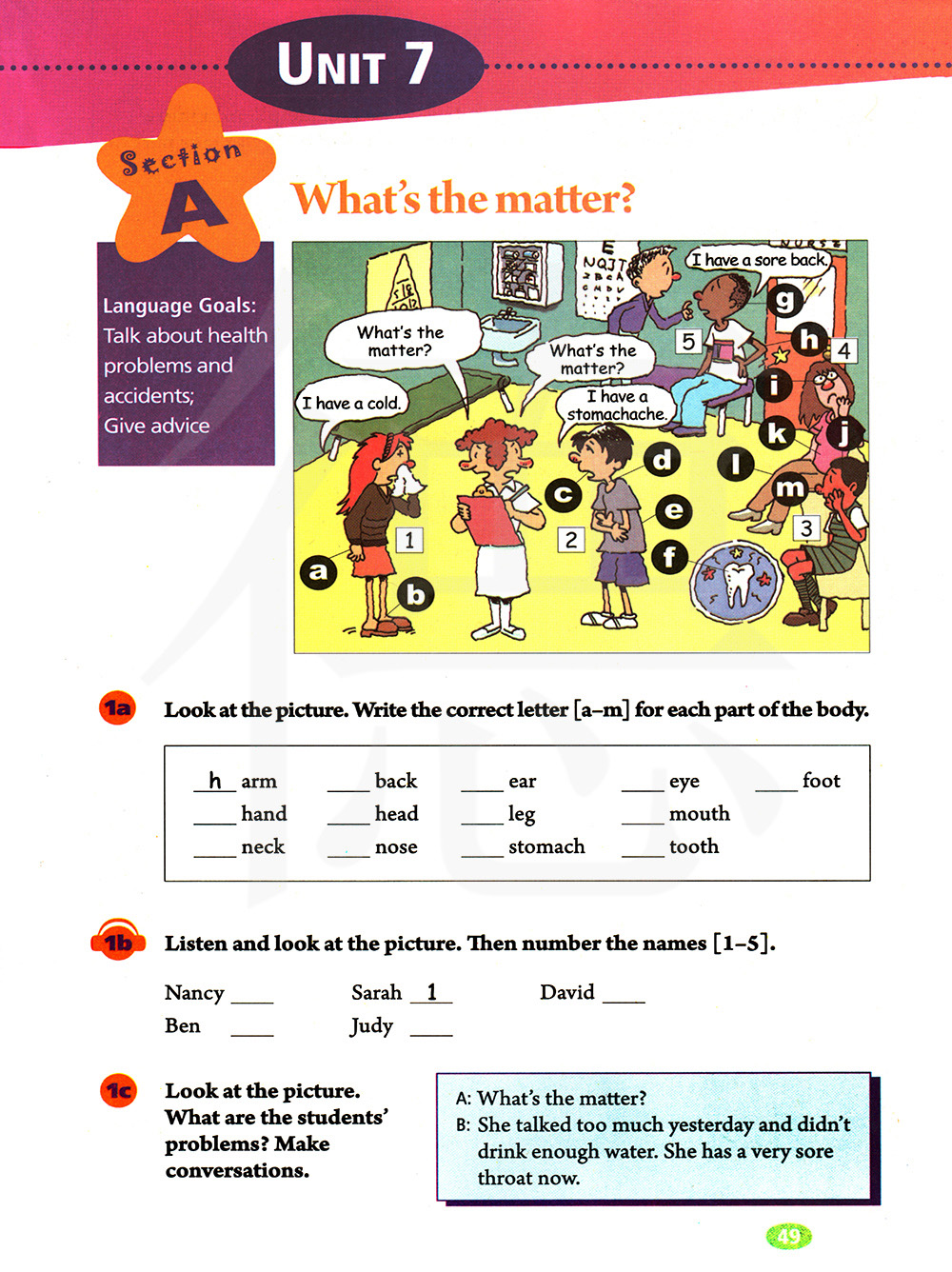
head 头 eye眼睛 eyebrow['a?bra?] 眉毛 ear耳朵 nose鼻子mouth嘴巴 tooth 牙齿
face脸 neck 脖子 stomach 胃,腹部 arm 胳膊 hand 手 finger ['f??ɡ?(r)] 手指
knee膝盖 leg腿 foot脚 toe [t??]脚趾 back背部 throat 喉咙 chest 英[t?est] 胸部
2. 1)询问某人患了何种疾病或遇到何种麻烦时,常用一下几种结构来表达:
What’s the matter(with sb.)?(某人)怎么了?
【注释】matter n.“毛病,麻烦事”v.“要紧,有关系”,主要用于否定句、疑问句或条件状语从句中。
It doesn’t matter.没有关系。
What’s wrong (with sb.)? (某人)怎么了?
What’s the trouble (with sb.)? (某人)出了什么事?
What happened (to sb.)? (某人)发生了什么事?
Are you OK? 你没事吧?
Is there anything wrong with sb.?某人有什么事吗
2)表达身体疼痛或不舒服,可用以下结构:
①某人+have/has +病症 The twins have colds.双胞胎感冒了。
【注释】cold 伤风,感冒,可数名词
have colds/ a cold表示“感冒”持续的状态 catch a cold强调“感冒”的行为21世纪教育网版权所有
②某人+have/has +a +headache/toothache/stomachache/backache/earache.
I have a stomachache.我肚子痛。
③某人+have/has +a +sore +发病部位
I have a sore back.我背痛。
【注释】a: sore adj. “疼痛的,酸痛的”,可用作定语或表语。
b: back adv. 以前;向后地;往回去n. 后面;背部 on one’s back在某人的背上
come back回来 go back 回到 give back归还 pay back偿还;报复 call back回电话;记起(某事)
④某人+hurt(s)+身体部位或反身代词 He hurts his leg.他的腿受伤了。
【注释】hurt vt.使受伤,弄痛 vi疼痛 过去式hurt过去分词hurt
⑤某部位+ hurt(s) My head hurts badly.我的头痛的厉害。
⑥某人+ have/has +a pain +in one’s +身体部位
I have a pain in my chest. 我胸口痛。
⑦(There is)something wrong with one’s+身体部位.
There is something wrong with my right eye.我的右眼有毛病。
⑧其他表达方式 He has a heart trouble.她有心脏病。
He got hit on the head.他头部受到了撞击。
3. She talked to much yesterday and didn’t drink enough water.昨天她说话太多,并且没有和足够的水。
1) 分辨三者的口诀: too much, much too, 用法区别看后头: much 后接不可数, too 后修饰形或副。too many 要记住,后面名词必复数。
much too+ adj, too much+ 不可数名词,意为 太多….. 。
2) enough 【形容、副词】足够的/地,enough 放在名前后,形副后。 good enough 足够好,enough money=money money She cut her finger.她割破手指了。
4.drink hot water with honey喝加些有蜂蜜的茶
with prep.“具有;带有;加上”,表示事物的附属部分或所具有的的性质;反义词without
【拓展】1)with表人与人之间的协同关系
make friends with sb.
talk with sb.
quarrel with sb.
fight with sb.
play with sb.
work with sb.
communicate with sb.
2) with 表“带来”,或 “带有,具有”,在…身上,在…身边之意
The girl with golden hair looks beautiful .那个金头发的女孩看起来漂亮。
3)with表用某种工具或手段 I cut the apple with a sharp knife . 我用一把锋利的刀削平果。 Tom drew the picture with a pencil . 汤母用铅笔画画。
4)with 表原因或理由 He jumped up with joy . 他因高兴跳起来。
5)with表示让步,“虽有,尽管”; with的复合结构表行为方式或伴随情况;“随着”
5. sound like+ 名词代词和从句:It sounds like you don’t know the truth. It sounds like a good idea. sound+形容词, “听起来,好像” ,The music sounds nice.
6. I think I sat in the same way for too long without moving.(P2)我想是我一个姿势做的太久没有移动。
a: without prep. 没有,在无…的情况下
b: in the same way用同样的方法;同样地
7.You need to take breaks away from the computer. 你需要离开电脑休息几次。
a: 1) need用法:
1情态动词Need I to answer the question? 我需要回答那个问题吗?
Yes, you must. /Yes, you have to. 是的,你必须回答。/是的,你得回答。
/No, you needn't.不,不必了
2)实义动词need sth. need sb./sth. to do sth.
She needs help. 她需要帮助。
b: break n.(课间)休息 v. 打破;折断;弄坏;削弱;(使)破;打破(纪录) take /have breaks/a break 休息 have/take a rest休息
c: away from指从...离开,作后置定语
5. I should lie down and rest. 我认为你应该躺下休息。
lie vi. 躺;位于;展现 (过去式lay ;过去分词lain; 现在分词 lying);说谎;谎骗(lied-lied-lying)
n. 谎言;位置 lie down躺下 tell a lie撒谎
7.If your head and neck still hurt tomorrow, then go to a doctor. 如果明天你的头和脖子还痛的话,就去看医生。
a: if 引导的条件状语从句:
1) If you go to the party, you’ll have a good time.(主将从现)
2) If he comes here, please tell me.(主祈从现)
3) If you have any questions, you can ask me.(主情从现)
b: go to a doctor/see a doctor/ go to see a doctor看医生
8. At 9:00 a.m. yesterday, bus No.26 was going along Zhonghua Road when the driver saw an old man lying on the side of the road. 昨天上午九点钟,26路公交车正沿着中华路走,这时 司机看见一位老人躺在路边。
(1) was going为过去进行时。过去进行时,是表示过去 某个具体时刻正在进行的事情或动 作。结构为
主语+was/were +doing (现在分词)
It was raining when they left the station. 他们离开车站的时候天正在下雨。
(2) see sb. doing sth.看见某人正在做某事。强调正在发生。 see sb. do sth.看见某人做某事。强调全过程
(3) lie-lay-lying v.躺
区别:v.撒谎,说谎(lied-lied-lying)
9、 A woman next to him was shouting for help. 一位妇女在他旁边,大喊求助。
shout for help大声呼救 shout for sb./sth. 呼喊某人、某物
shout to sb.向某人喊话 shout at sb.冲某人叫骂(贬义)
10. The bus driver , 24-year-old Wang Ping,stopped the bus without thinking twice. 这位公交司机,24岁的王平,没有多想便停了车。
1)24-year-old Wang Ping 24岁的王平
a:用“基数词-year-old”表示,此结构常做(前置)定语。如:
Her 18-year-old daughter is now in the university. 他18岁的女儿现在上大学。
b: 一般直接用基数词表示年龄,如:
Her daughter is eighteen. 她的女儿18岁。
c: 用“基数词 years old”表示,有时可将years old 换成years of age表示年龄。如:
Her daughter is eighteen years old. / Her daughter is eighteen years of age. 她的女儿18岁。
2)think twice是英语中一种固定的表述,表示在做某事之前“认真思考; 权衡利弊' 例如:
We must think twice before we make this decision!在我们做出这个决定前,必须认真思考!
11、 He got off and asked the woman what happened. 他下车并问妇女发生了什么。
get off : 下(汽车,火车,飞机等)反义词为:get on登上(汽车,火车等)
get on /get off 后跟ship, bus, train, plane等大型交通工具 比较:get into进入 /get out of从…下来get into/get out of , 后跟taxi, car等小型交通工具和电梯等
12. He expected most or all of the passengers to get off and wait for the next bus. 他期待大部分或所有乘客下车去等待下一辆公交车。
expect sb. to do sth.期待某人做某事
我们的老师期待我们按时到达那儿。 Our teacher expect us to be there on time.
(1) to one’s surprise:让某人吃惊 让她惊讶的是,邓紫棋唱歌如此好听。 To her surprise, G.E.M. sings so well.
(2) agree to do sth.同意做某事 她同意让我早走。 She agreed to let me go early.
【拓展】agree with sb. agree to/on sth.
13. Thanks to Mr. Wang and the passengers, the doctors saved the man in time. 多亏王先生和乘客们,医生及时挽救了那位老人。
(1) thanks to…多亏…,由于…to 接感谢的对象(后面接某人或某物)。 Thanks to the English teacher,I got good grades.= With the help of the English teacher, I got good grades. 多亏了我的英语老师,我取得了好成绩。
区别:thanks for…为…而感谢…for 后接v.ing 或名词。Thanks for you kindness. 感谢你的善良。
(2) in time及时,迟早
Tom got to the cinema in time and saw where are we going ,Dad?Tom 及时赶到电影院,看到了爸爸去哪儿。
区别: on time按时,准时 We should finish homework on time. 我们应该按时完成作业。
14. It’s said that many people don’t want to help others because they don’t want any trouble. 很多人不想帮助他人因为他们不想惹任何麻烦。
(1) It 为形式主语,真正的主语是that引导的从句。
(2) trouble ucn.(不可数)问题,麻烦
固定搭配: get into trouble陷入麻烦 have trouble with sth.在某方面有麻烦 have trouble (in ) doing sth.做某事有麻烦
15. Did you hurt yourself playing soccer? 你踢球的时候弄伤了自己吗?
playing soccer是一个现在分词短语,充当时间状语,是时间状语从句的省略形式,
这句话是 did you hurt yourself while you are playing the soccer/ When you played soccer的省略,
相当于: Did you hurt yourself (when) playing soccer? 也可以理解成动词ing做伴随状态,表达一种进行的动作。
16. 反身代词: myself , ourselves, yourself , yourselves, himself, herself, itself, themselves. 作动词或介词的宾语:经常在 enjoy, teach, hurt, cut. buy, introduce, dress, kill等动词和by, for, to, of等介词后作宾语。
反身代词作宾语和同位语。
He usually teaches himself English. 他经常自学英语。(宾语)
He did it himself.他自己做的这件事。(同位语)
He is teaching himself English.她在自学英语。
She was talking to herself.她自言自语。
He lives by himself in the country.他独自住在乡下。
1) Help yourself! 请随便吃吧!/请自己去取吧!
2) Make yourself at home! 别客气!
3) make yourself heard /understood. 使你的话被人听得见/理解
4) teach oneself 自学=learn by oneself
5) by oneself 独自
6) for oneself 为自己;替自己
7) enjoy oneself 玩的愉快
8) dress oneself 给自己穿衣
9) keep…to oneself
10)work for myself为我自己工作。