知识点
一、短语归纳
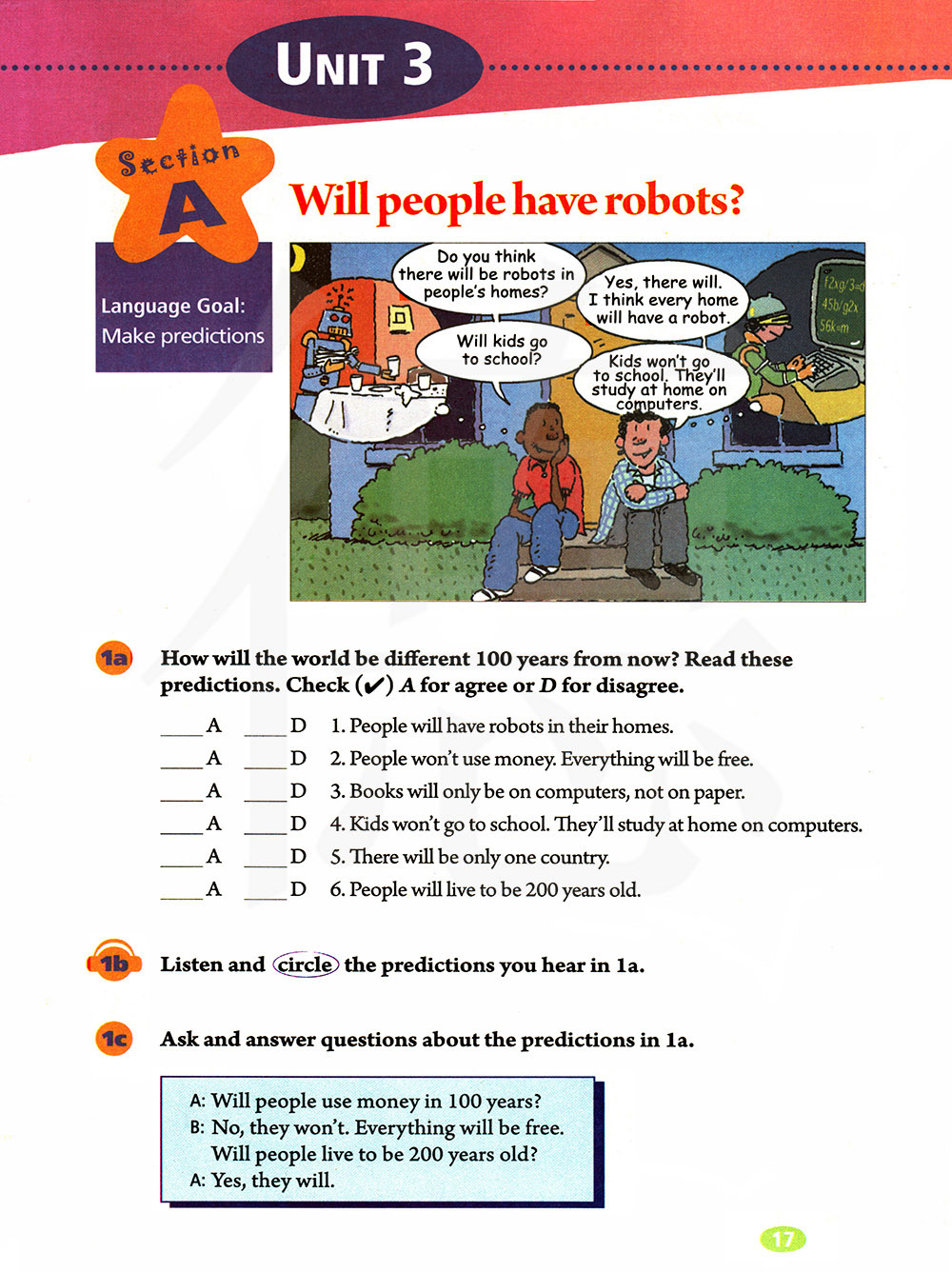
on computers在电脑上
on paper在纸上
live to be 200 years old活到200岁
free time空闲时间
in danger处于危险之中
on the earth在地球上
play a part in sth参与某事
space station太空站
look for寻找
computer programmer 电脑编程员
in the future在未来
over and over again反复地
get bored感到厌烦的
wake up醒来
look like看起来像
fall down倒塌
二、用法集合
1.will+动词原形 将要做……
2.fewer/more +可数名词复数 更少/更多……
3.less/more+不可数名词 更少/更多……
4.try to do sth尽力做某事
5.have to do sth不得不做某事
6.agree with sb同意某人的意见
7.such+名词 如此……
8.play a part in doing sth参与做某事
9.make sb do sth让某人做某事
10.help sb with sth帮助某人某事
11.There will be +主语+其他 将会有……
12.There is/are+sb./sth.+doing sth 有……正在做某事
13.It is +形容词+for sb +to do sth 做某事对某人来说是怎样的
14.Sb. spend some time/money (in) doing sth.
Sb. spend some time/money on sth.
It takes sb some time/money to do sth.
Sth takes sb some time/money
15.already“已经”,通常用于肯定句
16. hundreds of 许多、大量,与具体数字连用时,用单数且不与of连用。
如:five hundred Thousand, million,billon与其用法相同
17.believe表示相信某人说的话 believe in相信某人的为人
18. forget to do sth忘记去做某事 forget doing sth忘记做了某事
三、语法:一般将来时
◆ 一般将来时基本概念
一般将来时表示将来某一时刻的动作或状态,或将来某一段时间内经常的动作或状态。由助动词shall或 will加动词原形构成,shall 用于第一人称,will用于第二、三人称。除英国外的说英语的国家,在陈述句中,即使在第一人称一般也用will,在英国也有这种趋势。在口语中,常用shall, will的缩写形式为’ll , 如:I’ll, you’ll等。Shall not的缩写式为: shan’t, will not 的缩写式为:won’t.
肯定句:I/We shall/will go. You/He/She/They Will go.
否定句:I/We shall/will not go. You/He/She/They Will not go.
疑问句:Shall I/we go? Will you/he/she/they go?
◆一般将来时常与一些表示将来的时间状语连用,如:
tomorrow(明天), next week(下周), from now on(从现在开始);in the future(将来)等。 其时间状语有如下几种
1)this引导的短语 如 this year
2)tomorrow及其相关短语如tomorrow morning
3)next引导的短语 如 next month
4) from now on ; in the future ; in an hour 等。
◆一般将来时五种用法
(1)Will/Shall+ 动词原形 表示将要发生的动作或情况。
a. I will (shall) arrive tomorrow.我明天到。
b. Will you be free tonight? 你今晚有空吗?
c. We won’t (shan’t) be busy this evening. 我们今晚不忙。
①在一般将来时的句子中,有时有表示将来时间的状语,有时没有时间状语,这时要从意思上判断是否指未来的动作或情况。例如:
a. Will she come? 她(会)来吗?
b. We’ll only stay for two weeks. 我们只待两星期。
c. The meeting won’t last long. 会开不了多久。
②在以第一人称I或we作主语的问句中,一般使用助动词shall,这时或是征求对方的意见(a),或是询问一个情况(b):
a. Where shall we meet? 我们在哪儿碰头?
b. Shall we have any classes tomorrow?明天我们有课吗?
在这类问句中,近年来也有不少人用will,特别是在美国。例如:
How will I get there? 我怎么去?
(2)be going to+动词原形
①表示打算、准备做的事。例如:
a. We are going to put up a building here.我们打算在这里盖一座楼。
b.How are you going to spend your holidays?假期你准备怎样过?
②表示即将发生或肯定要发生的事。例如:
a. I think it is going to snow. 我看要下雪了。
b.There’s going to be a lot of trouble about this. 这事肯定会有很多麻烦。
③“will”句型与“be going to”句型区别。前者表示纯粹将来,后者表示打算、计划、准备做的事情,更强调主语的主观意愿。例如:
a. Tomorrow will be Saturday. 明天是周六了。
b. We are going to visit Paris this summer.今年夏天我们打算游览巴黎。
(3)用现在进行时表示。 表示位置转移的动词(如:go, come, leave, start, come, go, arrive, reach等),可用现在进行时态表示按计划安排即将发生的动作。如:
a. Uncle Wang is coming. 王叔叔就要来了。
b. They’re leaving for Beijing. 他们即将前往北京。
c. I'm leaving for Beijing. 我要去北京。
(4)用一般现在时表示。
①某些词,如come, go, leave, arrive, start, get, stay, live, fly等的一般现在时也可表示根据规定或时间表预计要发生的动作.
a. The new term starts (begins) on August 29th. 新学期八月二十九日开学。
b. He gets off at the next stop.他下一站下车 c. The train leaves at 12:00. 火车12点开出。
②当主句为将来时态或表示将来意义时,时间和条件的状语从句必须用一般现在时表将来。如:
a. If it doesn’t rain tomorrow, we will go out for a picnic. 如果明天不下雨,我们将出去野餐。
b. Turn off the lights before you leave. 走前关灯。
c. I’ll write to her when I have time. 我有空会给她写信。
(5)“be to+动词原形”和 “be about to+动词原形”表示将来。
①“be to+动词原形”表示按计划要发生的事或征求对方意见。例如:
a. Are we to go on with this work? 我们继续干吗?
b. The boy is to go to school tomorrow.这个男孩明天要去上学。
c. He is to visit Japan next year. 明年他将访问日本。
②“be about to+动词原形”表示即将发生的动作,意为:很快,马上。后面一般不跟时间状语。
a. We are about to leave.我们马上就走。
b. I am about to get up, mum. 妈妈,我立刻就起床。
◇there be句型中一般将来时的用法
There will be…
There is/are going to be…
a. There is going to be a basketball match this afternoon. 今天下午将有一场篮球。
b. There will be a party in his house. 他家有要举行一个聚会。 (6)与条件状语从句和时间状语从句搭配使用时,从句用一般现在时表示,主句用一般将来时。
If it is fine tomorrow, we’ll go swimming.
When he comes back, I’ll tell him to call you back.
(7)在“祈使句+and/or+陈述句”句型中,陈述句只能用will或情态动词加动词原形
Work hard, and you will pass the exam.
Work hard, or you will fail your exam.