知识点
一、重点短语
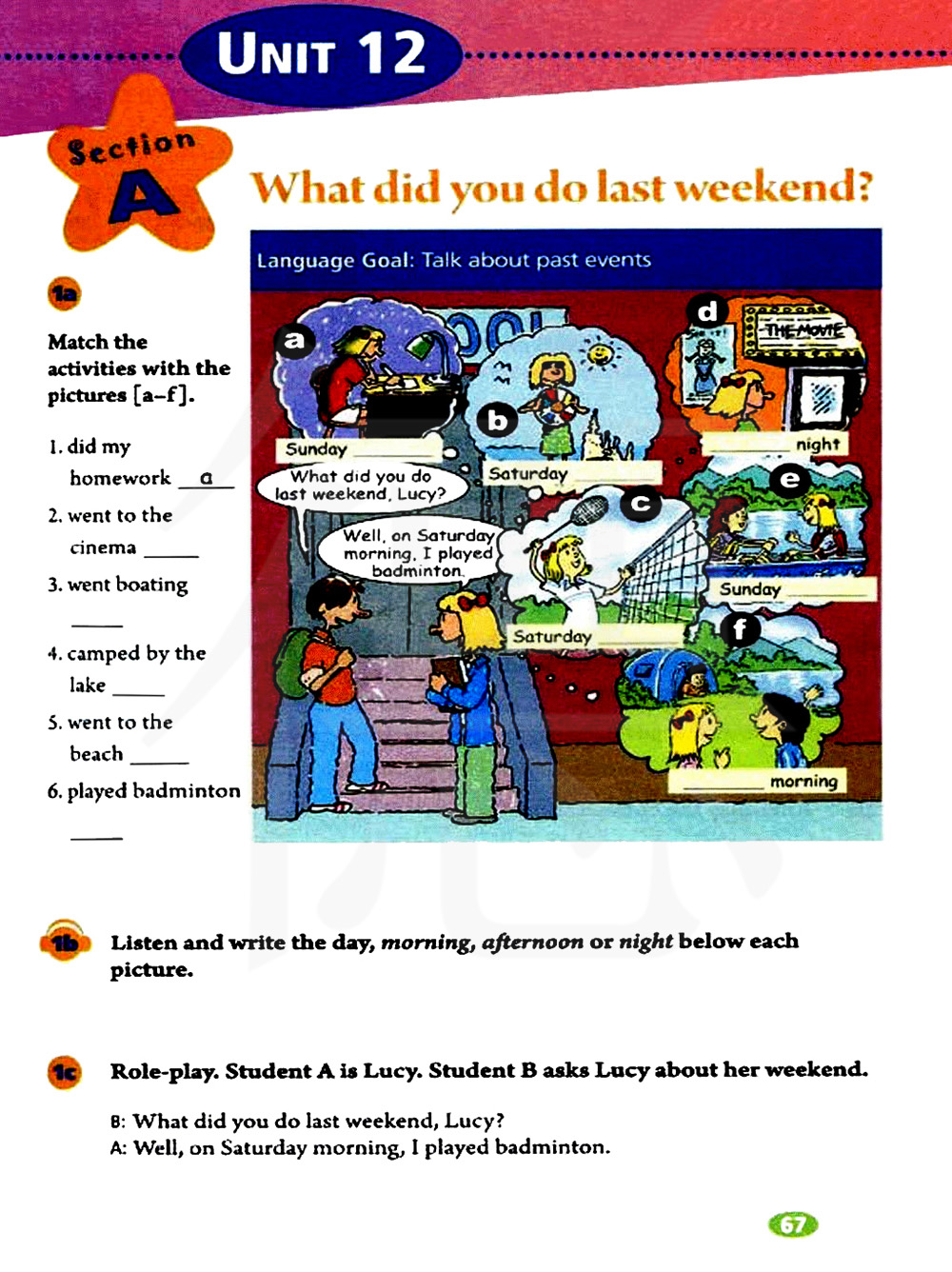
1. play badminton 打羽毛球
2. camp by the lake 在湖边野
3. go to the beach 去海滩
4. go to the cinema 去电影院
5. tell sb. about sth.告诉某人有关...的情况
6. stay up 熬夜
7. over=more than超过;多余
8. fly a kite 放风筝
9. run away 逃跑
10. second language 外语
11. anything interesting注:不定代词+形容词
12. shout to sb. 对某人大声喊叫
13. that’s why+从句 “那就是为什么......”
14. take ...to... 带领某人去某处
15. put up tents 搭建帐篷
16. make a fire 生火
17. keep us warm 使得我们暖和
18. on the first night 在头一天夜里
19. under the moon 在月光下
20. each other 互相
21. get a terrible surprise 大吃一惊
22. look out of 从......往外看
23. know about 知道
24. start to do sth. 开始做某事
25. up and down 上上下下
26. wake up 醒来 wake sb. up 叫醒某人
27. move into... 移动进入
28. learned from 从......学到
29. stay at home 呆在家里
二.重点句型
1. —What did you do last week? 你上个星期做了什么事?
—I did my homework. /We went boating 我做我的作业。/我们去划船了。
2. —How was your weekend? 你上个星期过得怎样?
—Great,thanks. 很好,谢谢。
3. I stayed up late to watch the soccer game. 我熬夜到很晚是为了看球赛。
4. As a special gift, our parents took us India.作为一份特殊的礼物,我爸妈带着我们去了印度。
5. But I was so tired that I went to sleep early. 但是我太累了,所以早早就睡着了。
6. We saw a big snake sleeping near the fire. 我们看见一条大蛇正在篝火附近睡觉。
一般过去时态(The Simple Past Tense)
一、用法
1.表示过去某个时间发生的动作或存在的状态,常和表示过去的时间状语连用,如: yesterday (昨天) the day after yesterday (前天) last night(昨晚) in 1990(在1990年) two days ago(两天前)等
For example, I got up at 7:00 yesterday.
My father was at work yesterday afternoon.
I was ten years old last year.
2.也表示过去经常或反复发生的动作,常和表示频度的时间状语连用,如:often, always, usually, sometimes等。
For example, he always went to work by bus last year.
She was often late for school last week.
★表示过去的时间的时间状语:
yesterday 昨天早晨 Just now 刚才 yesterday afternoon 昨天下午 Last week 上周 Yesterday evening 昨天傍晚 in the past 过去 that day 那天 The day before yesterday 前天 last year 去年Last night 昨天夜里 Three days ago 三天前 that year 那年 Three weeks ago 三周前 that month 那个月 Three months ago 三个月前
二、规则动词过去式的构成
三、规则动词过去式词尾-ed的读音
★巧记动词过去时态
动词一般过去时,表示过去发生的事;
be用was或用were, have,has变had;
谓语动词过去式,过去时间做标志;
一般动词加-ed,若是特殊得硬记。
否定句很简单,主语之后didn’t添;
疑问句也不难,did放在主语前;
如果谓语之前有did,谓语动词需还原;
动词若是was,were,否定就把not添。
四、一般过去时的分类
1、be动词的一般过去时态:有人称和数的变化(am/is 的过去式为was, are 的过去式为were)。
肯定句:主语+was/were+... She was a teacher five years ago.
否定句:主语+was/were+not+... She wasn’t a teacher five years ago.
一般疑问句:Was/Were+主语+...? Was she a teacher five years ago?
肯定回答:Yes, 主语+was/were. Yes, she was.
否定回答:No, 主语+wasn’t/weren’t. No, she wasn’t.
特殊疑问句:What was she five years old?
What did she do five years old?
2、实义动词的一般过去时态:没有人称和数的变化
肯定句:主语+动词过去式+... I went home at eight yesterday.
否定句:主语+didn’t+动词原形+... I didn’t go home at eight yesterday. 一般疑问句:Did+主语+动词原形+...? Did you go home at eight yesterday?
肯定回答:Yes, 主语+did. Yes, I did.
否定回答:No, 主语+didn’t. No, I didn’t.
特殊疑问句:When did you go home yesterday?