知识点
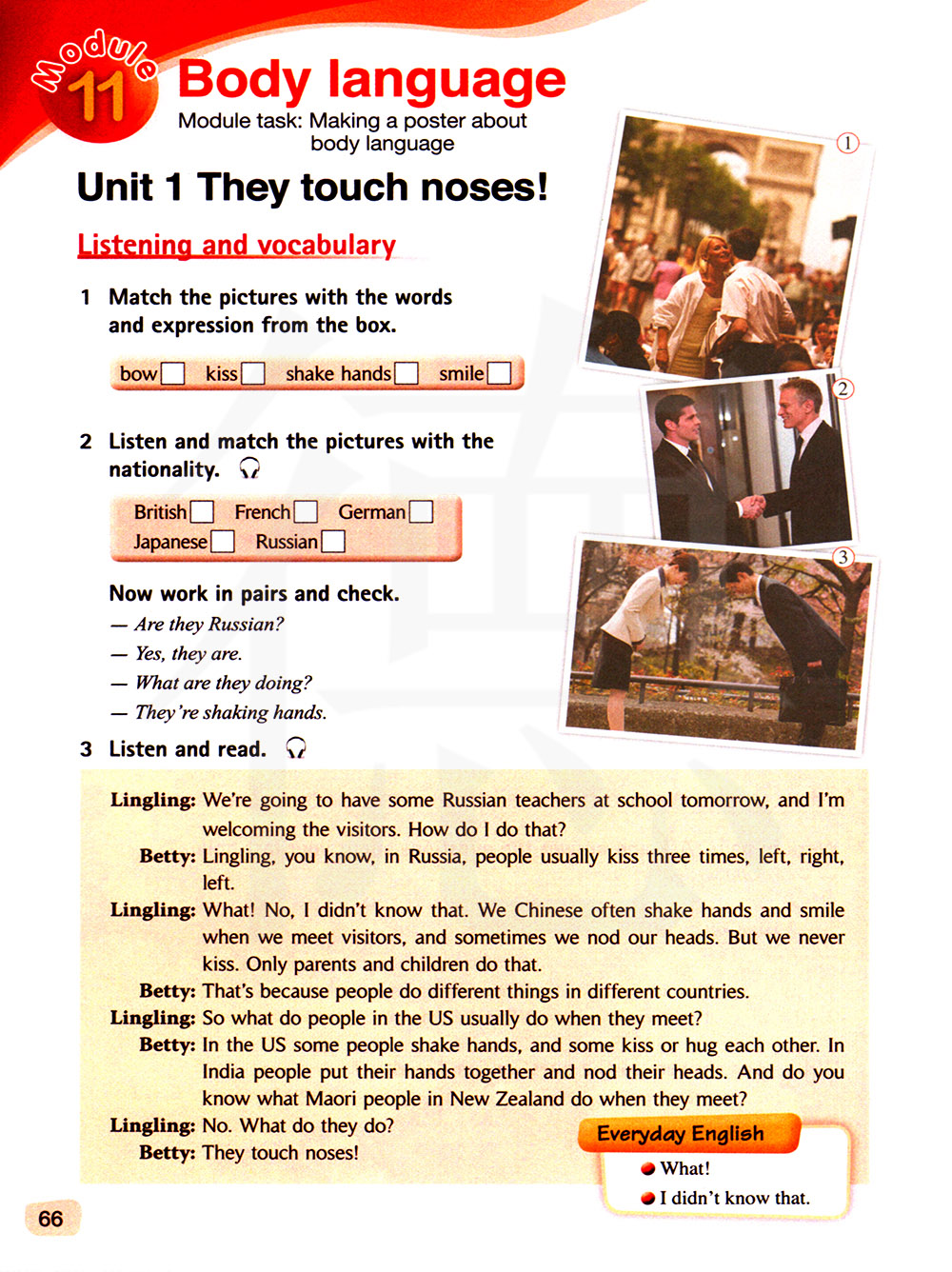
1、body language 身体语言
2、once 一次 twice 两次三次及三次以上用基数词 + times three times三次
3、shake hands 握手 shake hands with sb. 与某人握手
4、nod one’s head 点头
5、only adv. 只是,仅仅 I only touched it. 我只是摸了它一下。
only adj. 唯一的,仅有的 John is the only boy in his family.,
6、That’s because„那是因为„That’s because you were not careful enough.
We didn’t go for a picnic. That’s because the weather was bad.
7、each other 互相,常放在动词后。We help each other at school.
8、put one’s hands together 把手合拢 In India people put their hands together.
9、nod one’s head 点头
10、touch noses 碰鼻子
11、head teacher 班主任;校长
12、some ways to do sth. = some ways of doing sth. 做某事的一些方式
There are some ways to go shopping. = There are some ways of going shopping.
13、close to 靠近 I live close to a park. stand close to 站得近
14、talk to/with sb. 与某人交谈 talk about sth. 谈论某事
15、personal space 个人空间 We need some personal space.
16、how/what about (doing) sth.? (做)某事怎么样?
How/What about swimming this afternoon? What/How about your school life?
17、arm in arm 譬挽臂地,手挽手 The two girls often walk arm in arm. Hand in hand 手拉手 shoulder to shoulder 肩并肩 face to face 面对面
18、hold v. 抓住,握住 Please hold the book for me. hold one’s arm 抓住某人的手臂
19、move away 移开/移走∕搬开 Move the box away. Move to 搬到 We are moving to a bigger house. Move on 继续前进
20、not„at all 根本不,一点也不 (用于疑问句、否定句) T
hey don’t like apples at all.
Not at all. 不用谢,别客气(回应对方感谢时的用语)Thank you.→Not at all.
He wasn’t at all happy. (对某人来说)做某事是„的
21、it is adj. (for sb.) to do sth.
It is easy for us to learn Chinese well.
polite adj. 有礼貌的 adv. politely 其反义词:impolite, rude
22、somewhere else别处
23、look at each other 看着彼此/对方
24、That’s easy. 那很简单。
25、wave to sb. 向某人挥手 The teacher waved to the students at the airport.
wave to say goodbye 挥手告别say goodbye 道别say goodbye to sb.向某人道别,
say hello to sb.向某人问好 say sorry to sb.向某人道歉
26、be careful 小心
27、in fact 事实上,实际上 fact n. 事实,细节
Few people know the fact. In fact I don’t know her.
28、rude adj. 粗鲁的;无礼的 n. rudeness
Don’t be so rude to your father.
29、shall 提出或征求意见,后接动词原形。Shall I/we do sth.?
Shall I /we have a picnic?
30、on time 准时,按时 We should get there on time.
in time 及时 When I was hungry, my mother sent the bread to me in time.
31、It’s a way of being polite and showing respect. 这是一种礼貌且显示尊重的方式。
范文:不同国家的饮食情况
People in different countries like eating different foods. Chinese like eating dumplings and noodles. Italians like pizza. Japanese like uncooked fish, and America is famous for its fast food in the world.
People in different countries eat food in different ways. Chinese like eating with chopsticks. Westerns use knives and forks to eat. In some countries, people use nothing but their fingers to eat.
Chinese people like talking when they are having dinner, but in some countries, it is not polite to talk at the table. It is very interesting , isn’t it?